Online Reporter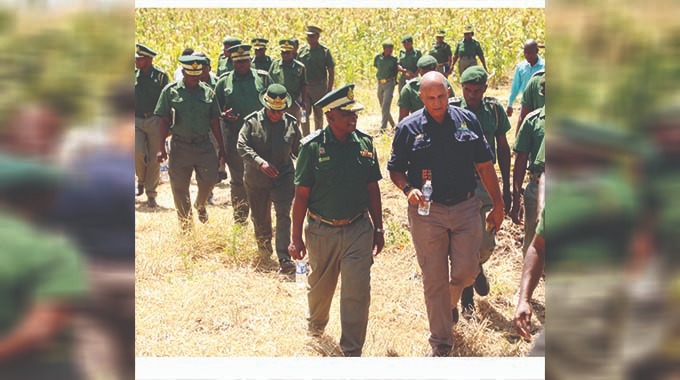
Raymond Jaravaza, [email protected]
THE Zimbabwe Prisons and Correctional Service (ZPCS)-run Anju Farm in Nyamandlovu, Matabeleland North Province stands as a shining example of successful commercial farming and rehabilitation.
This initiative not only aims to achieve self-sufficiency through cash crop production but also equips inmates with vital life skills for reintegration into society upon release.
The farm, home to over 140 inmates serving sentences of 36 months or less, operates year-round on expansive arable land. It produces maize, winter wheat, sugar beans, cabbages and butternuts. Powered by a centre pivot irrigation system during dry seasons and supported by five electric boreholes feeding a 4-million-litre reservoir, the farm ensures continuous agricultural activity.
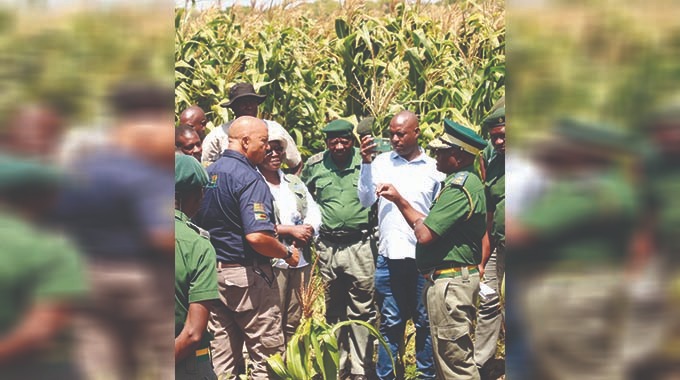
In 2016, ZPCS partnered with the Agricultural and Rural Development Authority (Arda) through a Memorandum of Understanding (MoU) to enhance farming activities across correctional facilities nationwide. ZPCS Commissioner General Moses Chihobvu and Arda board chairman Mr Ivan Craig yesterday toured Anju Farm to get an appreciation of the farming activities.
Comm-Gen Chihobvu expressed satisfaction with the farm’s focus on horticulture and cash crops, which contribute to self-sustainability by generating income to meet prison needs. He said plans are underway to expand farming operations by adding 40 hectares of irrigated land.
“I would like to applaud the decision by management at Anju Farm to venture more into horticulture and cash crops.
This will drive the prison into self-sustainability because the money earned from the sale of farm produce will be used to cater for the needs of the prison,” he said.
“The MoU that we signed with Arda some years ago means that ZPCS can leverage the labour that we have in the form of prisoners as part of the rehabilitation and reintegration process to venture into commercial farming with Arda supporting us with technical skills and expertise.”
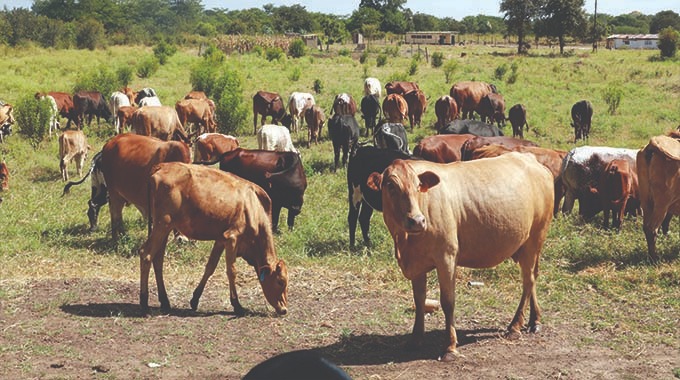
Comm-Gen Chihobvu stressed the importance of replicating Anju Farm’s model across all prisons to ensure nationwide self-sufficiency. He cited instances where Anju Farm supplied food to other correctional facilities during droughts and contributed surplus produce to local markets in Bulawayo.
“Last year, Anju Farm Prison supplied food to Chikurubi Maximum Prison in Harare due to the drought that hit the country and affected several prisons’ food production capabilities,” he said.
Anju Farm currently has 35 hectares under maize and five hectares under sugar beans. Principal Correctional Officer Engineer James Musutu, the provincial farm manager, said drilling additional boreholes would significantly enhance irrigation capacity.
He said the maize crop was not affected due to rainwater that was abundant in the last few months, but Anju Farm needs more boreholes to feed water into the main reservoir and ultimately supply the centre pivot in the drier seasons.
“The reservoir, which is our main source of water for the 35 hectares under centre pivot irrigation, has a carrying capacity of 4 million litres of water. The capacity of the centre pivot pump is 120 cubic metres per hour from the water reservoir that is supplied by five boreholes,” said Eng Musutu.
“During the dry season, when we don’t depend on rain water it takes about two and a half days for the all the boreholes to fill the water reservoir, which is why we are asking for more boreholes to be drilled to solve water challenges here at Anju Farm.”
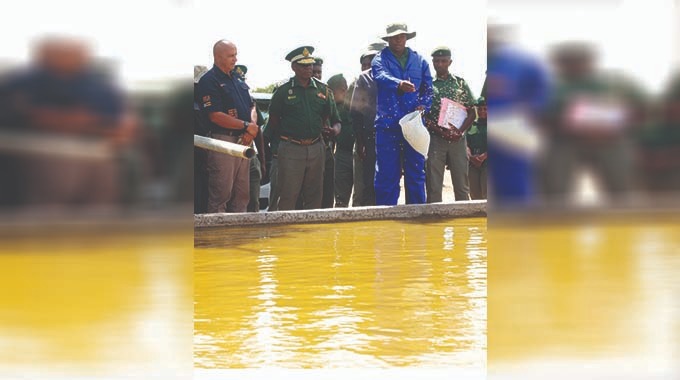
Beyond crop production, Anju Farm boasts projects in goat breeding, cattle rearing, poultry farming, and fisheries.
These ventures further diversify income streams while providing inmates with practical skills applicable after their release.
Mr Craig praised the partnership’s success, saying inmates are at the heart of these initiatives. He said the skills they acquire will empower them upon reintegration into society,
“I have to appreciate the work that I saw here at Anju Farm starting from the fisheries project, the horticulture that includes growing of seedlings to the butternut and the sugar beans. The magnitude of the projects is not what people would generally expect from a prison-run farm,” he said.