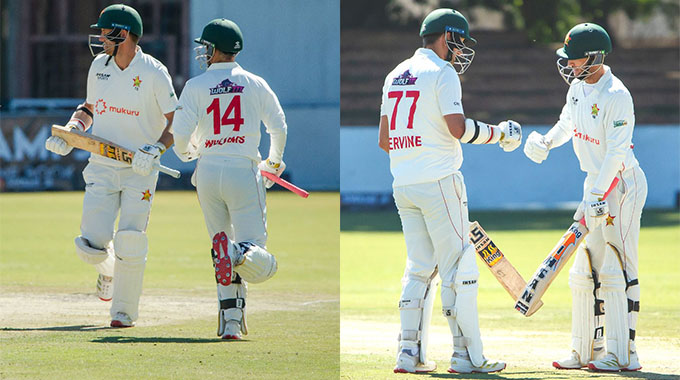
Brandon Moyo and Stanford Chiwanga
ANOTHER Test match, another defeat. We expected this, yet still we hoped for better. These are the Chevrons we have now, but undeniably, not the Chevrons we want. The swift, nine-wicket capitulation against New Zealand at Queen’s Sports Club yesterday was not just a loss; it was a stark, almost painful reaffirmation of how far Zimbabwe’s national cricket team has fallen. New Zealand needed just 2.2 overs to wrap things up, chasing a paltry target of only eight runs to secure victory. The Blackcaps sealed the win in the third session of day three, further highlighting Zimbabwe’s ongoing struggles in red-ball cricket.
This marks their sixth Test loss at home this year.
Despite the crushing defeat, head coach Justin Sammons offered a mixed assessment, expressing satisfaction with parts of their bowling effort but conceding that a lack of concentration at crucial moments proved costly with the bat.
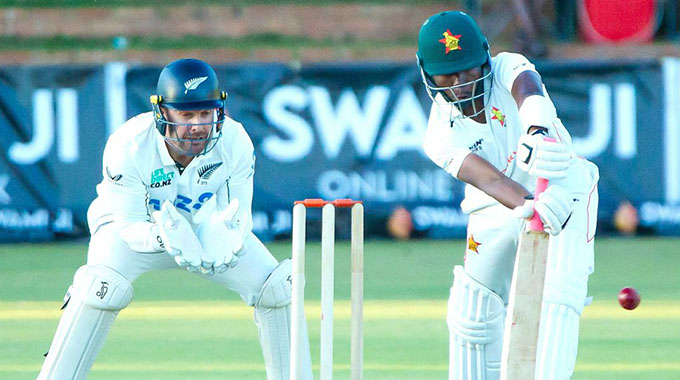
“Bowling was a positive. The way we bowled on day one wasn’t really on it. But seeing the way we showed character to come back the next day was impressive, we challenged them throughout the day, we made life difficult for them against high-quality opposition with top-class batters. It was a challenge, it was Test cricket. Blessing Muzarabani was marvellous,” he said.
Sammons lamented the missed opportunities in critical phases of the match.
“It was tough on the morning of day one. If we had gone to lunch three wickets down, with Welch still at the crease, it would have been a good session. But, again, it’s a key moment that we are just not getting over the line… In those moments, we were just not getting over the line.
“We were brave in saying we can get through this first session. If we had gone through the first session, and then batted out the whole day, it would have been a better or different story. We were a bit more balanced in this side.”
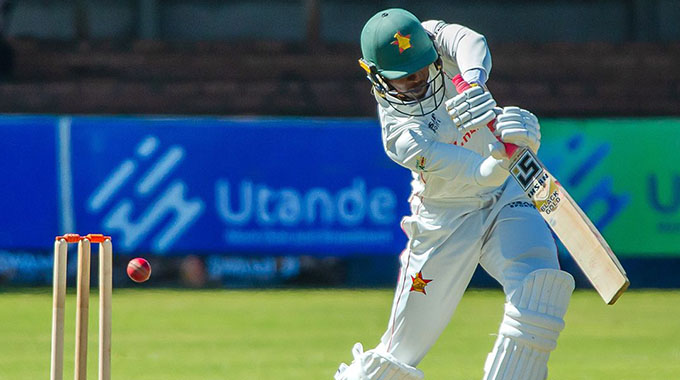
Zimbabwe won the toss and elected to bat first, with captain Craig Ervine stating his desire for runs on the board to bring his spinners into the game later. However, the opposite unfolded. The Chevrons were bundled out for a meagre 149 runs in just over two sessions. New Zealand responded strongly with 307 runs, taking a significant lead. The hosts then suffered yet another batting collapse in their second innings, succumbing for 165 all out, leaving the visitors a mere eight runs to win the Test and take a 1–0 series lead.
The third and final day began with Zimbabwe on 31/2, trailing by 127 runs, having lost both openers late on day two. Nick Welch fell inside the first 20 minutes for four runs, followed shortly by night-watchman Vincent Masekesa for two. A brief 60-run fifth-wicket partnership between Ervine and Sean Williams offered some hope, but Williams was caught just a single run shy of his eighth Test half-century, leaving the Chevrons at 110/5, still trailing by 48 runs. Ervine fell in the very next over, just before lunch.
Zimbabwe limped into the break on 114/6, with Sikandar Raza and Tafadzwa Tsiga at the crease. Wickets continued to fall in the second session, though Tsiga (27) and Blessing Muzarabani (19) provided some late fight, helping Zimbabwe edge into a small lead before they were all out. New Zealand completed the chase with ease, Newman Nyamhuri taking the sole wicket of Devon Conway for four runs, before Henry Nicholls sealed the victory with a boundary.
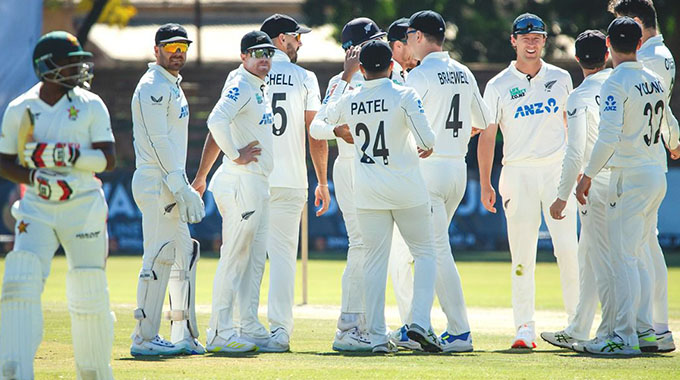
Once a team capable of upsetting cricketing giants and boasting players of genuine international calibre, the current Chevrons appear a shadow of their former selves. There’s a prevailing sense of a squad adrift, seemingly devoid of the consistent bite in bowling, the resolute defiance in batting, and the tactical nous that defines competitive Test cricket. To fold inside three days on home soil, offering little more than fleeting resistance, isn’t merely disappointing – it’s an indictment of where the sport stands in this nation. What’s most galling for the long-suffering Zimbabwean cricket fan isn’t just the losses, but the manner of them. There’s an absence of the gritty determination, the fighting spirit that once characterised Zimbabwean sides even in defeat. The swiftness with which wickets tumble and targets are conceded suggests a fundamental fragility, a mental hurdle as significant as any technical one. When a team crumbles to leave a mere eight-run target for an opponent, it speaks volumes about a collective breakdown that extends far beyond individual errors.
The dream of competing on the world stage, of inspiring a new generation of cricketers, feels increasingly distant with each insipid performance. While calls for patience are often made, patience wears thin when the trajectory remains stubbornly pointed downwards. The return of Test cricket should be a cause for celebration and competitive engagement, not merely an exercise in tallying predictable defeats. For the Chevrons to truly become the team we want, radical introspection and fundamental change are not just desirable – they are desperately needed. Otherwise, these humbling defeats will remain the norm, and the hope for better will continue to be just that: hope, constantly unfulfilled.