Online Reporter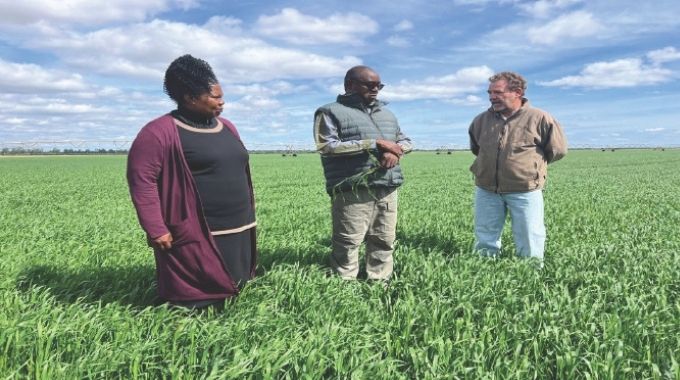
Sukulwenkosi Dube-Matutu, [email protected]
THE Antelope irrigation scheme in Maphisa, Matobo District, is emerging as a key contributor to Matabeleland South’s winter wheat production drive. As the province works towards its ambitious target of 4 500 hectares, the scheme has already planted 525 hectares out of a planned 678 hectares, placing it firmly on track despite earlier weather challenges.
Owned by the Agricultural and Rural Development Authority (ARDA), the Antelope estate is run under a public-private partnership arrangement with farmer Mr Deane Leroux. This collaboration has transformed the scheme into one of the region’s leading agricultural operations, showing how partnerships can boost productivity and improve food security.
Spanning about 1 000 hectares, the estate is now regarded as a model of farming excellence. Its performance supports Government efforts to strengthen national food supplies and improve nutrition, as Zimbabwe pushes towards its Vision 2030 goal of becoming an upper-middle-income economy.
Speaking during a recent visit by Deputy Minister of Lands, Agriculture, Fisheries, Water and Rural Development Davis Marapira, Mr Leroux expressed confidence in meeting the planting deadline and achieving good yields.
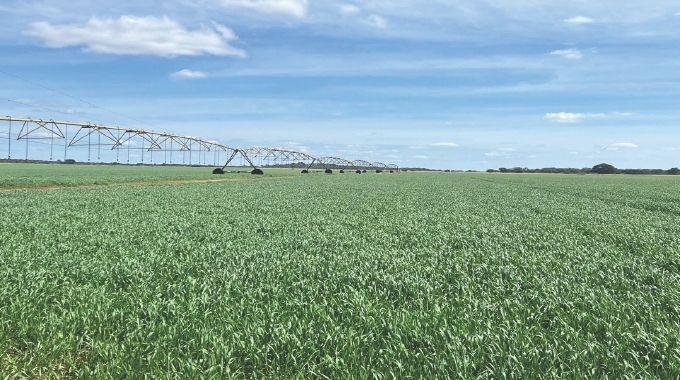
“We started planting on May 3 and now have 525ha out of 678ha. The crop is at various stages. We were slightly delayed by heavy rains, but we are moving swiftly to finish planting by the end of the month. Our target is lower than last year’s 718ha because we still had maize in the field that we couldn’t harvest on time due to the rains,” Mr Leroux said.
The heavy rains, while causing delays in maize harvesting, have turned out to be a blessing in another way. Soil moisture levels are very high, which is expected to benefit the wheat crop as it grows.
Mr Leroux said that rainfall at the estate reached around 1 000 millimetres this season, far above the normal average of 300 millimetres.
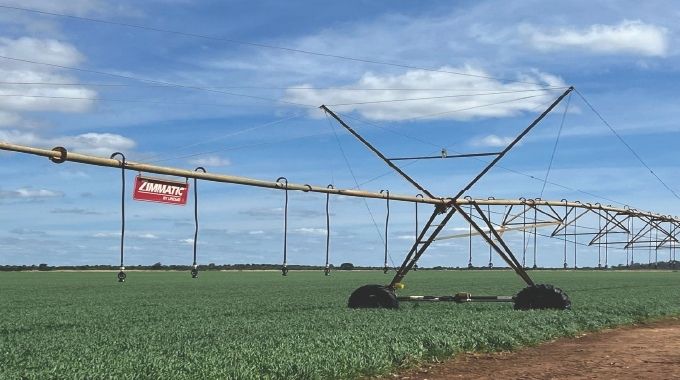
“The field capacity is already up. This winter we expect to use an additional 380mm of water instead of the usual 600mm, which will reduce water and electricity costs,” he said.
This reduction in irrigation needs is significant, as wheat production during winter normally requires large amounts of water and energy. Lower costs will improve the scheme’s overall efficiency and profitability.
Deputy Minister Marapira, who toured the estate to assess progress, said the Government is satisfied with efforts being made at Antelope and across the province. He noted that while disruptions caused by the rains were unavoidable, the national wheat target remains within reach.
“The ministry will continue to monitor progress across all provinces. Staff at provincial, district, ward and village level have been instructed to work tirelessly to ensure targets are met,” said Deputy Minister Marapira.
He also highlighted that the partnership between Government and Mr Leroux, which began in 2013, is delivering positive results that align with the country’s long-term development plans.
“I’m pleased by the developments here at ARDA Antelope where they have a target of about 700ha and are now at 525ha. The province has planted 1 500ha out of 4 500ha. So, with nine days left, plus a 15-day grace period to mid-June, we can meet the target if every scheme plays its part. The crop I’m seeing here is good, with a targeted yield of 8 to 8.5 tonnes per hectare. This is the level of production we need to achieve food sufficiency,” said the Deputy Minister.
Across Matabeleland South, agricultural authorities are working hard to close the gap between current planting levels and the set targets. Matabeleland South Provincial Agricultural Development and Advisory Services (ADAS) Director Ms Shupikai Sibanda said progress is steady, even though the province is slightly behind schedule.
She noted that at ARDA Ingwizi, another key irrigation scheme in the province, 525 hectares have been planted out of a target of 700 hectares.
According to Ms Sibanda, the province has so far achieved 33 percent of its planting target, but efforts are underway to accelerate progress before the planting window closes.
“The heavy rains up to late April left enough soil moisture to sustain the crop to maturity. Farmers only need to top up water and here in Maphisa, the farmer will add about 300mm, which is economically viable,” Ms Sibanda said.
These favourable soil conditions are expected to play a crucial role in ensuring a healthy crop and good yields, especially in a region that is often affected by dry conditions.
Nationally, Zimbabwe is aiming to plant 125 000 hectares of winter wheat this year. This figure represents an increase from the 122 142 hectares planted during the same period last year.
The country’s wheat production has been improving steadily in recent years. In the previous season, Zimbabwe recorded a historic harvest of 642 000 tonnes, surpassing the national annual requirement of between 350 000 and 450 000 tonnes.
This achievement marked a major shift for the country, which for many years depended heavily on wheat imports. Improvements in irrigation infrastructure, access to farming equipment, and consistent Government support have helped turn winter wheat into one of Zimbabwe’s biggest agricultural success stories.
The national wheat programme is supported by about 256 958 hectares of functional irrigated land. This has made it possible to expand production even during the dry winter season.
Looking ahead, the Government is targeting a harvest of 662 000 tonnes. If this goal is achieved, Zimbabwe will further strengthen its self-sufficiency in wheat, reduce reliance on imports, and boost its strategic grain reserves.
For schemes like Antelope in Maphisa, the focus remains on completing planting on time and maintaining high standards throughout the growing season.
With favourable soil moisture, improved efficiency in water use, and strong coordination between farmers and Government, there is growing confidence that both provincial and national targets can be achieved.
The progress seen so far at Antelope is a clear sign that with the right support and commitment, Zimbabwe’s agricultural sector can continue to grow and deliver results that benefit the entire country.