

 admin
admin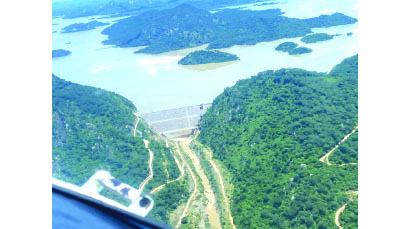
Lovemore Chikova-Development Dialogue
Last week, a milestone was achieved in the developmental journey that Zimbabwe, through the Second Republic led by President Mnangagwa, has embarked upon with the aim of lifting everyone out of poverty.
The momentous event was the approval by Cabinet of Tugwi-Mukosi Dam’s combination master plan, a development plan that provides a layout to direct any future development and growth around the dam.
In fact, a combination master plan or a development master plan – whichever one likes to use – ensures that business is being done in a systematic and organised way.
Well, this column has been advocating for a quick pace in ensuring development takes off around Tugwi-Mukosi Dam so that it starts to fully benefit the country, and most particularly communities that surround it.
The revelation that the Tugwi-Mukosi Dam development master plan is now approved should be good news, not only to this column which has been a huge advocate of that, but all those who want to witness development in the country.
The document is more like a go ahead for development to start taking place around the dam, while potential investors, both local and foreign, should be excited about the opportunities that abound.
This is the right time to start inquiring about how one can invest at the dam or in the area surrounding the dam, as there are lots of prospects in the area.
Speaking to journalists in Masvingo on Friday last week following Cabinet’s approval of the development master plan, Provincial Affairs and Devolution Minister Ezra Chadzamira summed it up all.
“The dam will avail water for irritating 40 000 hectares around the water body and in downstream areas,” he said. “We are also expecting investment in tourism, with investors building hotels, lodges and holiday homes within the dam’s immediate environments.
“Our people are also getting fishing licences to venture into commercial fishing and many cooperatives from communities around the water body have been licensed, changing the lives of our people in the process.”
More importantly, the development master plan includes a perennial greenbelt around Tugwi-Mukosi Dam and the Lowveld.
Well, this is what everyone in that part of the region has been waiting for, and it has taken the development approach being pursued by President Mnangagwa to ensure more tangible progress start to be realised at Tugwi-Mukosi.
Real work has to start now, as the dam’s potential can start being unlocked for the benefit of all.
It will be like the re-awakening of a sleeping giant, as the implementation of the development master plan takes effect.
The process started with the gazetting of the Regional Town and Country Planning (Tugwi Mukosi Dam and Environs Combination Master Plan Authority) Notice, 2021.
The notice outlined institutions that were empowered to work together in implementing the Tugwi-Mukosi development master plan, that was still being developed.
The institutions were Chivi Rural District Council, Masvingo Rural District Council, Zimbabwe Parks and Wildlife Management Authority, Environmental Management Agency, Ministry of Lands, Agriculture, Fisheries, Water and Rural Development, Zimbabwe Tourism Authority and Zimbabwe Council for Tourism.
The giant dam straddles Chivi and Masvingo rural districts, hence these are often referred to as the custodians of the water body which is located at the confluence of Tugwi River, which flows from Chivi and Mukosi River, which flows from Masvingo.
The involvement of the Zimbabwe Parks and Wildlife Management Authority is because of the need to manage wildlife resources, especially when the planned national park is set up around the dam.
There are also resources in fisheries, which ZimParks is already managing.
The Ministry of Lands, Agriculture, Fisheries, Water and Rural Development is important when it comes to the development of agricultural projects, especially through irrigation.
Already, the reservoir, with a full capacity of 1,8 billion cubic meters, and with the advances in irrigation technology, has irrigable land of over 40 000ha.
There is no doubt that with such a massive number of hectares under irrigation, the southern part of Zimbabwe will become an agricultural hub, contributing mightily to national food security.
That the intention is there to make Tugwi-Mukosi a tourism hub is evident through the involved of the Zimbabwe Tourism Authority and Zimbabwe Council for Tourism.
Apart from water activities that tourists can take advantage of, the scenery around Tugwi-Mukosi Dam has the potential to attract tourists.
The beautiful mountainous terrain that stretches from just before the dam through Ngundu to the area around Runde River, running for about 20 kilometres, can be exploited to become a tourism hub, with various activities being initiated to increase the tourists’ appetite.
It is no coincidence that it is in this area on the Masvingo-Beitbridge Road where work has started to turn the road into four lanes, as part of the Harare-Masvingo-Beitbridge Road’s rehabilitation progress.
The wider road, which will be adjacent to Tugwi-Mukosi has the potential to add to the ambience of the area, as it becomes part of the development being carried out around the dam.
And speaking of mountains, the United Nations World Tourism Organisation (UNWTO) recognises mountains can attract tourists, hence what it terms mountain tourism.
According to UNWTO, mountain tourism is: “Tourism activity which takes place in a defined and limited geographical space such as hills or mountains with distinctive characteristics and attributes that are inherent to a specific landscape, topography, climate, biodiversity (flora and fauna) and local community.”
A wide range of outdoor activities for leisure and sports can be undertaken around Tugwi Mukosi Dam because of the beautiful scenery underpinned by ranges of mountains.
United Nations Environment Programme has interesting statistics about mountain tourism.
It states that areas with mountains attract at least 20 percent of global tourism, making them second only to coasts and islands as popular tourism destinations.
For Chivi, with its mountain ranges around Tugwi Mukosi Dam, ways can be devised to ensure the tourists are attracted to the area through marketing and publicity.
There is no doubt that the mountain ranges stretching from the area around Chibi-Turn-off through to the border with Mwenezi district at Runde River Bridge can successfully be marketed to tourists.
The approval of the combinational master plan sets the ball rolling for the initiation of activities around Tugwi-Mukosi Dam and this adds to the Second Republic’s ambition to achieve an upper middle income economy by 2030 under Vision 2030.
Until now, the major beneficiaries of water from the dam has been the Lowveld sugar estates, whose irrigation potential has been boosted by the availability of the extra water.
Some people have also been fishing in the dam after getting some licences to do business.
But the approval of the combination master plan is just the beginning of massive development at the dam.
Businesses should start looking at reaping the rewards from developments that are set to take off around the dam.
Villagers too should not feel left out, especially those surrounding the dam from Madzivire and Shindi communal lands.
Tugwi Mukosi has a long history, and the people have been patient as it unfolded.
The dam construction was expected to start in the late 1950s by the Rhodesian government, and another attempt in the late 1970s by the same government did not see any construction starting.
It was only in 1998, under the new Zimbabwean Government, that construction of the dam started.
But then, construction was affected by various problems, including lack of foreign currency, which saw Italian contractor Salim Impregillo, stopping work at various intervals because of non-payment.
In 2019, it was announced that the crafting of the Tugwi-Mukosi combination master plan had been divided into two sections, and was expected to be completed before the end of that year.
The combination master plan was said to be being crafted by a South African consultant in collaboration with Great Zimbabwe University and the Midlands State University.
That is why the approval of the combination master plan should be celebrated as part of this history, but one of the final phases to ensure people start reaping the rewards.
Feddback: [email protected]



 Online Reporter