Online Reporter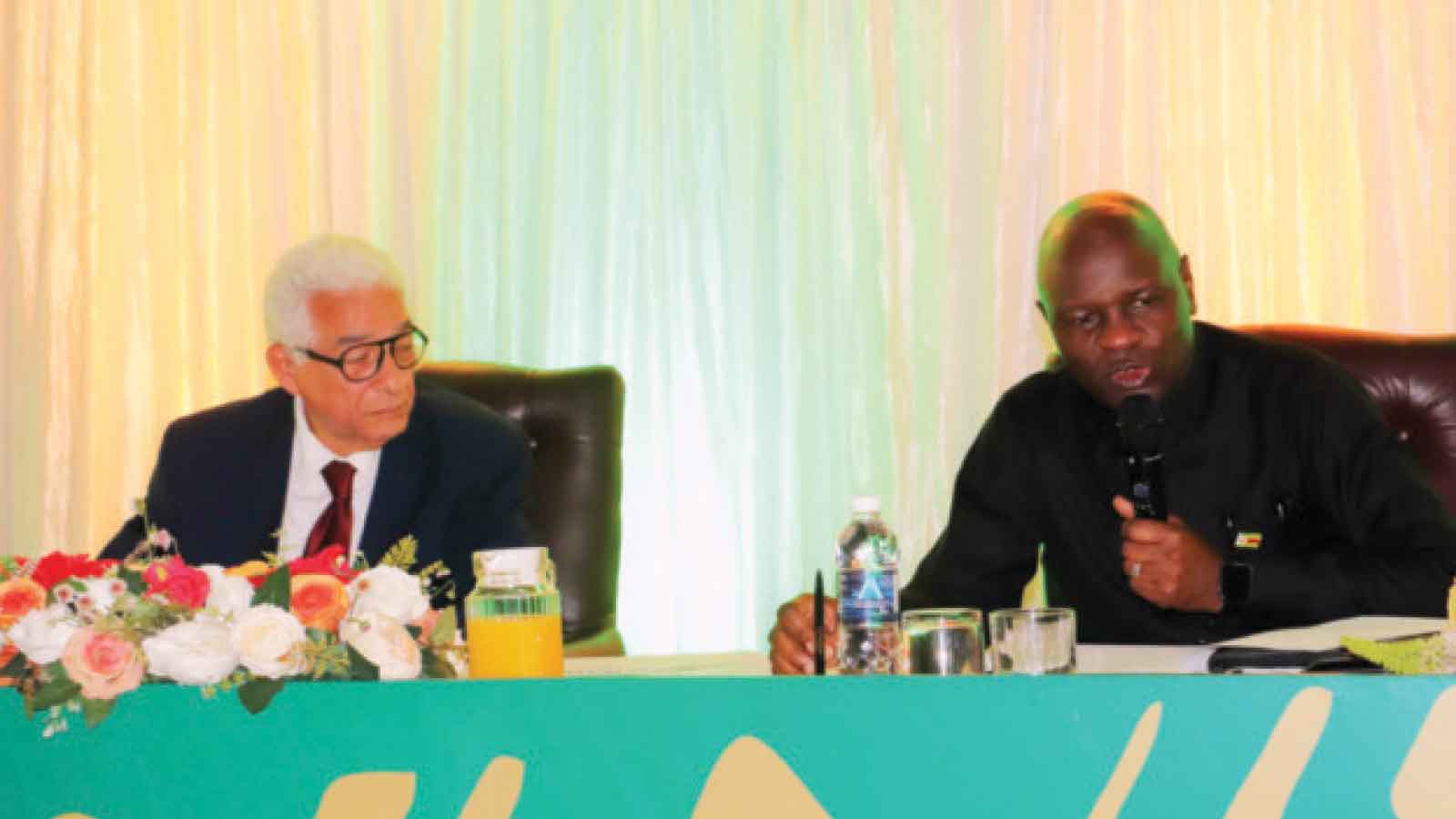
Nyore Madzianike and Precious Manomano
THE African Peer Review Mechanism Panel of Eminent Persons, led by lead panel member for Zimbabwe Ambassador Aly-El Hefny, says their mission is not to judge but to learn, share and document best practices that strengthen accountability, fiscal discipline and institutional efficiency.
During his delegation’s engagement with stakeholders in Harare after touring the country’s provinces on a targeted review of economic governance and management, Ambassador El Hefny said contributions by various stakeholders will open further engagement and cooperation among other African countries.
“This time, it should be understood immediately that it will be limited to this only, but it opens the way for future cooperation concerning other important issues that are a priority for the Government of Zimbabwe, always having good governance,” he said.
“The APRM’s goal is not to judge but to learn, share and document best practices that strengthen accountability, fiscal discipline and institutional efficiency.
“Your contribution will ensure that the views of the ministries, public institutions and others share the findings of the target review.”
Ambassador El Hefny said the review will focus on five key objectives under the economic governance and management thematic area, each forming an essential pillar of Zimbabwe’s path towards sustainable economic transformation and good governance.
“The first is the design and implementation of economic policies that promote sustainable development. This review will identify achievements, challenges and innovations in economic governance, enrich the review report with accurate data and generate actionable recommendations aligned with Zimbabwe’s reforms and Africa’s Five-Year Plan. The APRM is a mutual support mechanism grounded in African solidarity,” he said.
Ambassador El Hefny commended the stakeholders for their openness and professionalism, saying he looked forward to continued collaboration in the work that enhances balance, accountability and inclusiveness in Zimbabwe.
“The APRM encourages transparency, accountability and collective and inclusive growth among African nations,” he said.
“Of course, in this case, among Zimbabweans, it is therefore not a mechanism for criticism, but rather an introspection that is meant to enhance continuous improvement.
“For the betterment of governance and the well-being of the people of Africa and of course Zimbabwe in this particular case. In our case, also in Zimbabwe, it is important to emphasise the heritage-based philosophy.”
APRM Zimbabwe focal point Ambassador Chimbindi said the review is a self-assessment mission on how the country is faring on economic development.
Earlier yesterday, the team visited the Dinson Iron and Steel Company in Manhize as part of its ongoing targeted review process on economic governance and management in Zimbabwe. Dinson is a subsidiary of Tsingshan Group of China.
The delegation assessed progress at the country’s largest steel manufacturing plant, focusing on governance systems, operational compliance and alignment with national development priorities.
Their tour formed a key segment of a broader programme aimed at evaluating how major national projects contribute to economic transformation, social impact and sustainable industrial growth.
During the visit, the team engaged with management and technical staff to understand the operational framework guiding the multi-billion-dollar steel plant.
The assessment sought to determine how the project is strengthening Zimbabwe’s rural industrialisation agenda, enhancing employment creation and supporting the Government’s thrust towards achieving an upper middle-income economy.
DISCO Operations Director Mr Wilfred Motsi told the delegation that they are targeting to produce five million tonnes of steel when they reach the final stage of their projected production.
They are currently in phase one, which began in June last year. Mr Motsi indicated that in the first phase, DISCO is producing about 600 000 tonnes of steel against national consumption of 400 000 tonnes.
He said his company is planning to increase production to 1 200 000 tonnes in the second phase.
“So in terms of phases, this is our first phase, and we are almost there. In terms of completion of phase one, we are looking at over 98 percent,” he said.
“We are expecting to work with other value chain industries so that they can use our steel billets and our pig iron to further process and produce other products that we are not producing here, like flat sections.
“Over and above, we are going to see if the market is producing so we can start other phases whereby we increase production from the 600 000 tonnes we are producing right now to maybe 1,2 million tonnes.”
The APRM findings are expected to contribute to strengthening policy implementation and improving institutional efficiency.
The visit to Dinson marked one of the delegation’s key engagements with strategic economic institutions.