

 Online Reporter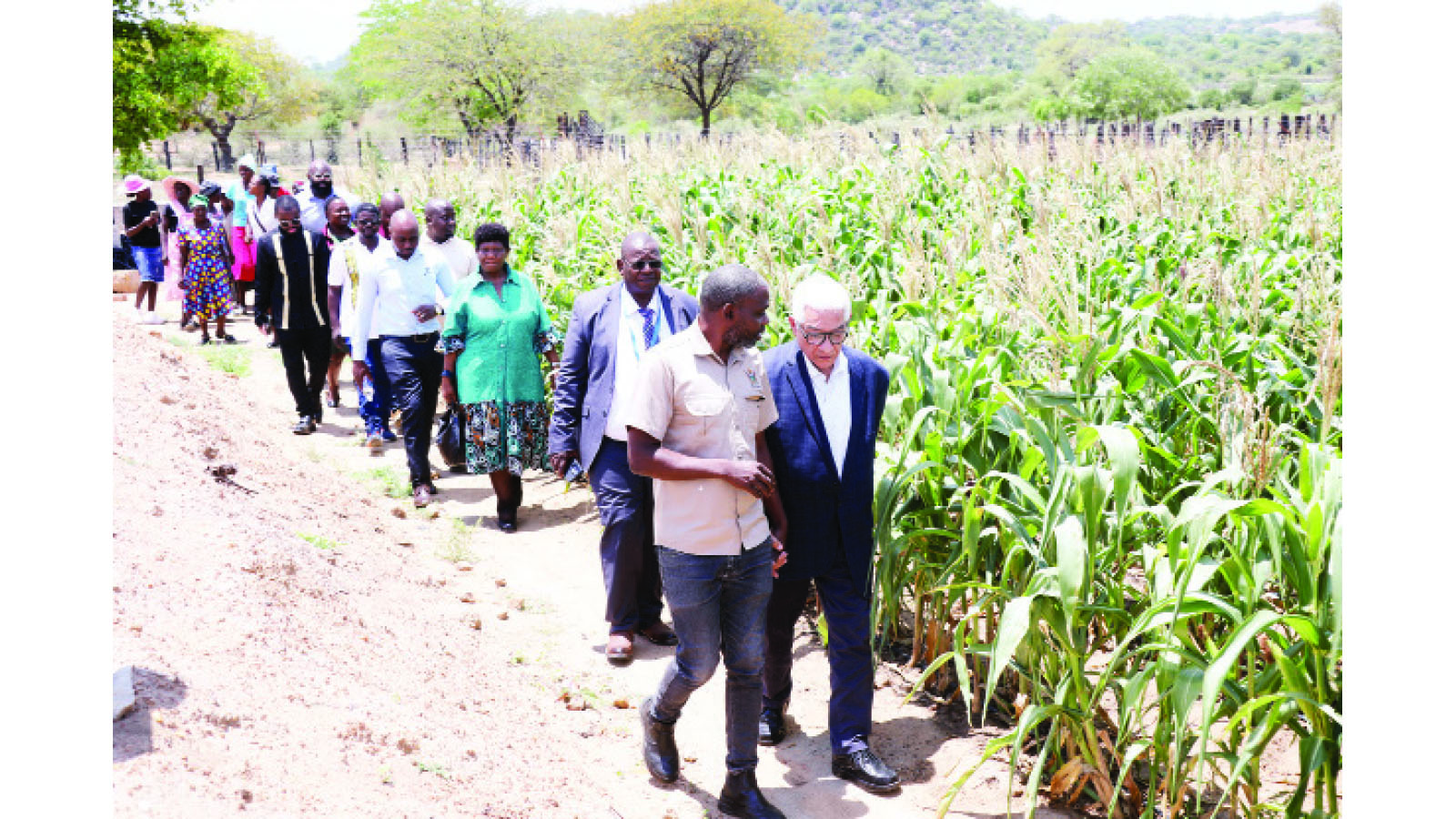
Nyore Madzianike in Gwanda
THE African Peer Review Mechanism (APRM) team has expressed admiration for Zimbabwe’s Presidential Rural Development Programme, suggesting that other African countries could benefit from similar sustainable development initiatives.
An APRM international consultant and part of a delegation conducting a targeted review of economic governance and management, Professor Masibo Lumala, shared these sentiments following a visit to the Garanyemba Village Business Unit in Gwanda District.
The delegation, led by Ambassador Aly El Hefny, is focused on evaluating economic governance in Zimbabwe.
“There is that element of circular economy that has really emerged,” said Prof Lumala.
“As a Kenyan, I believe this is a concept we can easily adopt and translate to many other African countries. We are empowering people from the grassroots up. If this knowledge were shared widely, Zimbabwe could thrive.”
Lead Panel Member for Zimbabwe, Ambassador Aly El Hefny, commended the Government for the initiative.
“I am amazed by the number of women involved in these projects, highlighting their engagement in developmental efforts,” he noted.
“This is not the only project; there are initiatives across various locations. I salute the Government, provincial authorities and community members who have made this dream a reality.”
The delegation also included APRM interim Chief Executive Officer Ambassador Rofina Chikava and Mr Jonathan Gandari, Chief Director of the Ministry of Information, Publicity and Broadcasting Services and who is also an APRM Zimbabwe national steering committee member.
Permanent Secretary for Provincial Affairs and Devolution, Mrs Lathiso Dhlamini Maseko, said the Government is committed to economically empowering the nation.
“Matabeleland South is rich in mineral resources that need to be fully explored,” she remarked.
“We have moved past political issues; now we focus on true economic emancipation.”
Mrs Maseko highlighted the province’s potential for economic development, mentioning essential minerals such as gold and lithium. “We need to ensure these resources benefit our communities. Although we have significant mineral wealth, some resources remain untapped,” she stated.
She noted that the province thrives on small-scale mining and irrigation projects.
“Geologists suggest that our mineral deposits could last for more than 200 years, yet our extraction rates need improvement,” she explained. “While we are often regarded as a less productive region, this perception is misleading. In areas with irrigation schemes, production levels are robust. We are located in a region with good rainfall and fertile soils,” said Mrs Maseko.
She also acknowledged that Matabeleland South is becoming increasingly self-sufficient in food production, thanks to the Presidential irrigation schemes. “Previously, we weren’t known for contributions to the grain supply, but with improved irrigation and smart agriculture practices, we are now managing to feed our communities. While we may not have year-round food security, we are making significant strides towards self-sufficiency,” she said.


 Bongani Ndlovu