admin
admin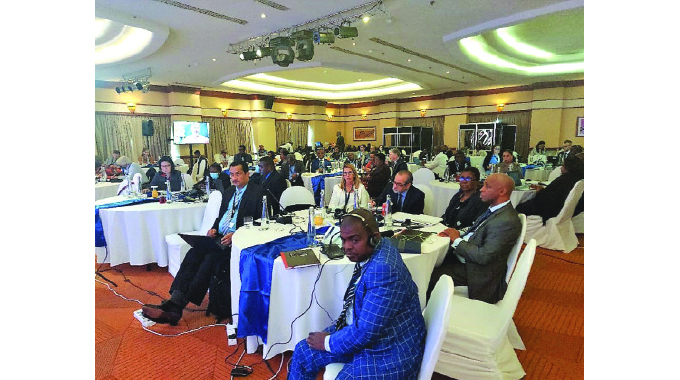
Leonard Ncube, Victoria Falls Reporter
THE 78th session of the Executive Committee of the African Parliamentary Union (APU) kicked off in Victoria Falls amid calls for member states to be vigilant in fighting violent extremism and global terrorism.
The United Nations (UN) estimates that violent extremism is costing African countries US$97 billion each year.
The resurgence of unconstitutional changes of government, the expanding threat of terrorism and violent extremism across the continent, including the influx of foreign terrorist fighters, private military companies and mercenaries, the proliferation of armed groups, as well as transnational organised crime, continue to negatively impact the peace, security, sovereignty and territorial integrity of African states.
The African Union (AU) has noted that terrorism increased on the continent from 2011, with the Libyan crisis. This opened the way for the arrival of foreign mercenaries in the Sahel and an influx of terrorist organisations defeated in the Middle East.
Terrorism has since spread to other parts of the continent. From Libya to Mozambique, Mali, the Gulf of Guinea in West Africa, Somalia, the Sahel, the Lake Chad Basin and eastern DRC, the terrorist contagion continues to grow.
In her welcome remarks yesterday, the president of the Zimbabwe Senate Cde Mabel Chinomona, who is also vice president of the executive committee representing Southern Africa, said the meeting is taking place at a time when an increasing number of African countries are facing the threat of terrorism.
“I would like to emphasise the urgency of ending extremism. While it is pleasing that Africa has made gains towards the Sustainable Development Goals (SDGs), the impact of extremism has potential to reverse this progress,” she said.
“It is therefore urgent that member states enforce APU resolutions to address the risks posed by terrorism. Terrorism and violence find a breeding ground in negative circumstances such as human rights violations and armed conflict.”
Cde Chinomona, who was elected vice president at the last APU conference held in 2020 in Djibouti, said hosting the event in Zimbabwe, particularly in Victoria Falls, is ideal as the city represents tolerance and diversity through the natural heritage and strategic location on the horn of Zimbabwe bordering with Zambia, Botswana and Namibia.
Zimbabwe won the bid to host the APU session following a visit by APU secretary general Mr Idi Gado Boubacar in May to assess facilities and he was satisfied with the conference facilities in Victoria Falls.
During his visit he signed APU Memorandum of Understanding with Parliament of Zimbabwe to formalise Zimbabwe’s commitment to host this particular event.
Cde Chinomona said the risk of terrorism emerges from multi-layered social, economic and political issues such as unresolved internal conflicts, poverty and inequalities, exclusion, and lack of the rule of law.
She said the scourge of terrorism has led to destruction of lives and infrastructure, a reduction in domestic investment and a fall in economic activities.
“The availability of illegal small arms and light weapons and organised crime across borders provide a fertile environment for terrorists’ activities and increasing terrorist attacks represent perhaps the most significant impediment to the goal of achieving a conflict-free continent,” said Cde Chinomona.

She implored African parliaments to ensure that their governments tackle issues of poverty and inequalities which will in turn help discourage youths from joining terrorist activities.
“I am convinced that this venue is ideal for this meeting which represents the full diversity of the continent of Africa. We have to create an environment in which terrorism does not enjoy sympathy and support,” said Cde Chinomona.
“This we can be achieve through addressing terrorism drivers and incentives for youth recruitment. The APU platform is conducive for us to share the African heritage of open, equitable, and inclusive societies in which extremism cannot thrive.”
The scourge of terrorism especially in West Africa and Covid-19 are the major challenges affecting African parliaments.
Cde Chinomona urged APU members to show commitment in achieving peace and stability in Africa by doing more in their contribution to address the scourge of terrorism.
The AU established joint forces to fight terrorism, such as AMISOM/ATMIS in Somalia, the Joint Multinational Force in the Lake Chad Basin, the G5 Sahel Joint Force, the Sadc mission in Mozambique (SAMIM), and bilateral initiatives in Mozambique.
The Union also reactivated legal instruments to combat terrorism, such as the Plan of Action on the Prevention and Combating of Terrorism adopted in 2002, the operational framework of the OAU Convention on Combating Terrorism adopted in 1999 and its Protocol adopted in 2004, the Johannesburg Declaration on the initiative to silence the guns, and the AU Roadmap on Practical Measures to Silence the Guns in Africa by 2030. — @ncubeleon



 Online Reporter