Online Reporter
LOS ANGELES — The most-watched Academy Awards ceremony ever was a lavish affair in which Titanic won 11 Oscars.
Since then, viewing figures have plummeted.
But why?
Whatever treats are in store at this year’s Academy Awards, it’s safe to assume that none of them will involve an enormous Kodiak bear.
Things were different in 1998.
The industry’s confidence was demonstrated by Celine Dion and Michael Bolton belting out power ballads.
The hip young stars and screenwriters of Good Will Hunting, Matt Damon and Ben Affleck, brought along their mothers as dates.
And two Oscar-nominated Rose Dawsons — 22-year-old Kate Winslet and 87-year-old Gloria Stuart — sat side-by-side.
Their best actress and best supporting actress nods were just two of the 14 nominations racked up by James Cameron’s Titanic — it went on to win 11 — so when Cameron waved his best director statuette, and shouted, “I’m the king of the world!”, he had a point.
This was the climax of the most-watched Oscar ceremony ever: 57 million people in the US tuned in to see the glamour and excess live on ABC.
As evidence of what a pop cultural event it was, that was 4.5 million more viewers than watched the finale of hit sitcom Friends in 2004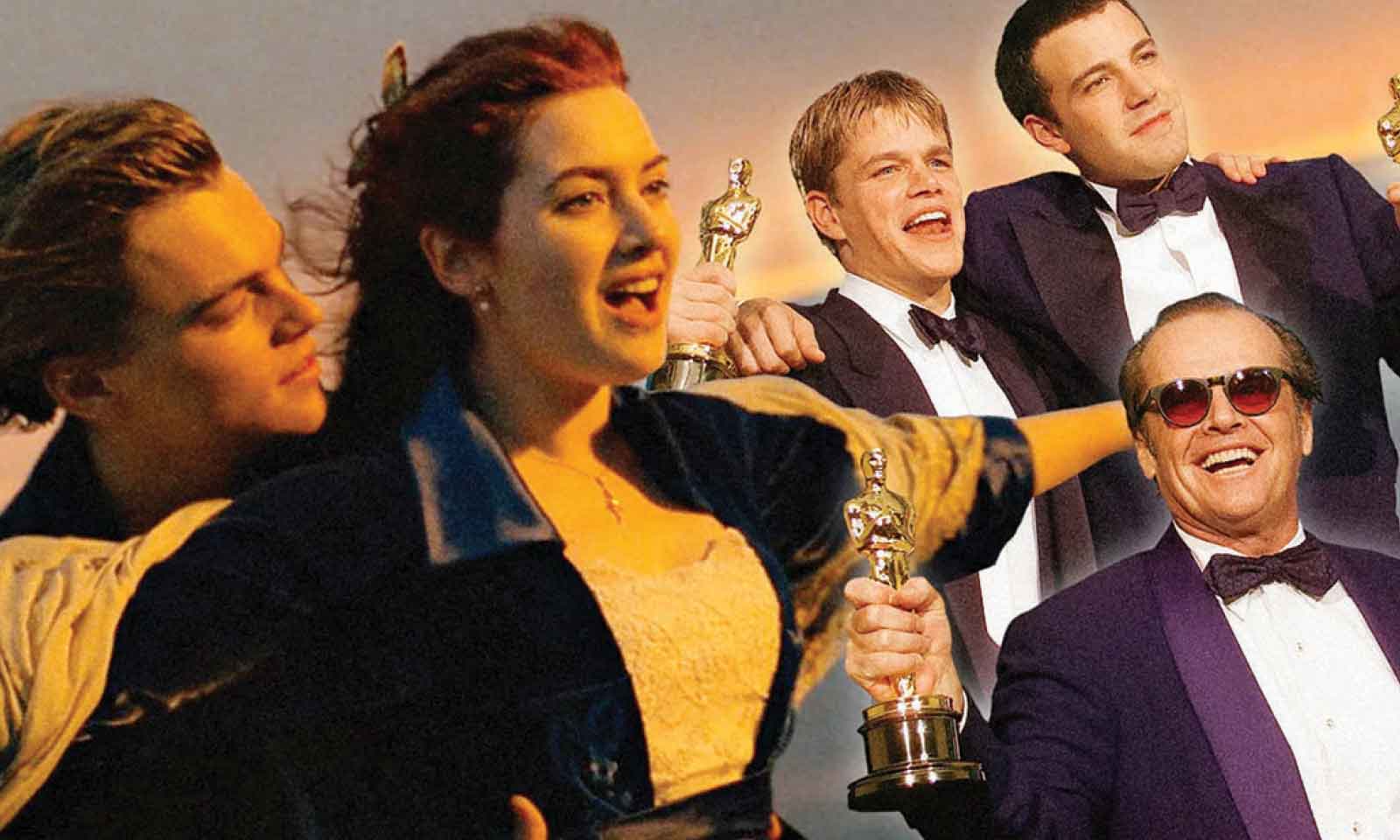
But in subsequent years the Academy Awards’ viewing figures have sunk like a ruptured transatlantic liner.
In 1999, 46 million people watched. The numbers hovered between 30 million and 40 million in the early 2000s, but they plummeted after that: 27 million in 2018, 24 million in 2020, hitting 20 million for the first time in 2018, and reaching an all-time low of 10 million in the Covid-blighted year of 2021.
Last year, the figure was 20 million again – roughly a third of what it was when Cameron reigned supreme.
Film journalist Stephanie Bunbury tells the BBC that there are several factors behind the tumbling figures: a “dwindling interest in cinema”, the “shift away from appointment [TV] viewing” brought about by streaming, and “the utter naffness of the event itself”.
A DREAM OSCARS FILM
Still, one Bart the Bear-sized reason why 1998’s event was so much more popular than recent ones is that Titanic was an extraordinary, record-breaking hit.
The first film to rake in more than US$1bn, it stood as the highest grossing film ever made until it was toppled by another of Cameron’s successes, Avatar, in 2009.
Tim Robey, the author of Box Office Poison: Hollywood’s Story in a Century of Flops, tells the BBC that viewers were drawn to 1998’s Oscars because Titanic was the very opposite of a flop.
“Titanic had the massive clout of being, at the time, the biggest film ever made, the biggest commercial juggernaut ever to be up for the Oscars. And it was just so widely adored: people had been back to see it again and again and again, so they wanted to see it win those awards. There was a sort of ‘victory lap’ component to it.”
In some ways, Titanic was the Academy’s dream film.
“It was a gigantic studio hit that became a global sensation,” Michael Schulman, the author of Oscar Wars: A History of Hollywood in Gold, Sweat, and Tears, tells the BBC, “but it had the prestige of an Oscar movie, plus the technical prowess to win most of the craft categories.”
THE BIG POST-MILLENNIAL SHIFT
Nowadays . . . not so much. In the ‘90s, the global box office for all of the best picture winners combined
was nearly US$5bn, whereas
in the 2010s, that figure had dropped to US$2bn.
While we’re looking at stats, it’s worth noting that, in the 1990s, many Oscar winners didn’t just make a fortune, but they cost a fortune to make.
The average budget for a best picture winner in that decade was US$50m.
In the 2010s, the average had fallen to US$20m.
The 2009-2012 best picture winners – Slumdog Millionaire, The King’s Speech and The Artist — all cost around US$15m.
And when in 2010 the best picture prize went to Kathryn Bigelow’s The Hurt Locker — budget US$15m, gross US$50m — rather than her ex-husband’s Avatar — budget US$237m, gross almost US$3bn — the writing was on the wall.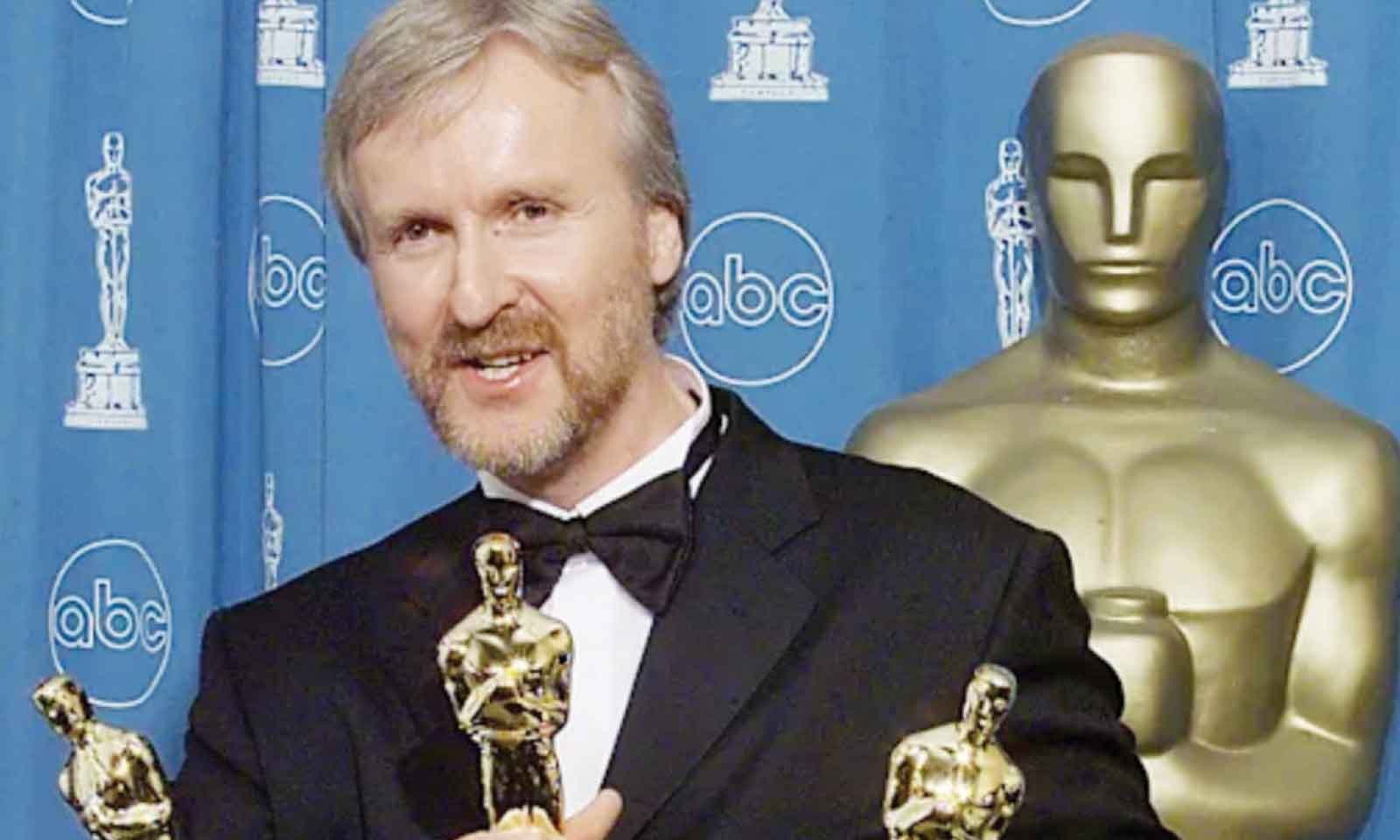
The Oscars were no longer about expensive mainstream hits — and the ceremony no longer attracted expansive mainstream audiences.
Last year’s winner, Anora, had a budget of just US$6m and a global gross of US$58m. When the budgets and the box-office takings of best picture winners diminish, it seems, the ceremony’s viewing figures diminish, too.
What has happened since 1998 is that Hollywood studios have put their money into superhero adventures, fantasy epics, video game-adaptations and other crowd-pleasing blockbusters — and those aren’t the kind of films that do well in awards season.
It’s now extremely unusual for the public and the Academy to agree on what qualifies as a great film.
The Lord of the Rings: The Return of the King was a megabudget blockbuster which grossed more than US$1bn and then won best picture in 2004.
But it would be two decades before another worldwide box-office bonanza with a six-figure budget, Oppenheimer, won the top Oscar.
“Movies have become more bifurcated between the ‘prestige’ films that tend to win Oscars and the franchise-driven popcorn movies that rarely do,” says Schulman, “while mid-budget movies like Forrest Gump or The Silence of the Lambs, which used to align the Oscars with popular taste, have increasingly dried up.” — BBC