Online Reporter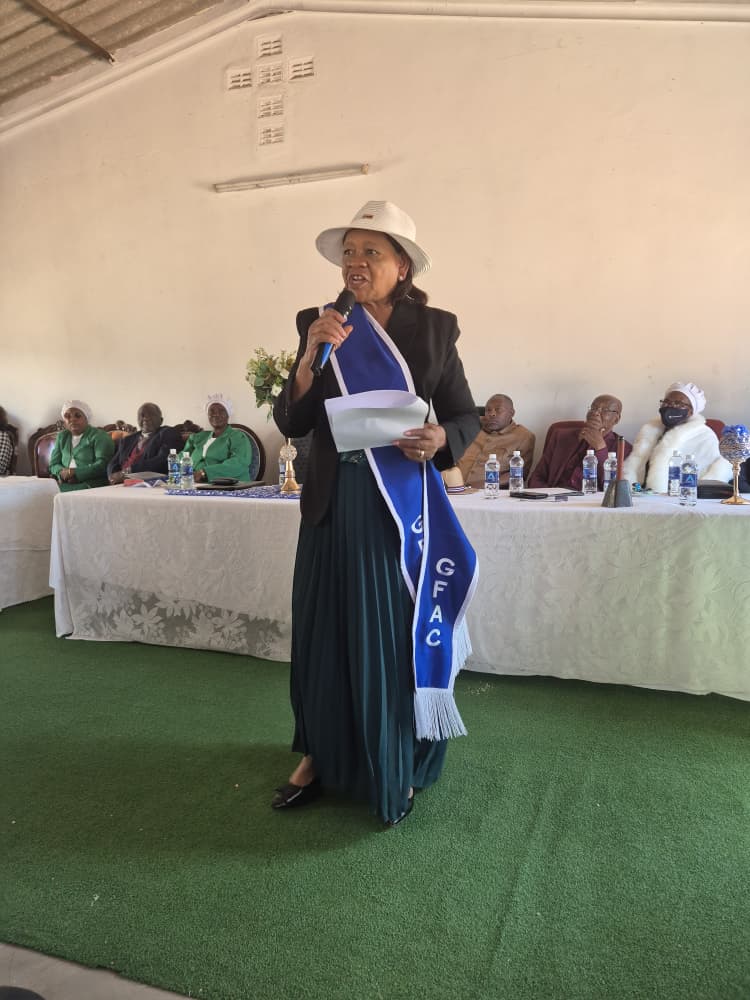
Mthabisi Tshuma, [email protected]
WOMEN have been challenged to take charge of their economic future by turning the resources around them into thriving businesses that can uplift families and strengthen communities.
The call was made by the Minister of Environment, Climate and Wildlife, Dr Evelyn Ndlovu, during the General Foundation Apostolic Church in Christ (GFACC) International Women’s Conference held in Mangwe District last week.
Held under the theme “Arise, Shine and Take Your Position” drawn from Isaiah 60:1, the conference brought together women from Zimbabwe, Botswana and South Africa. Delegates also travelled from all 10 provinces of
Zimbabwe, creating a platform that blended faith, fellowship, leadership and practical discussions on economic empowerment.
While the gathering focused on spiritual growth, the message that echoed throughout the conference was clear: women must become active participants in building their own prosperity rather than waiting for opportunities to come to them.
Among those who attended were former Mangwe Member of Parliament Cde Hlalani Mguni, Mangwe Proportional
Representation Councillor Cde Simphiwe Mguni and other Zanu-PF leaders from the district, who joined
participants in discussions centred on development, community empowerment and nation building.
Before addressing delegates, Dr Ndlovu planted a tree and donated 35 fruit trees to the church to establish an orchard.
The gesture carried a powerful message.
Just as a tree takes time to grow before it bears fruit, she said women must invest in projects today that will secure their future and that of generations to come.
Addressing hundreds of women gathered at the conference, the Minister urged participants to stop viewing limited resources as barriers to success.
Instead, she encouraged them to start with whatever they have and grow gradually.
“As women, I urge you to start businesses with whatever resources you have, and a good example is women I recently visited in Mashonaland East who have used imukando or ukutshayelana imali to progress from buying household items to investing in taxis and trucks for logistics businesses,” she said.
Dr Ndlovu said women across the country have repeatedly demonstrated that small beginnings can lead to major achievements when combined with determination, discipline and teamwork.
She reminded delegates that Government has introduced several programmes designed to support economic empowerment at grassroots level.
Among these are the Presidential Sasso Chicken Project, Village Business Units and the Presidential Pig Scheme, initiatives aimed at creating opportunities for rural households to generate income and improve food security.
In a move that was warmly welcomed by delegates, the Minister pledged direct support to women attending the conference.
“I pledge to support the women here at the conference with Presidential chickens,” Minister Ndlovu announced.
The announcement drew applause from participants, many of whom view poultry production as an accessible business that can quickly generate income while providing food for families.
The Minister also challenged communities to make productive use of the land available to them.
She said many families possess adequate land to start meaningful projects but often leave it underutilised while searching for opportunities elsewhere.
“The land that we have at our homes is enough for us to have meaningful projects which can be a lifeline to many families through providing a consistent source of income,” she said.
To demonstrate what is possible, Dr Ndlovu pointed to a young entrepreneur from Bango Ward in Mangwe who is using communal land to grow horticultural crops that are sold in Plumtree, Maphisa and surrounding areas.
The success of such projects, she said, proves that small-scale agriculture can be transformed into a viable business capable of creating jobs and improving household incomes.
She stressed that women do not need large amounts of capital to begin their entrepreneurial journey.
Agriculture, retail businesses and service-based enterprises remain viable opportunities for those willing to start small, manage their resources wisely and reinvest profits back into their ventures.
According to the Minister, true empowerment comes when women move beyond dependence and become producers, employers and business owners.
“Arise, shine, take your position, build your family, build your business, build your community and build our nation,” she told the gathering.
Throughout her address, Dr Ndlovu repeatedly linked women’s economic empowerment to broader national development.
She said women play a critical role in addressing poverty, unemployment and food insecurity, particularly in rural districts where economic opportunities are often limited.
By starting businesses, embracing farming projects and creating employment opportunities, women can contribute significantly to the growth of local economies.
The Minister also encouraged women to work together through co-operatives and community-based enterprises.
She urged them to seek training opportunities, improve their business skills and explore markets beyond their local communities.
At the same time, she emphasised the importance of protecting the environment while pursuing economic development.
Projects such as orchards, climate-smart agriculture and sustainable land use practices, she said, offer opportunities for income generation without compromising natural resources.
Dr Ndlovu said women must stop waiting for perfect conditions before taking action.
Instead, they should use the resources already available to them and begin building the future they envision.
According to the Minister, success often belongs to those who are prepared to start small, remain focused and grow steadily over time.
As the conference drew to a close, delegates left with more than spiritual encouragement.
Many departed with new ideas for income-generating projects, renewed confidence in their abilities and practical opportunities for support.
Others spoke of forming partnerships, strengthening existing businesses and exploring new farming ventures inspired by discussions at the gathering.
By the end of the conference, the message was unmistakable: women have the power to transform their lives, their families and their communities.
The challenge now, delegates were told, is to rise, take their position and turn those aspirations into action.