Online Reporter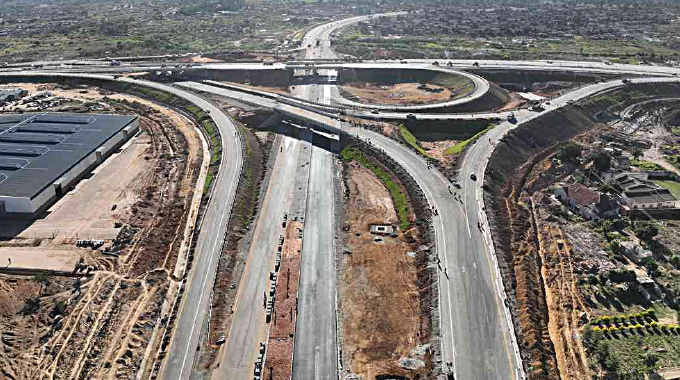
Gibson Mhaka, Zimpapers Politics Hub
ON 17 August, 2024, Zimbabwe, under the leadership of President Mnangagwa, assumed the Chairmanship of the Southern Africa Development Community (SADC) at the 44th SADC Summit of Heads of State and Government held in Harare.
Today, 17 August, 2025, President Mnangagwa will pass on the baton to his Madagascan counterpart, Andry Rajoelina, at the 45th SADC Summit of Heads of State being held in Madagascar.
During his one-year tenure at the helm of the regional bloc, President Mnangagwa registered numerous milestones that gained acclaim within the region and beyond.
Notably, he continued to call on Member States to prioritise food security and push for infrastructure development.
This focus on food security and infrastructure development became a hallmark of both Zimbabwe and SADC’s growth and development agenda.
It is important to note that during his tenure as SADC Chair, President Mnangagwa’s consistent emphasis on food security and infrastructure development became more than just a policy position, it evolved into a defining part of his legacy.
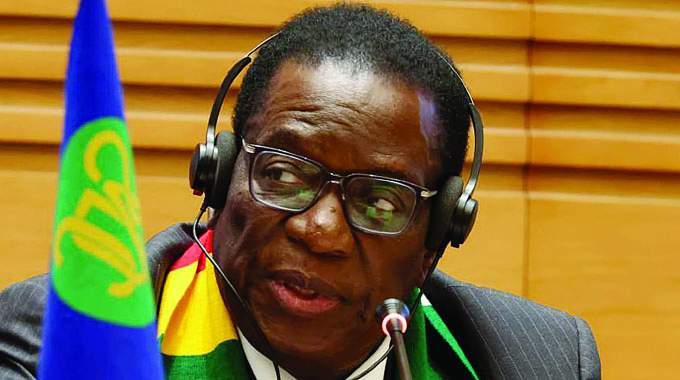
As he prepares to pass on the baton, his legacy is etched in the memories of fellow Heads of State as a blueprint for sustainable growth, showcasing a forward-thinking vision that aims to build a more resilient and self-sufficient Southern Africa.
This focus has set a clear precedent for future SADC leaders, underscoring the importance of foundational pillars like food security and infrastructure development for the region’s prosperity. These themes, which also reflect a national agenda that Zimbabwe has been pursuing, became a hallmark of his tenure.
Soon after assuming office as SADC Chairman, President Mnangagwa urged members of the regional bloc to prioritise food security, highlighting that Zimbabwe was on the right trajectory to achieve this goal.
In an interview with ZBC News from his Pricabe Farm in Kwekwe on 18 August, 2024 — just a day after he assumed the Chairmanship — President Mnangagwa said Zimbabwe had developed a model of agriculture that effectively addressed food security at the household level.
“I believe that the ambition of every single country is the ability to feed itself. We have developed a model of agriculture which addresses food security at household level in the country.
“Above that, there is commercial agriculture which we are supporting and we are doing our best to make sure we progress as a country.
“Zimbabwe is on the correct trajectory in terms of attaining food security forever,” he said then.
This message was further amplified a week later on the international stage.
Addressing the SADC Council of Ministers and Ambassadors on the sidelines of the Tokyo International Conference on African Development in Japan on 27 August, 2024, then Minister of Foreign Affairs and International Trade, Frederick Shava, briefed them about the just-ended 44th SADC Summit.
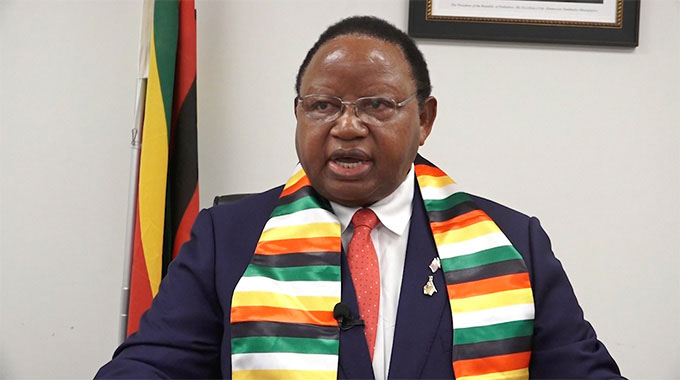
Echoing the sentiments of President Mnangagwa, Minister Shava also emphasised the issue of food security, stating that Zimbabwe would give it special attention.
“Having attended to all this, the summit addressed the way forward from the theme and outcomes of the SADC Summit and the priorities of the region are clear.
“Zimbabwe will give special attention to issues of food security and restoration of regional peace and stability during our chairmanship,” he said.
This same emphasis on food security was reiterated on 26 March, 2025 as SADC took steps to enhance its food security strategies.
Key stakeholders convened in Harare for the SADC Regional Vulnerability Assessment and Analysis programme, where the chairperson of the regional Vulnerability Assessment Committee (VAC) and Director-General of the Food and Nutrition Council, Dr George Kembo, emphasised the importance of providing early warning information to inform key policy decisions.
“Our focus at SADC is shifting towards strategies that address food insecurity, rather than merely identifying numbers.
“We want to recommend collaborative strategies that Member States can implement to reduce food insecurity.
“The seasonal analysis has indicated a potentially good season, so with political will, we believe the region can overcome the hunger challenges it faces,” he said.
Dr Kembo’s statements and the SADC’s new strategic focus on food security were a direct response to President Mnangagwa’s call to prioritise the issue as the regional bloc’s Chairman.
This initiative demonstrates how the President’s high-level vision is being translated into practical, collaborative strategies at the operational level, with the goal of building a more resilient and food-secure Southern Africa.
President Mnangagwa’s leadership at SADC also placed a strong emphasis on achieving regional food self-sufficiency.
He advocated for a scaling up of transformative agriculture and food systems, urging Member States to adopt robust climate mitigation strategies and resilience-building mechanisms.
This approach directly mirrored Zimbabwe’s own policies, such as the Pfumvudza/Intwasa farming model, a climate-proofed conservation farming technique.
The goal was to ensure the region could feed itself and reduce dependency on external food sources, especially in the face of climate change-induced disasters.
As SADC Chairman, President Mnangagwa played a pivotal role in taking the Pfumvudza/Intwasa concept globally, showcasing its success in Zimbabwe as a blueprint for sustainable, climate-proofed agriculture.
This has helped the model gain significant regional, continental, and global acclaim.
This commitment to a more self-reliant SADC also extended to robust infrastructure.
Realising that Zimbabwe’s central geographic location makes it a crucial road corridor, facilitating the movement of goods, people, and services across the region, President Mnangagwa recognised that infrastructure is the foundation for economic development.
The commissioning of the US$88 million state-of-the-art Trabablas Interchange stands as a testament to this unwavering commitment.
This monumental project, forming a crucial part of the North-South Corridor, is not merely a local achievement but also a vital regional trade artery, seamlessly connecting Zimbabwe with SADC Member States and the broader African continent.
Among the many transformative projects commissioned by President Mnangagwa, which serve as examples for the SADC region, are Hwange Units 7 and 8, which have significantly reduced power outages across the country, thereby contributing to regional energy stability.

Further demonstrating this national transformation, the continuing development of Mt Hampden, which is home to the New Parliament, into Zimbabwe’s new administrative capital is progressing steadily.
This has been aided by the recent completion of eight state-of-the-art villas at the Diplomatic Village, which reflects the Government’s commitment to world-class urban infrastructure and will facilitate diplomatic relations crucial to SADC’s work.
President Mnangagwa also consistently highlighted that energy, water, and transport infrastructure are the backbone of industrialisation and regional integration.
He urged Member States to accelerate projects related to cross-border energy, transport infrastructure, and the diversification of power sources, with a particular emphasis on renewables like solar and wind.
His focus was on creating a more connected and efficient region, thereby facilitating trade and economic growth.
It is clear that President Mnangagwa’s Chairmanship provided a platform for Zimbabwe to showcase its own agricultural and infrastructure initiatives on a regional scale.
By advocating for these policies at the SADC level, Zimbabwe positioned itself as a leading example in agricultural production and infrastructure development.
This emphasis has encouraged regional dialogue on how to build a more resilient and self-sufficient Southern Africa, with a clear blueprint for future leaders to follow.
The legacy of his tenure is therefore seen as a push for concrete, foundational changes that will outlive his chairmanship.
Ultimately, during his one-year tenure at the helm of the regional bloc, President Mnangagwa registered numerous milestones that gained acclaim within the region and beyond.
Among the key highlights, he continued to call on Member States to prioritise food security and push for infrastructure development, themes that defined his chairmanship and are set to outlive his tenure.