

 Online Reporter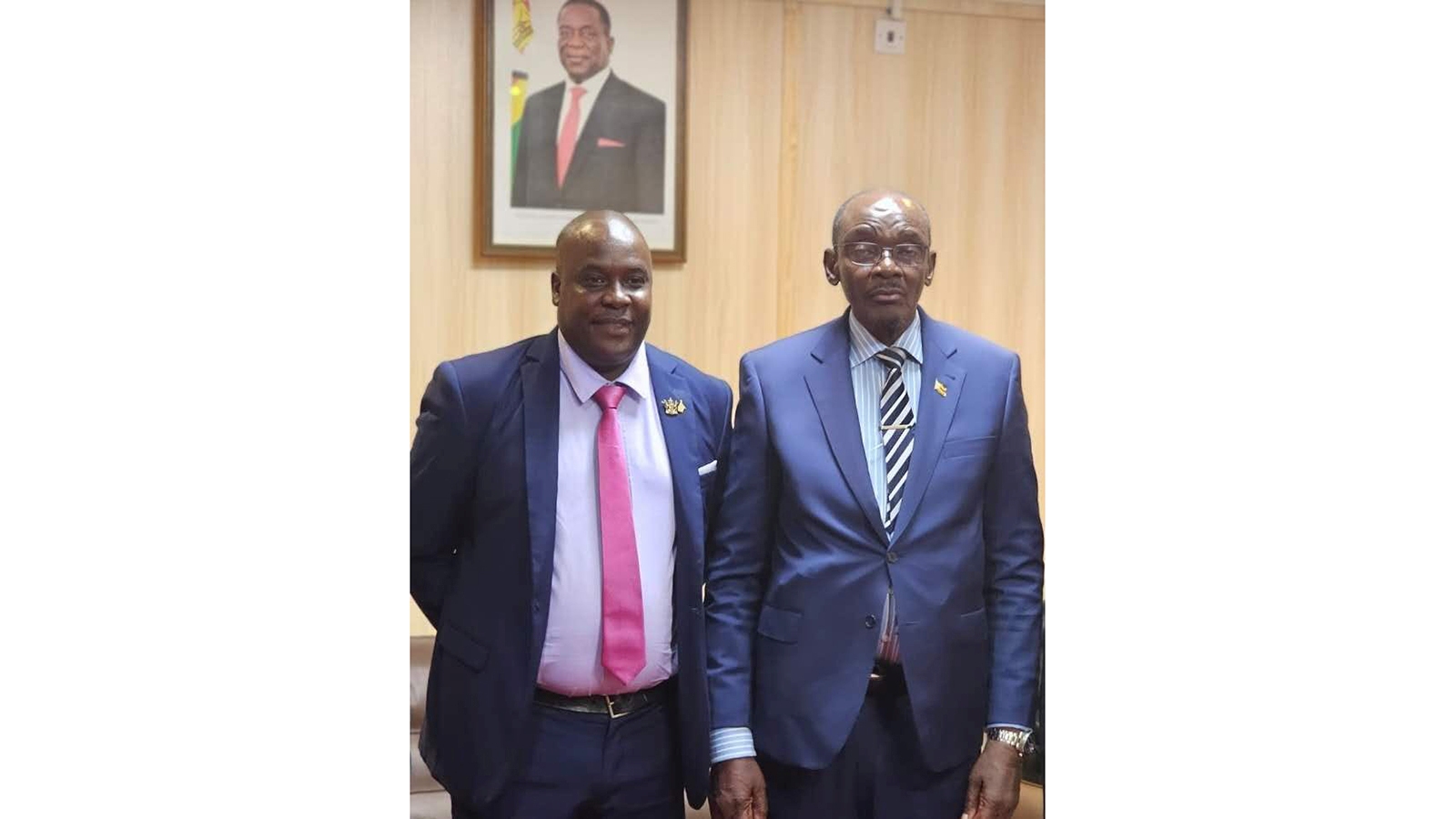
Kuda Bwititi
Zimpapers Politics Hub
IN a high-level engagement aimed at deepening strategic cooperation, the Asia-Africa Cooperation Centre has positioned itself as the critical nexus between Zimbabwe’s national development goals and China’s global infrastructure initiative.
This follows a meeting between the African Representative of the Centre, Mr Tawanda Dozva, and the Vice President of Zimbabwe, Honourable Kembo Mohadi, in Harare recently.
The discussions focused on operationalising the alignment of Zimbabwe’s Vision 2030 with the framework of China’s Belt and Road Initiative (BRI) through the platform of the Asia-Africa Centre.
In an interview with the Zimpapers Politics Hub, Mr Dozva detailed the Centre’s role as an implementation bridge.
“The operational logic we presented is one of precise matchmaking,” he said.
“The Asia-Africa Centre facilitates the flow of Chinese technology, capital and proven development experience to directly address Zimbabwe’s specific needs in line with His Excellency President Mnangagwa’s Vision 2030 blueprint.”
He emphasised the model’s focus on moving beyond raw material extraction to integrated, value-added partnership. “This is about enabling Zimbabwe to harness its own resources. It’s a partnership that builds capacity, from infrastructure and agriculture to mineral beneficiation, creating jobs and transferring skills for sustainable growth,” Mr Dozva said.
Vice President Mohadi, who expressed the Government’s full support for the deepened cooperation, highlighted key economic sectors earmarked for collaboration. He identified trade, culture, tourism, agriculture and infrastructure development as priority areas where the partnership could accelerate progress towards achieving upper-middle-income status by 2030.
The engagement comes against the backdrop of Zimbabwe’s prolonged economic challenges, which officials attribute partly to decades of foreign sanctions. Analysts view this partnership as a strategic pivot towards non-Western allies, consistent with the Government’s “Engagement and Re-engagement” foreign policy.
The Asia-Africa Centre’s proposed collaboration model addresses Zimbabwe’s most pressing constraints. The nation, despite possessing vast mineral resources like lithium and platinum and fertile agricultural land, has been hampered by ageing infrastructure, power supply shortages to industries, and technological gaps.
Past successful projects, such as the expansion of the Victoria Falls International Airport and the Kariba South Hydroelectric Power Station, were cited as foundational examples of the bilateral partnership. Future projects under the BRI framework are expected to focus on further transportation networks, energy solutions, and agricultural modernization.
When questioned on the nature of the financing and cooperation, Mr Dozva drew a clear distinction with historical models. “Our cooperation is based on equality, mutual benefit, and respect for sovereignty. It is about ‘teaching a man to fish.’ The goal is to leave behind not just a project, but enhanced local capability,” he said.
The Vice President’s office confirmed that the talks were constructive and forward-looking, setting the stage for more concrete project proposals and agreements to be developed through relevant ministries and the Asia-Africa Centre in the coming months.



