admin
admin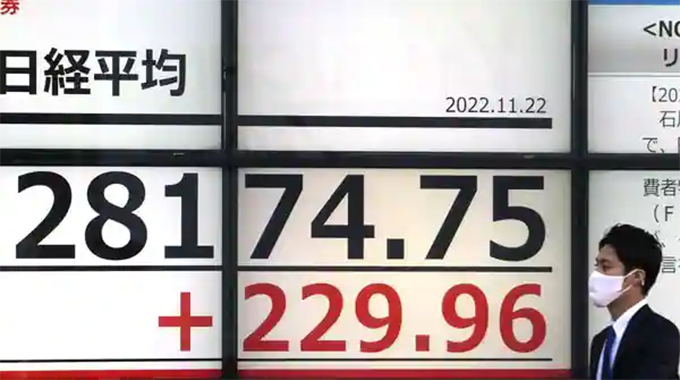
Shares extended declines in Asia as the Federal Reserve’s resolve to push interest rates higher for longer sapped appetite for risk taking.
The dollar climbed and the yuan fell as poor Chinese economic data added to downbeat sentiment in markets. While authorities have ended the Covid Zero policy that drove the weakness in China, the country is now struggling with a surge of infections.
Benchmark indexes in Japan, South Korea, China and Australia all slid Thursday, with notable falls in Hong Kong-listed technology companies. Futures contracts for the S&P 500 fluctuated after the gauge snapped a two-day rally Wednesday in a volatile session that saw shares end off their lows.
Fed Chair Jerome Powell said the central bank had a “ways to go” in its campaign to rein in inflation. Policy makers projected rates would end next year at 5,1 percent, a higher level than previously indicated and well above market projections.
“The Fed was decidedly more bearish than expected,” said Karen Jorritsma, head of Australian equities at RBC Capital Markets. “They will stay the course on inflation, making a hard landing almost a certainty.”
Treasury yields made small gains in Asia after fluctuating during the US session after the Fed’s hawkish decision and Powell’s comments. The relatively muted moves indicate bond market doubts about the Fed’s staying power in raising and holding rates higher for longer.
The Federal Open Market Committee raised its benchmark rate by 50 basis points to a 4,25 percent to 4,5 percent target range. Powell left the door open to a similar hike at the next meeting in February or a step down, while pushing back on bets for reversing course next year.
The Fed confounded those betting on a dovish meeting, and that will be good for the dollar — and bad for stocks — heading into the final stretch of 2022, according to the results of an MLIV Pulse survey of 112 investors. The yuan’s drop snapped two days of strengthening, with the downward move accelerating after industrial production and retail sales data for November fell short of economist estimates. The country also injected net 150 billion yuan in liquidity through its medium-term lending facilities, more than economists anticipated.
New Zealand government bond yields rose after the economy grew more than twice as much as economists expected in the third quarter, with the rate on 10-year debt jumping 15 basis points.
Later, policy decisions will be front and center in Europe, with the Bank of England and European Central Bank seen following the Fed with half-point hikes in rates.



 Online Reporter