admin
admin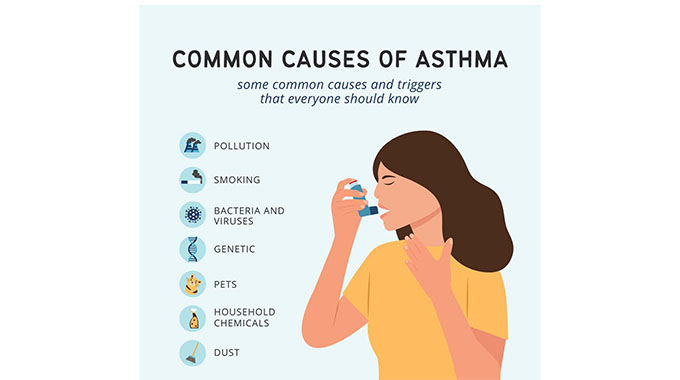
Rumbidzayi Zinyuke-Health Buzz
When I gave birth to my twin daughters in 2007, I had a complicated delivery. Just when I had delivered the first baby, my doctor called out to the nurse that the other one had turned.
She was in a breech position and he could not reach her no matter how hard he tried.
He told me to prepare for surgery should everything fail.
I was definitely not prepared to have one child naturally then be operated on for the other. My body could not take it.
After 12 long minutes, my girl came, feet first. But she was not breathing!!
After what seemed like hours, I heard her small cry but she was weak and was whisked away to the nursery where she stayed in an incubator for six days.
A month after we got home, the twins suddenly developed flue-like symptoms which quickly degenerated into pneumonia.
We were admitted for another week where they went under the nebuliser for an hour a day.
They got better and we went home.
When they turned one, we noticed that something was not right with twin two. She would get tired easily whenever she played and she would cough so much, sometimes until she vomited.
Whenever they got the flue, twin one would quickly respond to medication but for twin two, it would be weeks before the mucus stopped flowing down her nose.
We were in and out of hospital and when she was four, she was finally diagnosed with Exercise Induced Asthma (EIA).
At least the medication she got worked and she could play with others but we were always extra careful to make sure she did not over exert herself.
Of course, she had attacks here and there which would land us in hospital and under the nebuliser. But as she grew, the attacks became fewer and far apart until they stopped at age 12.
Now, whenever she exercises or over-exerts herself, she can have a bout of coughing but she has not had a serious attack in four years.
According to my child’s doctor, the cause of EIA (also referred to as exercise-induced bronchoconstriction) is not fully understood but it can happen to anyone.
It happens when the airways narrow or squeeze during hard physical activity and causes shortness of breath, wheezing, coughing, chest tightness, fatigue during exercise among other symptoms.
Some factors thought to be involved include allergies that run in the family, parents with asthma, some types of airway infections at a very young age, exposure to environmental factors, such as cigarette smoke or other air pollution.
As alluded before, it remains unclear exactly what causes EIA but studies have shown that dry air was a more likely culprit.
They say breathing in cold, dry air dehydrates the air passages. This causes them to constrict, reducing air flow. Other factors, such as chlorine or other fumes, can irritate the lining of the airways and contribute to breathing difficulties as well.
If not treated, exercise-induced bronchoconstriction can result in serious or life-threatening breathing difficulties, particularly among people with poorly managed asthma. It can also result in lower quality of life because of inability to exercise.
For my daughter, there was no history of asthma or allergies in my family or her father’s. Maybe her complicated birth or the pneumonia she suffered played a major part in her condition.
Luckily, she was diagnosed early and got treatment.
But for many, EIA frequently goes undiagnosed. Studies show that approximately 9 percent of individuals with EIA have no history of asthma or allergy.
It states that EIA is usually provoked by a workload sufficient to produce 80 percent of maximum oxygen consumption. However, in severe asthmatics even minimal exertion may be enough to produce symptoms.
For this reason, many young patients may avoid vigorous activity with damaging consequences to their physical and social well-being.
And like me, parents may be reluctant to allow their children with asthma to participate in athletics, and teachers may fear taking responsibility for a child’s severe attack.
While children with EIA are at risk when they take part in physical activity, those with asthma are more at risk when they do take part in exercises.
In Zimbabwe and Africa in general, asthma remains an underdiagnosed and often under-treated which may not be discovered for years.
Childhood asthma can cause irritating daily symptoms that interfere with play, sports, school and sleep. In some children, unmanaged asthma can cause dangerous attacks.
Unfortunately, childhood asthma cannot be cured, and symptoms can continue into adulthood. But with the right treatment, symptoms can be kept under control to prevent damage to their growing lungs.
The most common treatment for asthma is to use an inhaler, which delivers medication directly to the lungs.
Inhalers can help control the disease and enable people with asthma to enjoy a normal, active life.
These include bronchodilators (such as salbutamol), that open the air passages and relieve symptoms, and steroids (such as beclometasone) that reduce inflammation in the air passages, which improves asthma symptoms and reduces the risk of severe asthma attacks and death.
Fortunately for me, my daughter did not have to use an inhaler but for most children, using an inhaler can be difficult, especially during emergency situations.
Asthma can cause a number of complications, including severe attacks that require emergency treatment or hospital care, permanent decline in lung function, missed school days or falling behind in schoolwork, poor sleep and fatigue.
Experts say it is important to prevent triggering an asthma attack and this can be done through careful planning and avoiding triggers, limiting exposure to asthma triggers and avoiding the allergens and irritants that trigger asthma symptoms.
Exposure to tobacco smoke during infancy is also a strong risk factor for childhood asthma, as well as a common trigger of asthma attacks.
Even though exercise can trigger an attack, it is important for children with asthma to be active as long as their asthma is well controlled because regular physical activity can help the lungs work more efficiently.
The child should also maintain a healthy weight since being overweight can worsen asthma symptoms, and put them at risk of other health problems.
As is the case with many diseases, there is a lot of stigma associated with asthma and there is need to raise community awareness to reduce the myths and stigma associated the disease.
There has been a response to the problem presented by asthma among children locally and at international level.
In 2019, Zimbabwe was among six countries that participated in a study to assess the prevalence as well as control of asthma in children aged between 12 and 14 years.
Asthma is also included in the World Health Organisation (WHO) Global Action Plan for the Prevention and Control of NCDs and the United Nations 2030 Agenda for Sustainable Development.
The health body has been taking action to extend diagnosis of and treatment for asthma in a number of ways.
“The WHO Package of Essential non-communicable Disease Interventions (PEN) was developed to help improve NCD management in primary health care in low-resource settings. PEN includes protocols for the assessment, diagnosis and management of chronic respiratory diseases (asthma and chronic obstructive pulmonary disease), and modules on healthy lifestyle counselling, including tobacco cessation and self-care,” the WHO said.
With more interventions, more children with asthma, exercise induced asthma and other respiratory conditions will be identified and receive the correct treatment.
Feedback: [email protected]


 Online Reporter