malvernmugadzikwa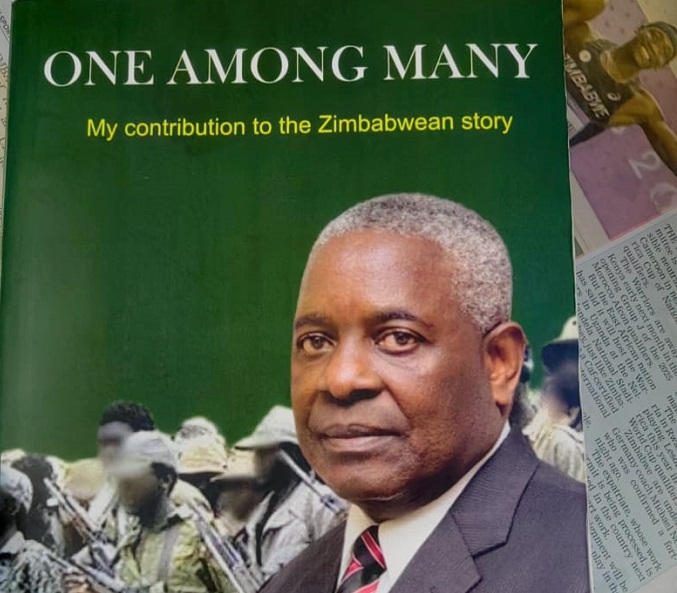
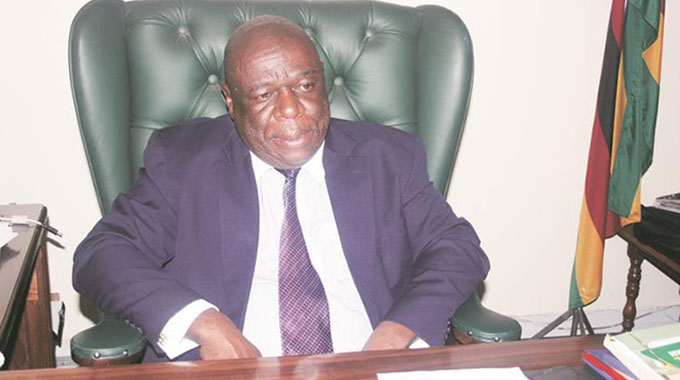
FRIDAY, August 9, marked 48 years to the day Rhodesian security forces massacred innocent, unarmed civilians at the Nyadzonia camp. The former Central Intelligence Organisation (CIO) Director-General, HAPPYTON BONYONGWE, was there when the attack happened. In his autobiography that will be published soon by Weaver Press, “One among Many: My contribution to the Zimbabwean story”, exclusively gleaned by The Sunday Mail, he recounts, in granular detail, what happened on the fateful day. In commemoration of Heroes Day tomorrow, we reproduce below excerpts from the book.
*************************
NYADZONIA was located on a curve of the Nyadzonia River, which described the letter “C”. The camp, the Command Section, barracks and kitchen were in the cusp of the C. Across the river were settlements for refugee families that had fled from the war in Rhodesia. The clinic was also across the river, as were villages of Mozambicans, although these were some distance away.
We were waiting to go for proper military training. It was difficult to feed the thousands who were at Nyadzonia and so the camp was officially classified as a refugee camp.
The United Nations High Commissioner for Refugees and other humanitarian organisations used to visit the camp and I believe that they rendered whatever support they could.
On such occasions, we would behave as civilians in the true sense, not marching or chanting slogans at all. Such visits were hilarious.
While it was true that the majority of the people who were at Nyadzonia wanted to be trained to fight against the Rhodesian state, it was not a military base, unlike Chimoio. Only some rudimentary training took place, to keep people occupied.
A small Frelimo detachment of perhaps five camaradas, with some AK-47s, was at Nyadzonia.
Trained Zimbabwean comrades only visited from time to time, and, therefore, no Zimbabwean was armed as such.
The Rhodesians were worried that if all the potential guerrillas at Nyadzonia were to be trained and deployed to the front, they would be finished — Rhodesia would fall.
One former comrade, Morrison Nyati, who had passed through Nyadzonia . . . turned against the struggle.
Nyati joined the notorious Selous Scouts and led the Rhodesians to Nyadzonia.
The Rhodesians, thus, had all the intelligence they needed for the attack.
This was both human intelligence from Nyati and others like him and aerial reconnaissance and photography as well.
This resulted in mass murder at Nyadzonia by the Rhodesians.
The gruesome attack on the Nyadzonia Refugee Camp, on August 9, 1976 is detailed in the book by Lieutenant-Colonel Ron Reid-Daly, who was the commander of the Selous Scouts, a notorious Rhodesian unit that disguised itself as guerrillas and in the process committed untold atrocities against the masses of the people.
The Rhodesians entered Mozambique with Ferret scout cars and Mercedes-Benz Unimogs mounting machine guns, cannons and all kinds of weapons of war to attack and kill us.
They entered through the Forbes Border Post, took the turn north from the Mutare-Beira road, onto the Catandica-Tete road, then crossed the Pungwe Bridge and came east to Nyadzonia on the dirt road to the camp.
They destroyed the Pungwe Bridge to prevent Frelimo forces from Chimoio from catching them while they were still at Nyadzonia or to follow up once they were escaping back into Rhodesia through the Eastern Highlands, the area where I grew up. The Rhodesian vehicles were painted in Frelimo colours and the soldiers wore Frelimo uniforms.
They flew Frelimo flags and markings to fool anyone who may have been inquisitive. Their faces were painted black to conceal the white faces among them.
Meanwhile, for us who were at Nyadzonia, we had no inkling whatsoever of the impending disaster. I doubt that even the Mozambicans and our commanders ever thought that the Rhodesians would enter Mozambican territory, in violation of international law, to attack an official refugee camp without trained combatants as such.
The number of Zimbabweans in the camp at that time was in the thousands. Companies which had originally been 120-strong were later increased to over 300 and all the letters of the alphabet from A to Z had been used up to name companies.
This would put the figure of comrades at Nyadzonia by the time of the attack above 8 000.
Young people were crossing the Zimbabwe-Mozambique border daily to join the liberation struggle.
The night before the attack was normal enough. We went to bed as usual after the evening sessions of singing and dancing to keep the spirits up. People would compose songs and we would sing these. They were all about the struggle.
Some of them were well-known church songs, whose lyrics would be substituted by words pertaining to the struggle for independence.
After a restful night, we were woken up on August 9, 1976 by an emergency whistle early in the morning, at just about first light.
The Rhodesian convoy stood at a distance to allow the parade ground to fill up. When one heard the emergency whistle, one’s reaction was to run to the parade square. In this case, the presence of the vehicles was read to mean that trucks had come to take us for training. The black Rhodesian soldiers were shouting out this message. No one wanted to be left behind, so everyone did their best to get to the parade square. We had never seen armoured cars; they were camouflaged in Frelimo colours anyway and, thus, we did not anticipate the danger. As the parade square filled up, the Rhodesian convoy deployed into shooting positions, covering the square. We were in the killing bag at less than 50 metres from them.
It was, I believe, a Frelimo soldier who read the situation, understood it and opened fire; the shout “varungu” (“the whites”) . . . run!” followed.
A clear bright morning darkened with thunder, smoke and fire. The earth shattered, literally, the machine guns spat fire from a distance of a few metres away, mowing down comrades. It was a massacre. One bullet would take down even up to four or five comrades. We were on a parade square, standing shoulder to shoulder, a mass of humanity.
There was blood everywhere. Those of us who were not hit in the first few minutes started running away from the Rhodesians, towards the river. We ran and ran. Below the parade square was an open football pitch, and the Rhodesians had a clear field of fire all the way to the river, over a distance of 700 metres.
The parade square, football pitch and open ground were a perfect killing ground for the machine guns. I just ran with others, with our numbers dwindling as comrades were mowed down by the bullets.
I need to mention comrades who bore the brunt of the attack.
The Front for the Liberation of Zimbabwe (FROLIZI), which had been formed by Cde Nathan Shamuyarira, donated some shiny dark green uniforms to ZANLA when FROLIZI collapsed and Shamuyarira joined ZANU.
These uniforms ended up being given to refugees in the camps in Mozambique. These uniforms were not really suitable for combat and, thus, they were brought to Nyadzonia and other refugee camps in Mozambique for those whose clothes were torn.
My own clothing, though old, was still better than what others had and, thus, I did not get the FROLIZI uniforms. Almost all who wore the FROLIZI uniforms were slaughtered. Fate can be decided on such simple issues. Even though they were unarmed, the uniformed comrades were the closest to resembling combatants and, thus, they were all picked up, notwithstanding the fact that they were just running away with all the others who were in civilian attire.
This is not to say that the Rhodesians spared those who were in civilian attire, some of which were rags, just that the FROLIZI uniform made it certain that you did not make it to the just over 700 who survived the massacre that day.
Only some 300 of the over 8 000 who were at Nyadzonia were in FROLIZI uniform. I remember a comrade, while we were at Doroi, who witnessed the burials at Nyadzonia, observing that of those who had been issued with the FROLIZI uniforms, almost all were killed.
The statistics about Nyadzonia are difficult.
Alexander Kanengoni, a comrade who was among the first group to arrive at Nyadzonia after the attack, states in his book, “Echoing Silences”, that there were over 15 000 comrades at Nyadzonia.
The river was crossed at a single point where a large tree had fallen across it, constituting a footbridge.
Coming from a landlocked country with few big rivers, many people could not swim well; hence, most tried to use the footbridge. Those who fell into the river drowned.
The Rhodesians also trained a machine gun onto the footbridge, mowing down those trying to cross. It was carnage!
My company (V Company) stood on the western side of the parade square, near the main gate, while the river was in the east.
We were closest to the Rhodesian armoured cars when they opened fire on us.
I and other comrades just ran towards the river, and I was among the last to arrive because we had the greatest distance to cover.
Whether this helped me to survive, I shall never know.
I had enough common sense when I got to the river to realise that I could not cross it at that time.
I grew up swimming, firstly in the shallow streams and later the Pungwe River in the Honde Valley, but the river had turned red with blood, and I decided to hide along the river bank, north-west of the footbridge.
I was there, in the reeds, for a long time. Some Rhodesians even came to the footbridge, a few metres away, looked around, sabotaged the water pump which was there, and left. It was by the grace of God that I was not discovered; they could have strafed the bushes and reeds along the river bank and I would have been flushed out and shot. It was not my day to die. I make it clear that I survived not because I did anything smart but because someone up there looked out for me. When things had quietened down somewhat, I left my hiding place, ran to the bridge and crossed the river. I ran up the side of the valley, towards the Mozambicans’ villages and beyond.
All the villages had been vacated. I kept going. After about an hour of some intermittent shots when the Rhodesians were killing the wounded, there was a din of gunfire.
I was to learn later that those they captured, all those they found in hiding all over the camp, alive, were placed under guard at the parade square.
When the Rhodesians were tired of killing people around the camp, they got all the armoured cars and machine guns and trained them on the survivors on the parade square.
The comrades, according to the Rhodesians, had a right to be killed but no right to become prisoners of war and be treated in terms of the Geneva conventions.
One cannot even mention the issue of human rights, as terrorists were not accorded any rights.
The commander of the raid gave the order for the firing squad to open fire.
The guns took lives and spilled the blood of more sons and daughters of Zimbabwe.
The ground was drenched in blood. When there was no movement at all, the guns fell silent and the Rhodesians left the camp.
They were ‘satisfied’ with their work for when have less than 100 men killed thousands of souls in a couple of hours?
This was not war but mass murder. The sons and daughters of Zimbabwe paid a heavy price that day for the liberation of their motherland. The only crime my comrades who lie at Nyadzonia “committed” was the quest for freedom from colonialism and the brutality of the Ian Smith regime.
I know of one Cde Lobo who survived the firing squad. As the guns opened up, he was shot on the femur and fell with those around him, who had been shot dead, and lay still. When it is not your day to die, you will live. Cde Lobo lived to see independent Zimbabwe, becoming a senior officer in the Zimbabwe National Army Military Police Directorate.
The comrades and Frelimo camaradas who went to the camp after the attack and presided over the burial of the thousands had a gruesome task to perform.
The scene they witnessed was horror. According to Kanengoni: “the . . . dead bodies . . . increased dramatically as we got closer and closer to the camp. And then, at last, we were confronted with an endless sea of dead bodies stretching in all directions and I shook my head in disbelief. There were corpses . . . everywhere. There were corpses of babies strapped on their mothers’ backs, there were corpses of small boys and girls. There were corpses of young men and women, there were corpses of old men and women.”
It took a bulldozer over seven days to bury the dead in mass graves.
Less than 1 000 survived.
When the Nyadzonia Survivors Group left Mozambique for training in Tanzania, we were between only 700 and 800 comrades.
There were many who were injured and could not get away.
Some had their limbs crushed by the steel-belted tyres of the armoured cars that chased them down but failed to kill them.
The Rhodesians were unable to finish off everyone.
The injured were ferried to Chimoio and Beira by helicopter as the Pungwe Bridge was down. The Rhodesians put the death toll at only 300.
This is just the figure of those who were in FROLIZI uniforms.
The Rhodesians tried to downplay the figures as there was no honour in killing so many unarmed civilians.
The deed was done and for once they felt constrained from gloating about it, an indication that attacking Nyadzonia was very wrong.
Bulldozers had to be assembled for digging mass graves into which the comrades’ remains were interred.
These were needless deaths which stand high among the atrocities committed by the Rhodesians during the independence war. It is no wonder that Zimbabwe is full of mine shafts and pits with the remains of Africans who were slaughtered and dumped therein during the war of independence . . .
The Rhodesians acted against international law.
The RSF (Rhodesian Security Forces) attack on a “refugee camp”, albeit a holding camp for people who could be trained to become guerrillas, did not amount to pre-emptive or anticipatory self-defence.
The requirements of the Caroline case, which established the principles applicable for invocation of self-defence, cannot be met in the case of Nyadzonia.
In the Caroline case, Marti Dixon, in his book on international law, writes that a state invoking self-defence had to show a necessity of self-defence, instant, overwhelming, leaving no choice of means and no moment for deliberation.
The threat we posed to Rhodesia was not instant and did not deny the Rhodesians a moment for deliberation.
The Rhodesians may as well have killed all young men and women in Rhodesia who could have become guerrilla fighters.
When armed combatants engage on the battlefield, there is honour in that engagement, not to use an armoured car and heavy machine guns to mow down unarmed boys and girls who could not fight back, whose only response was to run away. There is no honour in such conduct.
The policy of reconciliation, which was pronounced at independence in 1980, with no reprisal against the Selous Scouts and other RSF officers, must be understood in the context of massacres like Nyadzonia.
After crossing the Nyadzonia River and running past the Mozambican villages that were near to the camp, I eventually met one, later two, and then another, with the number of surviving comrades growing.
We moved together towards the south.
We were clear that going back to the camp was a bad idea. We also arrived at inhabited villages where we were told that other comrades had passed through.
The idea every survivor had was to go towards Chimoio to the south.
This had a big population and a large Frelimo garrison.
We reasoned that it would be safer there.
By dusk, we were a group of about 11.
There were some with injuries.
I shall never forget a lady who had been shot through the buttocks; there was a gaping hole through which you could insert a table tennis ball.
She had great difficulty walking.
I got to see her injury because she was screaming when she tried to relieve herself and was calling for help.
Most people, including other ladies, moved away.
There was no point in being squeamish about it.
Together with an elderly lady who stayed put, we helped her.
My capacity to do what was necessary in a time of crisis and unpleasantness came as a surprise to me.
We took turns to carry her as we walked throughout the night and arrived at the Pungwe River, quite some distance east of the bridge that had been blasted by the Rhodesians, by mid-morning, the day after the attack.
Whereas the Pungwe River is manageable enough in Zimbabwe, and I had grown up swimming in it, it is a very different proposition in Mozambique.
In Zimbabwe, as a young river, it is at most 50 metres in width. In Mozambique, near Nyadzonia, as a mature river, it is over 100 metres wide.
It gets to over a kilometre as an old river near Beira where it enters the sea.
We were advised by people near the river that about five comrades had drowned while attempting to cross and we had to be careful. We found a good place where one could swim to an island, rest and then proceed.
We also found a rope which we used to assist non-swimmers. We made a successful crossing without incident.
After crossing the river, we walked the whole day, reaching the Pungwe Bridge, which had been bombed by the Rhodesians, at around 7pm.
We arrived there with our wounded female comrade, who was taken away for treatment. We were met at Pungwe Bridge by Nhongo, who ran the operation to rescue and ferry comrades to Chimoio.
He struck me as a person who was always there at the most critical periods of the struggle.
He had a knack to be present where leadership was needed most.
He ferried us to Chimoio, to a holding camp known as Masengere, which was not the main Chimoio ZANLA operational base.
We stayed at Masengere for three days, before being moved to the Doroi Refugee Camp, which is to the left of the Chimoio-Beira road and the railway line, as one heads to Beira. The turn-off is a few kilometres after the town of Gondola.
The advantage of Doroi was that if the Rhodesians decided on another attack, they would have had to transit Chimoio, which had a strong Frelimo garrison.
The main ZANLA camp for trained comrades was also in Chimoio, and was to be attacked on more than two occasions.
The new Doroi Refugee Camp was located on a river, as Nyadzonia had been, but being smaller and not on a cusp, it was easier for people to escape.


 Online Reporter