Fadzai Makaya
Herald Correspondent
IMAGINE taking your child to a busy shopping centre.
Everywhere you turn, there is noise: people talking, children running around, music playing, and shopping trolleys rattling against the floor.
Suddenly, your child covers their ears, becomes distressed and struggles to settle down.
People begin to stare, someone shakes their head, and another whispers that the child needs discipline. You notice the looks, hear the comments, and feel the weight of being judged by strangers who have no idea what your child is experiencing.
Now imagine going through this repeatedly — at school, at church, on public transport and even during family gatherings.
For families raising children with Autism Spectrum Disorder (ASD), such moments are part of everyday life, and the hardest part is often not what the child is experiencing, but how the world responds.
What if we stopped judging what we do not understand and started asking how we could help?
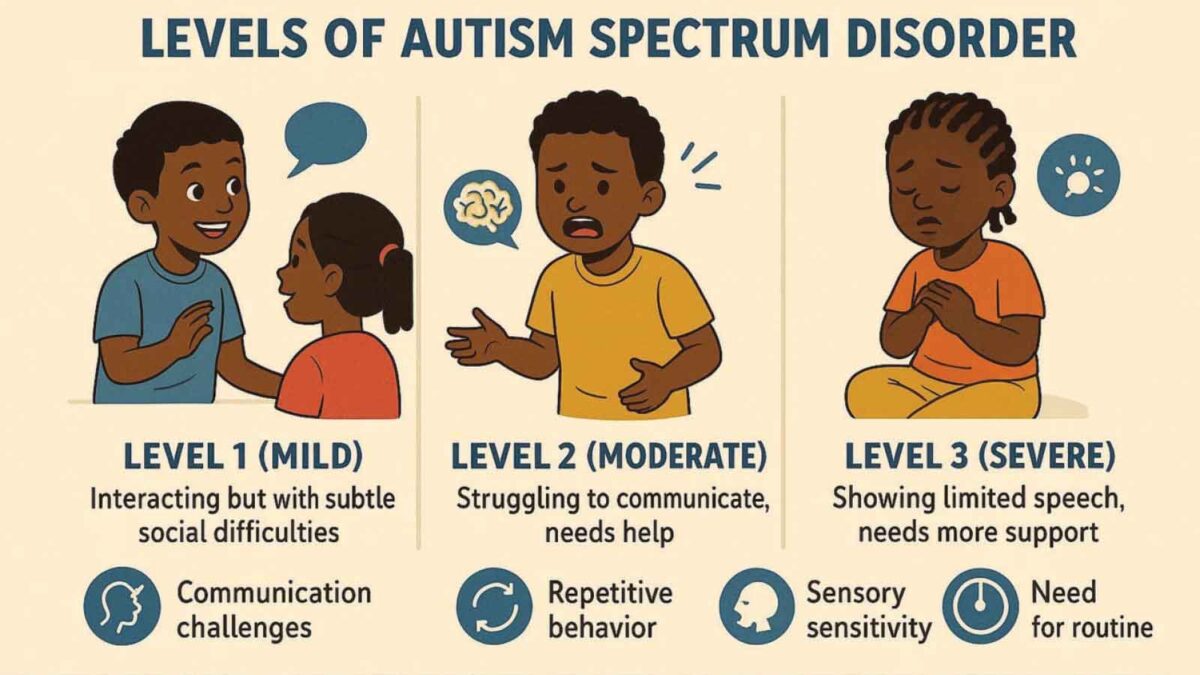
Autism Spectrum Disorder is a neurodevelopmental condition that affects how a person communicates, interacts with others, and experiences the world.
However, autism does not look the same in everyone. One child may talk constantly, while another communicates using gestures, pictures, or a device.
One person may enjoy company yet struggle with certain social cues, while another finds crowded places, unfamiliar routines, or loud sounds overwhelming.
Some need considerable daily support, while others live independently. There is no single way to be autistic, and no single story that explains every autistic person’s experience.
Yet misconceptions remain widespread. Some still believe ASD only affects boys, that every autistic person has an intellectual disability, or that a child cannot be autistic if they make eye contact, smile, or enjoy playing with others.
These assumptions make it harder for families to recognise developmental differences and seek timely support. Perhaps the most damaging myth is that autism is caused by poor parenting. It is not. Parents do not cause autism by being too strict, too soft, or by failing to discipline their children.
When a family becomes the subject of public judgement, consider a parent whose child struggles to communicate their needs.
That parent may spend hours trying to understand what their child wants, comforting them during distress and easing everyday routines. Yet to an outsider, it can look as though the parent has lost control.
A child who avoids eye contact is labelled rude. One who repeats certain movements becomes the butt of jokes, while a learner who struggles in class is dismissed as unintelligent or badly behaved.
We are quick to judge what we see, even when we know very little about what is happening beneath the surface.
In Zimbabwe, families also face the added hurdle of finding reliable information, proper assessments, supportive schools, and affordable services.
Where resources are scarce, parents carry a heavy burden with little guidance or understanding from their communities.
The emotional toll is significant: families often experience isolation, financial strain and anxiety about their children’s futures, with many withdrawing from social gatherings simply because they are exhausted from explaining their child’s behaviour or defending their parenting.
Imagine having to choose between taking your child into the community and shielding them from public hostility.
No family should face that dilemma. Autism itself is not synonymous with suffering; many difficulties arise when autistic people are denied the understanding and accommodations needed to participate in everyday life. Often, the barrier is not the child, but the environment and attitudes surrounding them.
What would happen if we responded differently? Encouragingly, change does not always require a major programme or a massive budget — sometimes, it begins with an ordinary person making a kinder choice.
Picture that same child in the shopping centre. Instead of staring or muttering hurtful remarks, a passer-by offers the parent a warm smile or simply gives the family space — no judgement, no intrusive questions, just quiet understanding. To a parent accustomed to criticism, such a small gesture makes a world of difference.
Teachers can make a difference, too. A pupil sensitive to noise may benefit from a quieter space, while a learner who finds verbal communication difficult may need alternative ways to express themselves.
Predictable routines and flexible teaching approaches help learners on the spectrum participate more comfortably.
Families need support rather than blame, alongside trustworthy information, accessible services and networks of people who understand their journey. Community leaders, religious organisations, health professionals and policymakers all have a role to play in challenging stigma, improving access to care and creating welcoming environments.
Most importantly, we must listen to autistic people themselves. Too often, conversations about autism hap-pen without the involvement of those whose lives are being discussed.
Their experiences, preferences and perspectives matter, and their voices should shape the decisions that affect them.
True inclusion is not merely allowing an autistic child to enter a classroom, attend church, or join a community activity; it is ensuring they have a genuine opportunity to participate, communicate, learn, and build relationships. Being present is one thing, while being accepted is another.
We often speak of raising autism awareness, which remains vital, but awareness alone is not enough. Someone may know what autism is and still make hurtful remarks, just as a school may acknowledge the condition yet fail to make reasonable adjustments for a learner.
Real progress happens when knowledge changes our behaviour — when we stop blaming parents for things we do not understand, when teachers look for ways to support a struggling pupil instead of giving up on them, and when communities make room for people whose communication, behaviour or sensory needs differ from the norm.
It also means recognising that autistic people are individuals with distinct personalities, interests, abilities and ambitions.
They are children, siblings, friends, students and adults with their own hopes for the future.
A diagnosis helps explain some aspects of a person, but it does not define everything about who they are.
The next time you see a child behaving in a way you do not understand, pause before passing judgement. Remember that you are witnessing only a fleeting moment of a much larger story.
That parent may already be doing everything they can, and that child may be struggling to communicate something they cannot put into words. What they need is not criticism, but patience, empathy and kindness.
We may not always understand another person’s experience, yet we can always choose to respond with dignity and compassion.
Let us look beyond the behaviour, beyond the diagnosis and beyond the label to see the person — because every autistic individual deserves more than merely to be noticed. They deserve to be understood, respected and allowed to belong.