

 admin
admin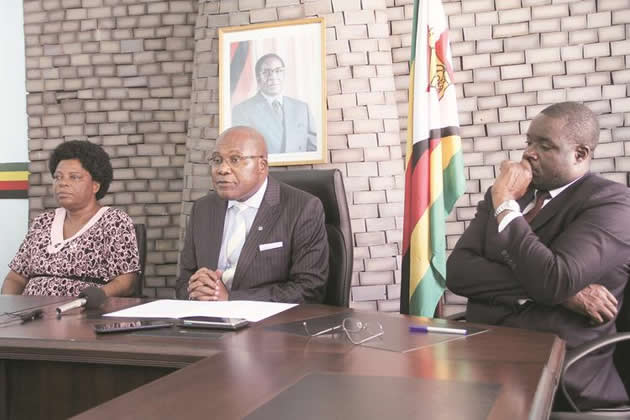
Joram Nyathi Spectrum
That noise has hit the bottom line, and the message is simply that you can’t eat your cake and have it too. You can’t celebrate the imposition of sanctions on your economy and still expect your business to independently prosper under them.
Thank you Comrade Minister for laying clear ground rules for media operations in Zimbabwe. They have been long overdue to the extent that many in the media, for various agendas, mainly political, have pretended that the concept of national interest is or can be contested, can be intuitive, according to personal predilection, one’s political affiliation or inclination at any given period.
This week Information, Media and Broadcasting Services Minister Christopher Mushohwe issued a statement on the state of the media in the country, which is at once definitive as well as setting very liberal parameters for media proprietors and journalists themselves, thus providing enough latitude for both to demonstrate through their products whether they can be trusted to self-regulate or they would rather live under a daily threat of what the minister referred to as “corrective measures in terms of the law” because they are unworthy of national trust; are completely irresponsible in their behaviour to the detriment of the national interest.
For the first time since I can remember, there was a serious attempt by Government to set out in broad terms what constitutes the national interest, the double-edged effect of a bad press and how those who feed such a Press in government and the ruling party pose a serious threat to national unity and, by extension, national security.
For purposes of clarity, I will quote liberally from the statement, first to show that Zimbabwe is not inimical to a free Press nor is government trying to impose a straitjacket on issues to be reported on or randomly preferred standards to uphold. This is what the minister said: “We want to see a professional media in Zimbabwe, a pluralistic media expressing divergent viewpoints, yes, but converging on defending the national interest.”
And what is it that constitutes the national interest? The explanation was fairly comprehensive: “The national interest includes, among other concerns, the sanctity of our independence and national sovereignty; our right to self-determination; national unity and the indivisibility of Zimbabwe; national security; sensitivity to our economic interests; our right to our national (natural?) resources; national culture, justice; and empowerment, and of course, democracy.”
I am happy that Minister Mushohwe has proposed a retreat next month for all media stakeholders at which “a new media policy will be debated and framed”. This is critically important to the extent that it should allow everyone concerned to express their views on the concept of national interest given that lack of a comprehensive definition has been the wellspring of political and media polarisation in the country, particularly in the past 15 years.
The serendipitous re-entry of whites into mainstream politics with the emergence of the MDC as a major political player put the national conscience to a severe test and sorely divided the national spirit. The media aligned themselves accordingly, depending on what was perceived to be “good for the nation” then, never mind the national interest. The MDC’s Eddie Cross summed up the zeitgeist with his “crash and burn” doctrine expressed as late as January 4 2009, purporting to speak for “ordinary, grassroots” Zimbabweans opposed to the GNU.
Nationalism, patriotism, national sovereignty became terms of scorn and derision well before ZANU PF lost the constitutional referendum in February 2000. But that spirit was further vindicated and sealed when ZANU PF “voluntarily” abandoned the Zimbabwe dollar for a multi-currency system in February 2009. And for obviously strategic concerns, though detrimental to the national economy and image, government has allowed itself to endure a long nightmare without a national currency. The attack dogs are waiting in anticipation.
Minister Mushohwe then trained his eye on the bad Press more specifically, and its pernicious effects on the nation. He said he confronted media proprietors who complained about the bad economy and low business: “I asked them, who needs a bad Press, who invests in a bad press? A bad Press is simply bad; it is not good for the country, it is not good for government, and it is bad business.”
The point being made was obviously that media proprietors made or were making free political choices, but were those choices good for their business? Is that the intended meaning of democracy?
You make your bed of roses, so you must lie on it.
The minister was generous enough to elaborate on the direct link between a bad Press and business, for those with ears to embrace the message or choose the scorched earth policy of “crash and burn”. From your bad Press, whatever the persuasiveness of its politics, investors tend to lose confidence in the country. Once that happens, said the minister, “you begin to witness disinvestment, capital flight, company closures, unemployment. . . ” Whether media choose to blame these manifestations on the ruling party’s land reform programmes and black economic empowerment policies is open to conjecture; the private media have tended to protest against those policies more than those supposed to be negatively affected by them.
That noise has hit the bottom line, and the message is simply that you can’t eat your cake and have it too. You can’t celebrate the imposition of sanctions on your economy and still expect your business to independently prosper under them.
For their part, Minister Mushohwe conceded, the media proprietors raised Adam’s fig leaf when challenged about the persistently negative stories they run daily, on government. They reportedly told him the stories were “planted by some of our own leaders pursuing personal agendas”.
This is a very important concession by the minister. President Mugabe made reference to the same during a ZANU PF Central Committee meeting on Wednesday this week ahead of the official opening of the party’s 15th annual national people’s conference in Victoria Falls today. He expressed concern about “personality clashes” for positions threatening party unity. “So, we have a problem at the moment that threatens to split the party,” President Mugabe conceded.
It is perhaps the first such candid confession on the gravity of divisions in the ruling party, previously only described as “factional fights”.
Yes Minister Mushohwe, it doesn’t matter whether the stories planted in the private media are negative or positive; whether they are true or false. It is damnable that ZANU PF itself has given hostage to fortune by having senior party members and ministers breaching their oath of office to talk to the media about Cabinet deliberations. Such people constitute a greater threat to national security than the media reporting on the disclosures.
Who else do such people sell those internal deliberations to?
Minister, we are in grave danger as a nation if we have in Cabinet and senior party positions people who can’t be trusted with State intelligence.
The crisis has gone well beyond the media. The guilty in the party and Cabinet must be exposed and shamed.



 Online Reporter