

 Chronicle Editor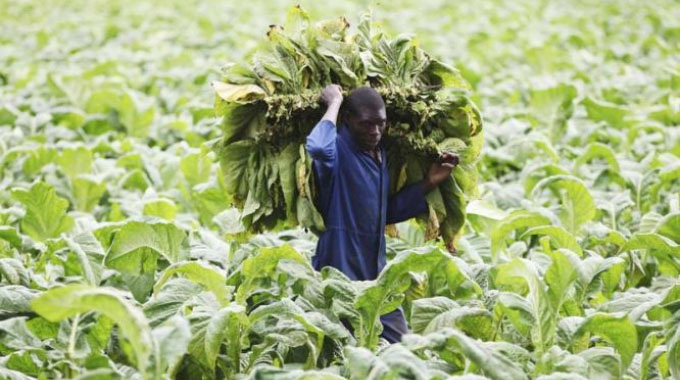
Fortunes Matutu
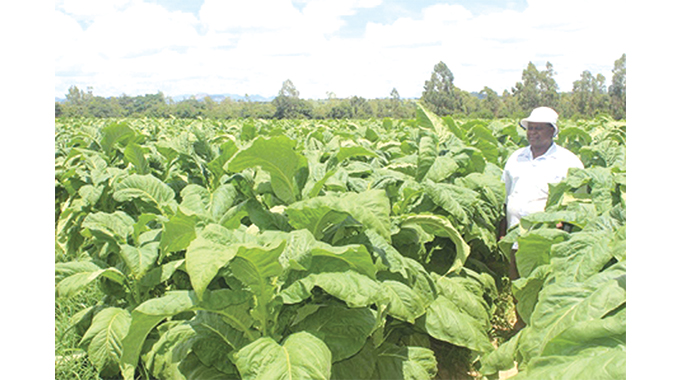
TOBACCO is one of Zimbabwe’s most popular cash crops, contributing an average of US$800 million annually to the economy. In spite of its benefits, it also comes at the cost of massive deforestation.
In tobacco farming, large amounts of wood are required for tobacco curing, poles and sticks are used for barn construction, and in some cases, land is cleared for cultivation.
Zimbabwe’s tobacco growers are mostly small-scale farmers without woodlots or electricity. In order to cure tobacco, they solely rely on fuel wood as an energy source.
Small-holder tobacco growers “illegally” use communally owned firewood for curing their commercial crops, putting local communities at a disadvantage since they use the forest for subsistence. Consequently, the rate of deforestation in the surrounding areas is alarming and unsustainable.
Zimbabwe experiences 262 349 ha of deforestation every year, and 20 per cent of that is attributed to the tobacco industry (52 470 ha per year).
As a result of the massive deforestation of tobacco growing areas, farmers have also begun cutting down trees and gathering firewood from non-tobacco growing regions. More and more trucks carrying illegal firewood from non-tobacco farming areas are being intercepted.
The loss of trees and other vegetation leads to desertification, soil erosion, land degradation, reduced agricultural production, increased natural disasters and increased greenhouse gases in the atmosphere which worsens climate change.
Subsequent land degradation from deforestation is a threat to people, affecting livelihoods, food security, water security and energy security. Deforestation destroys essential ecosystem services which are important in rural agriculture-based economies like the provision of clean water and fertile soils, leading to the loss of farming and other livelihood opportunities.
Considering tobacco farming’s benefits and its environmental impact, a balance must be struck between production and sustainability. Stakeholder engagement is essential as we work to address the threats posed by the tobacco industry, including farmers, traditional leaders, councils, regulatory authorities, and tobacco companies. It is necessary to encourage land use management that promotes conservation and compatible land uses in order to slow down deforestation.
In ideal situations, tobacco farmers would have woodlots of the fast-growing exotic eucalyptus tree for curing their crop, but few do. There are times when farmers receive tree seedlings to establish woodlots, but they simply don’t plant them or manage the planted seedlings. While seemingly completely unaware of the consequences of their actions, tobacco farmers simply have relied on indigenous trees for firewood.
As a way of promoting the growing of tobacco fuel wood, the Government introduced an afforestation fund, which is imposed on tobacco farmers when they sell their crops. A 1.5% deduction from tobacco sales is required for re-afforestation activities. This is done at the auction floors by the Tobacco Industry and Marketing Board (TIMB), who subsequently channel the funds to ZIMRA under the Ministry of Finance.
The Forestry Commission and other stakeholders access this fund to finance afforestation and reforestation activities under the Tobacco Wood Energy Programme (TWEP). Through various activities, the program seeks to enhance sound forestry, reforestation, and afforestation programmes for environmental sustainability. The Forestry Commission’s approach is to empower the tobacco grower with the means of production of sustainable energy for tobacco curing.
It is necessary for tobacco growers to recognize the importance of tobacco curing energy to the process of tobacco production. Tobacco curing wood energy needs to receive the same amount of planning and budgeting consideration as all other inputs used in tobacco production, including tobacco seed, fertiliser, chemicals, and labour.
According to the law, tobacco farmers are expected to set aside a piece of land on their plots to plant a woodlot of fast-growing tree species such as eucalyptus for the purpose of tobacco curing.
As part of TWEP, tobacco growers can now obtain tree seedlings from the Forestry Commission district offices free of charge.
The Forestry Commission has established tree nurseries within the tobacco growing areas to supply seedlings to all the tobacco farmers. Forestry extension services support and advise those growing firewood woodlots to do it successfully.
Planting trees will reduce dependence on slow-growing indigenous trees for tobacco curing.
Fast-growing tree species are seen as the solution for deforestation in Zimbabwe. Under TWEP the commission is carrying out research on fast-growing indigenous tree species so farmers can have a wider choice of what to grow in their woodlots. Through research, fast-growing eucalyptus trees have been produced for firewood, as have been Kenyan croton, which are being promoted as an alternative for firewood woodlots.
There are some farmers and environmentalists who are skeptical about planting and growing eucalyptus or other exotic species. They fear that water-hungry eucalyptus trees may deplete their water sources and also affect the natural ecosystem of the area.
As a complementary activity to tree planting and woodlot production, natural forest restoration can be promoted as a way to reinstate ecological functioning and biodiversity while continuously benefiting farmers.
This involves the management of degraded land to allow systematic regeneration of trees and shrubs from tree stumps, roots, wildlings and seeds. Natural regeneration is assisted by conducting several silvicultural practices like pruning, pollarding, thinning, enrichment planting and removing undesirable species such as invasive alien trees.
Successful restoration must address land degradation and soil loss. Organic matter can be added to a landscape to facilitate nutrient recycling and water retention and help restore forest health.
Several environmental works can be done to control soil erosion and gullies, including storm drains, contour ridges, gabions, and silt traps.
In addition to reforestation and afforestation activities, tobacco curing should follow good and efficient practices.
The bulk of farmers uses the traditional barn for tobacco curing. Structural elements in the barn lose heat, including walls, floors, roofs, exhaust chimneys, fireplaces, and exhaust fans. These losses are responsible for high barn energy consumption. It is possible for farmers to invest in and use more fuel-efficient rocket barns (furnaces) for curing tobacco that use 50% less wood.
Fortunes Matutu is a forester with the Forestry Commission and has a special interest in social forestry



 Blessing Chizhande
 Online Reporter