Chronicle Editor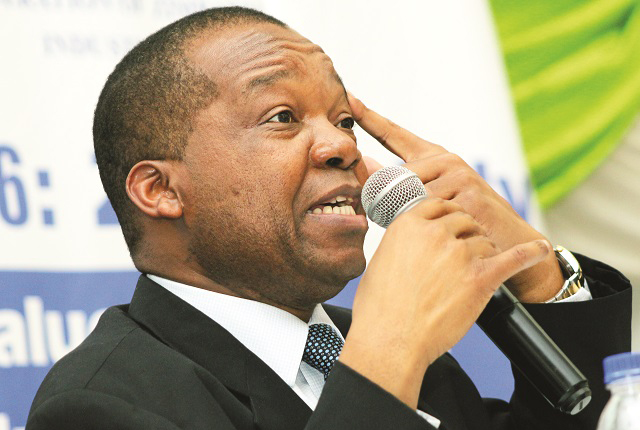
Keith Guzah Correspondent—
Last week, Reserve Bank of Zimbabwe Governor Dr John Mangudya announced the slashing of bank charges, a cause celebre among the transacting public.The new charges have been put at one percent of an amount withdrawn at an automated teller machine (ATM) and 1,25 percent for withdrawals over the counter.
The banking charges — which must come down further as part of an overdue package of reforms — were militating against the concept of financial inclusion, hurting poor folk and small businesses who were discouraged from banking although in the short-term this would disqualify them from accessing lines of credit.
And true to this position, Dr Mangudya said there were “ongoing efforts to promote financial inclusion and to ensure that banking products and services are affordable to the banking public”.
The RBZ promised to continue monitoring the cost of bank charges to ensure access to affordable banking services and at the same time promote the use of plastic money.
This is a significant development in the financial services sector at a time the country is at a crossroads following the adoption of the bond note and in light of other monetary policies that will impact on the general populace, including small businesses which are part of our empowerment efforts.
In fact, we have an interesting background in the fight against financial exclusion and advocacy of a model of empowerment which we call “empowerment from the bottom of the pyramid”.
On June 1, 2012 during an empowerment symposium with the then RBZ Governor Dr Gideon Gono which ran under the theme “Industry Supply Chain based Empowerment” which was chaired by the writer as president of the Affirmative Action Group, the RBZ chief confirmed that:
l The banking sector financial statistics as at December 31, 2011 indicated that the sector’s total revenue (turnover) was $870 million with $800 million going towards expenses resulting in a net profit of $70 million
l The revenue drivers for the banking sector included interest income at 55 percent with 45 percent coming from foreign exchange fees and commission, ledger and handling fees as well as management and establishment fees.
It is the issue of the cost drivers that eventually guided subsequent discussions as speaker-after-speaker rose to bombard banks on their unscrupulous business practices.
In a related conversation a few weeks before the aforementioned symposium, the former Governor had slammed banks for the high bank charges when he came before the Parliamentary Portfolio Committee on Small and Medium Enterprises. He said that these “extortionate tendencies” by banks were discouraging deposits by small businesses to medium businesses.
Dr Gono said then: “I am going to tell the banking sector to make a choice. You either agree voluntarily on reasonable amounts (bank charges) and also that you do not charge any cost on any account where there has not been a transaction . . . (or) if you don’t want to give them interest, then give them (depositors) back their money in full.”
He said the apex bank was engaged in discussions with the banking sector.
“If we have to create regulations or mediate between savers and the banks, we have to do that,” he pledged.
And during the symposium, which was also attended by the Bankers Association of Zimbabwe and key stakeholders in the financial services sector, Dr Gono instructed all banks to revise downwards all the charges. A few banks heeded the call, but only for a limited time.
The hiatus was even characterized by increases in the same offending charges.
The intervention by Dr Mangudya is timely.
Banks have been shamelessly milking the citizens of this country by charging them every time they used their bank cards to access money either through the ATM or paying for goods and services.
The slashing of bank charges dovetails well with the introduction of bond notes which, at full throttle, will increase ease of transaction and lead to increased confidence in the banking system.
Again, ordinary people and small businesses are a critical cog in this dispensation which speaks to the need for their prioritisation in policy considerations and interventions.
Now before we start celebrating, the question that quickly comes to mind is, of course, “for how long?”
Should this revision downwards of bank charges simply stop at the ATM and purchase points?
Should it not also cut across the national production line in order that those who are in business are encouraged to borrow, even if they have to provide security for the loans?
Once cheap and easily accessible funds are available, the business community will be able to pledge their hard earned assets and follow their vision of contributing towards the economic stability and growth of our battered economy.
The business community, and the transacting public, are beginning to invest confidence in Dr Mangudya and there is need to support his efforts in seeing the turnaround of the economy.
On the other hand, we expect the Bankers Association of Zimbabwe to be responsive and see how the financial services sector can play ball as directed by the RBZ chief.
The culture of profiteering should end, ushering in a new era of inclusiveness in banking services and the economy at large.
The writer is Hurungwe West legislator and founding president of the National Business Council of Zimbabwe.



 Online Reporter