Vusumuzi Dube
Rutendo Nyeve, Sunday News Reporter
THE banking sector has continued to contribute immensely towards the recovery and growth of the economy by channelling resources in the form of loans to the country’s productive sector, the Reserve Bank of Zimbabwe (RBZ) has said.
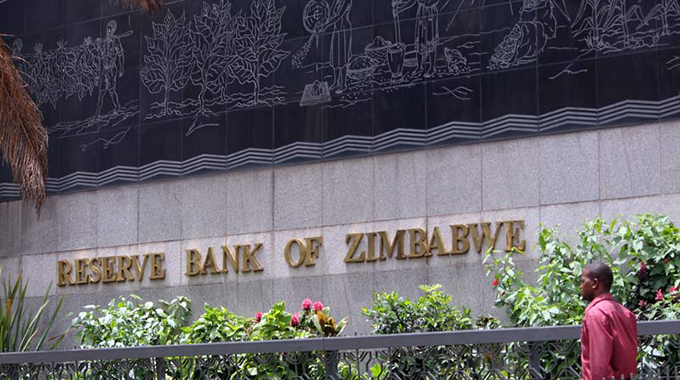
Loans provided to the private sector have helped stimulate economic activity and accelerate growth with 77,67 percent having been channelled to the country’s productive sector by 30 June this year.
Companies and individuals have also been able to invest and purchase goods and services that improve their livelihoods and contribute to overall economic growth.
According to the mid-term monetary policy released by the RBZ last week, the aggregate banking sector loans increased from December 2022’s $1,29 trillion to $10,19 trillion as at 30 June this year.

“Aggregate banking sector loans and advances increased by 7,9 times from $1,29 trillion as at 31 December 2022 to $10,19 trillion as at 30 June 2023. The increase was largely attributed to an increase in foreign currency-denominated loans, which constituted 94 percent of the sector’s loan book. Total loans to total deposit ratio for the banking sector remained relatively stable at 55 percent as at 30 June 2023 from 55,67 percent at the end of 2022. The foreign currency loans to foreign currency deposits ratio was 60 percent during the same period.
“The banking institutions continued to contribute to economic recovery and growth by channelling resources to the productive sectors of the economy. The loans to the productive sectors constituted 77,67 percent of total loans as at 30 June 2023,” reads the statement.
The statement further read that the agricultural sector was the biggest beneficiary of the productive sectors claiming 17,48 percent, followed by distribution with 14,19 percent.
The sectoral distribution of loans also shows that 12,24 percent went to manufacturing while 11,78 percent went to mining with 6,42 percent going to commercial, 6,37 percent to financial while 4,84 went to mortgage. Transport, construction and communication got 1,39 percent, 1,78 percent and 1,17 percent respectively.
The RBZ indicated that 77 percent of the loans were channelled towards the productive sectors, 12,05 towards the consumptive sector, while 10,28 percent was channelled towards other non-productive sectors.
Economic experts say loans and advancements can help companies expand and hire more workers, which can also contribute to economic growth.
“It is important to note that while there is a positive relationship between loans provided to the private sector and rates of GDP growth, this relationship is not necessarily causal or direct. There may be other factors that play a role in creating changes in GDP growth rates. For example, changes in Government policy, technological innovation, or global economic conditions can affect GDP growth rates,” said economist Mr Innocent Mpariwa.
He said an increase in loans provided to the private sector could lead to economic growth, as access to credit allows companies to invest in new projects and expand their operations.
Growth in business as a result of loans can lead to an increase in employment and also an increase in the production of goods and services, both of which contribute to an improved Gross Domestic Product (GDP), backed by enough investment opportunities and the necessary conditions for economic growth. — @nyeve14



 Online Reporter