

 admin
admin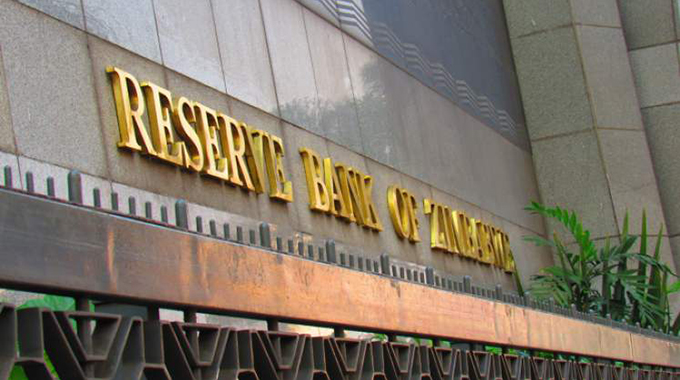
Golden Sibanda
ZIMBABWEAN banks suffered a cumulative 9 percent decline in profitability to $78 million in the first quarter of this year after some of the financial institutions incurred significant exchange losses, but their regulator says the industry remains largely stable.
The Reserve Bank of Zimbabwe (RBZ) said in its latest quarterly report to March 2019 that despite the drop in profits the banks remained generally stable and continued to exhibit resilience, buoyed by adequate capitalisation, sustained earnings performance, satisfactory asset quality and improved liquidity.
Aggregate profitability for the sector declined compared to the same period in 2018, the apex bank said, largely as a result of the effects of foreign exchange revaluation losses at some banking institutions.
During the quarter under review, 15 out of 19 banking institutions were profitable in their operations, while four (4) banks reported losses.
The RBZ said the losses were largely attributed to foreign exchange revaluation losses as a result of the floating exchange rate and increased operating costs.
“Although the banking sector remained profitable, aggregate net profit decreased by 8,80 percent from $85,58 million recorded during the period ended 31 March 2018, to $78,05 million for the period ended 31 March 2019.
“The decrease was largely attributable to foreign exchange revaluation losses reported by a few banking institutions during the quarter. Out of 19 operating banking institutions, 15 banks reported profits, while four (4) banks recorded losses,” RBZ said.
The income mix in the banking sector continued to be skewed towards funded income during the quarter ended 31 March 2019.
Non-interest income was largely driven by increased digital transactional volumes as most banks upheld strategies of realigning their business models in response to migration by customers to various digital platforms, the central bank said.
These include EcoCash, OneMoney, TeleCash, Zipit, credit cards, debit cards or Internet which have taken the place of cash transactions.
“The sector is steadily drifting away from the traditional sources of revenue such as interest income from loans and advances diversifying toward activities that generate fee income, trading revenue, and other types of non-interest income,” RBZ said.
A look at the income mix shows that fees and commissions contributed 41,45 percent, interest income from loans and advances 27,10 percent, interest income from investments and securities 19,13, foreign exchange 11,25 and interest income from balances with other banks 1,06 percent.
The banking sector assets increased by 10,17 percent, from $13,98 billion as at 31 December 2018 to $15,40 billion as at 31 March 2019.
The banking sector assets, largely comprised investment and securities (29,46 percent), loans and advances (26,71 percent), and balances with central bank which constituted 16,16 percent of total assets.
According to RBZ, the proportion of securities and investments and loans and advances, however, declined from 33,50 percent and 27,08 percent, respectively as at 31 December 2018.
Most of the banks remained adequately capitalized, with aggregate core capital of $1,69 billion as at 31 March 2019, representing a 6,92 percent increase from $1,58 billion as at 31 December 2018.
Capitalisation of retained earnings was the major source of capital growth among Zimbabwe’s banks. The banks’ capitalisation levels provide institutions with strong loss-absorption capacity.
As at 31 March 2019, all banking institutions were compliant with the prescribed minimum capital requirements.
The quality of the banking sector loan portfolio improved marginally during the period under review, reflected by the decline in the non-performing loans (NPLs) to total loans, from 6,92 percent as at 31 December 2018 to 5,58 percent as at 31 March 2019.
The RBZ said improvement in the NPLs ratio was a result of some banking institutions enhancing their credit risk management practices, notably loan origination, monitoring, collection and recoveries.



 Online Reporter