admin
admin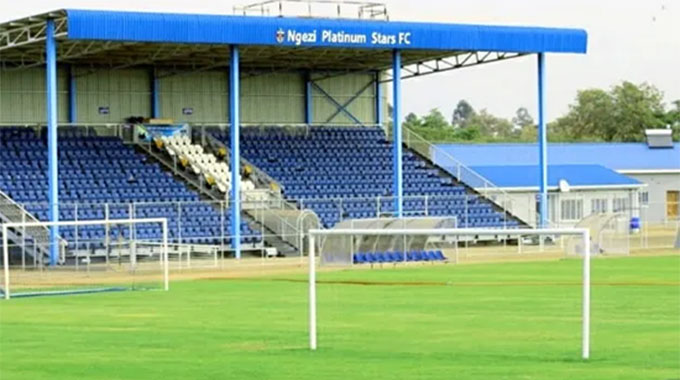
Tadious Manyepo-Sports Reporter
PREMIERSHIP football club Ngezi Platinum Stars have reserved in excess of US$350 000 for the upgrade and expansion of their home ground – Baobab – in Mhondoro-Ngezi.
The work is scheduled to begin in the next coming months with the club president, Stanley Segula, saying the works would have taken shape within the next 12 months.
The Mhondoro venue is widely regarded as one of the best in the country but only the VIP section has grandstands with spectators in the rest of the ground having to sit on grass.
The stadium was constructed six years ago following Ngezi Platinum’s promotion into the top-flight at the tune of about US$650 000. It was completed in a record time of five months.
And the club has started working on the expansion of the venue which Segula said will see the stadium being equipped with grandstands all-round.
A tartan athletics track will also be laid around the pitch.
Segula said the upgrade will take into cognizance the need to meet CAF standards as the team is keen to host international matches at the venue.
“We want to modernize that stadium. The budget which have put aside for the grandstands and rubberized surrounding athletics track is about US$350 000,” said Segula.
“Whatever the work we are doing at the stadium is guided by the CAF standards. We are keen to move with the times and in the next 12 months, you will be seeing everything starting to take shape.
“It is quite urgent for us to put those things in place. In the next 12 months, we want to see the rest of the field with those grandstands starting to take shape. Probably we will start with constructing the terraces bit by bit.
“We have a couple of investments lined up at the stadium like extending the grandstands, putting in a modernized athletics track around the football pitch and we always go back to the principal sponsor which is Zimplats to sponsor that.
“When Ngezi Platinum Stars were promoted into the Premier Soccer League in 2016, we decided to construct a stadium which we did I think in a record time of about five months.”
The stadium is named after the big baobab tree adjacent to its site.
Segula said his organisation decided to adopt the same name as the old pitch which used to host lower division matches before the new facility was built.
He said the baobab tree remains symbolic and it will starting now be tendered in a way that allows it to stay at the site for a long time.
“The old pitch was named the Baobab Stadium after the big baobab tree which is nearby and we just decided to adopt the same name for the new venue which is also nearby. That is how we ended up calling the stadium Baobab.
“The costs put together which we used to construct the stadium was about US$600 000 to US$700 000 which includes all the civils and the construction.
“The symbolic baobab tree will now be tendered so that it remains part of the history of our stadium.”


 Online Reporter