admin
adminmusic scene with his unique vibes and powerful voice.
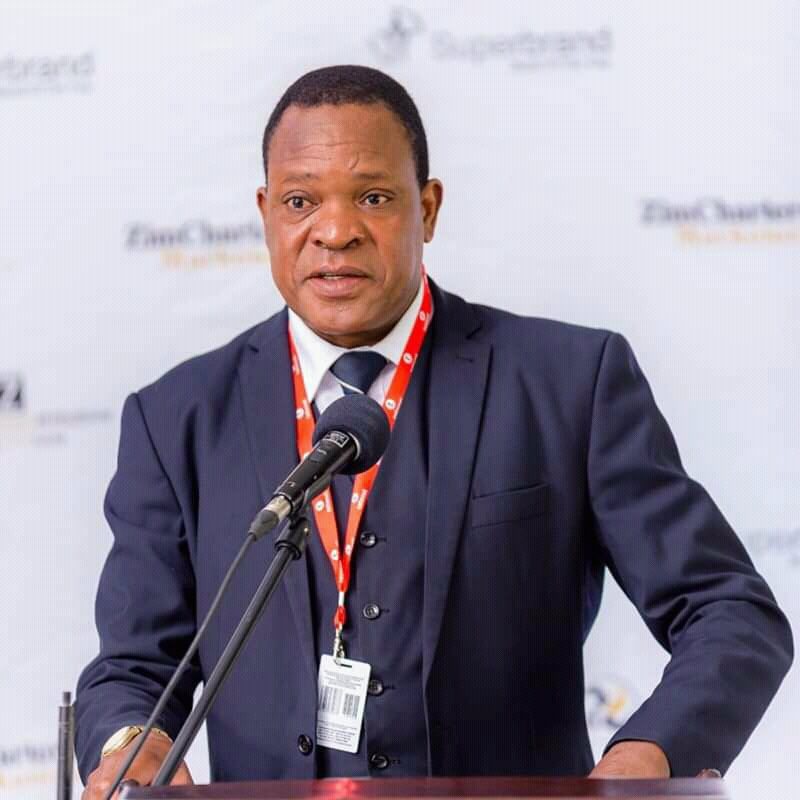
His name is Clive Barangiro, who has bounced back after a six-year hiatus from mainstream music.
Having last released the album “Revival” in 2006, which, as its title suggests, was an attempt to revive his music career, Barangiro has decided not to put his talent to waste and is now back to his former ways.
The affable musician recently paid The Herald a visit and proclaimed that he was now back for good.
“I had taken a long break owing to work commitments and this was further exacerbated by a number of developments that have been unfolding in the music industry,” he said.
The 50-year-old father of two has returned with two successful albums “Mimhanzi — Hymns” Volume 1 and 2 which are selling like hot cakes.
But why hymns at a time when other singers are experimenting with other genres?
“When we released Volume 1 in August last year, we were testing the waters and much to our surprise, the album broke through and has generated a lot of interest among people and the music has managed to cut across denominations. This prompted us to record Volume 2 in November and this has also performed beyond our wildest dreams and the music has cut across generations with people of all ages finding it appealing,” he said.
Barangiro’s music — because of its depth in message and instrumentation — is going places despite the fact that the artiste and his group Mimhanzi Crew, are marketing the album on their own.
“It is a unique type of music that our elders grew up listening to. I decided to take people down memory lane to those days when hymns dominated in church choirs but I have added in certain trends to make the music move with the times.
“Although we have sold over 4 000 copies of the two albums so far, we feel our marketing systems in Zimbabwe are in shambles because some of the leading music retail outlets either closed shop or are not operating at full throttle. The marketing and distribution of music these days is poor,” Barangiro said.
To add variety to the album, Barangiro worked with a pool of young musicians including his daughter Abigail Dhemba (27) and son Nigel (20) as well as vocalist Tsitsi Mafa, among others.
The adage, “like father like son” is certainly true when it comes to Nigel who is a versatile artiste.
“Nigel understands my music better and for that reason he is the one who produced, engineered, mastered and played all the instruments on the two albums,”
Barangiro said with unconcealed pride.
One has to listen to songs like “Riripo Tsime”, “Changamire Muponesi”, “Watakura Kuipa Jesu”, “Hosanna Wekudenga”, “Nditungamirirei Jehovha” and “Nzvimbo
Yakanaka” carried on Volume 1 just to appreciate the amount of work that went into the recording.
On Volume 2 are hits like “Ndinobva Kwamuri”, “Nditarire Nemufaro”, “Tsitsi Hedzi”, “Apo Toropito”, “Hatina Musha Panyika”, “Wauya Mucheki”, “Chinjikano”, “Ndinoshamiswa Kwazvo” and “Chinyarara Mweya Wangu”.
Born on January 20, 1962 in Concession, Mazowe, Barangiro grew up in a Christian family with his parents, Elias and Evelyn (both late) having been lead vocalists in the then Apostolic Faith Mission Church in South Africa and in Empress Mine, Kadoma, where the family later relocated to.
“My voice sounds more like my father’s and he played the guitar, which inspired me to do the same. No doubt I later became a lead vocalist in the church singing during church services. I never thought one day I would get into music professionally,” he recalls.
In 1994, Barangiro moved to Harare where he recorded his first album titled “Musha Wekudenga”, which carried the hit song “Kuguma Kwaswedera”.
“This was a big achievement for a new artiste to record an LP because in those days artistes would record singles. The video to the song ‘Kuguma Kwaswedera’ also became a favourite of many on the television programme Psalmody,” he said.
Barangiro then took a break owing to work commitments before bouncing back with another release, “Tamangani” in 2002 before repeating the same feat in 2006 with the album “Revival”.
But with the success of his two new albums, it is clear that Barangiro is here to stay.
“We have finished working on ‘Mimhanzi — Volume 3’ although at the moment we are concentrating on marketing the first two albums,” he said.



 Online Reporter