peter
peter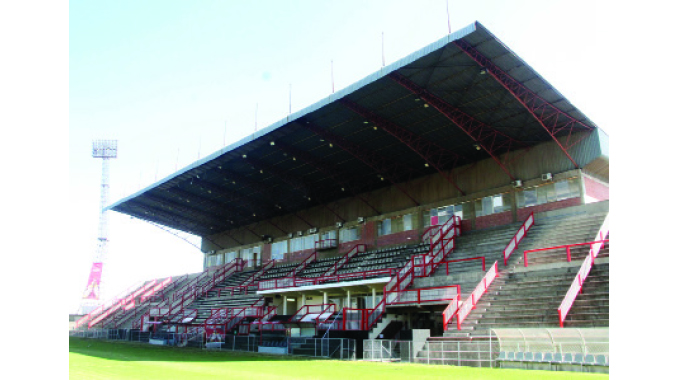
Vusumuzi Dube, Online News Editor
FOR every young man in Bulawayo with dreams of ever playing football professionally, Barbourfields Stadium is the Mecca.
It is the arena in which dreams that started at an early age are meant to come true.
These are dreams when one used to wake up early in the morning, only to spend long sunny days kicking around a tiny makeshift ball made of nothing more than plastic milk containers, bits of torn cloths and empty maize meal bags.
All those days toiling in the African sun are meant to end at Barbourfields, that arena where Peter “Nsukuzonke” Ndlovu and his brothers Madinda and Adam (may his soul rest in peace) dished out torment to opponents daily.
It is Bulawayo’s home of football where Mercedes “Rambo” Sibanda’s shots used to thunder through the air.
This is the arena that thousands packed even before independence to watch their favourite team Highlanders Football Club dish out their stellar football.
Back then, it was also home to Zimbabwe Saints, one of the household teams in the country before being demoted to lower leagues.
It is in this arena that black Zimbabweans felt an air of freedom during the colonial era, coming together and even engaging in political debates without the fear of being nipped by the colonial regime.
In short , this was the public sphere for black Zimbabweans.
Now 42 years after the country attained its independence, the stadium, by far the biggest landmark in the city, will host the country’s main independence celebrations.
This will be the first time that the celebrations will be hosted outside Harare as the President Mnangagwa-led Second Republic delivers on its promises of devolution and decentralisation.
To cap it up all the country’s two footballing giants- Highlanders and Dynamos- will once again renew their rivalry that dates back to pre-colonial times when they clash for the Independence Cup.
As the country prepares for the hosting of the festivities, Sunday News took a trip down memory lane to bring out the history behind the only other stadium outside Harare with a national stadium status.
Bulawayo City Council corporate communications manager, Mrs Nesisa Mpofu said the stadium, with a capacity of 22 995, was built in the 1950s, as an athletics stadium.
“ Barbourfields Stadium was built in the 1950’s and derives its name from the Barbourfields Township.
Barbourfields was named after H R Barbour who was the former Mayor of the City of Bulawayo. During the colonial era, he was greatly interested in the welfare of the indigenous people.
The stadium was initially an athletics stadium and subsequently incorporated football to become known as the football headquarters in the City.
It has a seating capacity of 22 995.
The stadium which was built mainly for recreational purposes is a Bulawayo community facility with a grading of a National stadium,” said Mrs Mpofu.
Just behind the stadium is one of the biggest hospitals in the country, Mpilo Central while on the other side is one of the public swimming pools in the city, Barbourfields swimming pool.
Football lovers have over the years gone on to name the various bays within the stadium, the swimming pool side is named Soweto, and houses the majority of the vociferous Highlanders supporters whenever the team is playing, while the side which mostly houses away team supporters is called Mpilo end.
The bay opposite the Very Important People (VIP) bay is named Empankweni, as the bay has no shade and fans that watch from the bay are said to be sun basking right through the 90 minutes of football like a lizard (Umpankwa).
On the left of the VIP section is the Edgars stand, which was named after the clothing retail because of the dress sense exhibited by both men and women who occupy the stand.
Mrs Mpofu said over the years, the stadium has undergone various rehabilitation works to modernise the facility.
“While it has had upgrades and refurbishments over the years, its major upgrade since its construction was for the All Africa Games in 1995 and a further upgrade in 2014 for the African Union Sports Council (AUSC) Region 5 games which saw the construction of the new changing rooms, anti-doping and medical rooms.
The Confederation of African Football upgrades and equipping of the stadium were being implemented before the start of the Covid -19 pandemic in March 2020.
Various community and national functions have been held at Barbourfields stadium.
Some of the historic activities which have been hosted at the stadium in recent years include the All Africa Games, AUSC Region 5 Games, and the Memorial service for the late Vice President Joshua N Nkomo after his passing on in 1999,” said the council spokesperson.
Cultural commentator, Dr Luyanduhlobo Makwati said it was impossible for anyone to discuss Bulawayo’s visibility outside the presence of Barbourfields stadium.
“Historically Barbourfields stadium has hosted several political events that have transformed the political landscape of the country.
On the cultural aspect it should be noted that culture can be simply defined as a way of life for a particular community.
So different communities value different things which range from social to economic levels.
Barbourfields is one of the Bulawayo’s football arenas that carries different memories for the Bulawayo community ranging from social events to sporting events.
For example, entertainment shows that were held there in the past define life for different generations in the city, while sporting events especially as the home ground to Highlanders Football Club, continues to bring people together who in their attendance have developed a culture that binds them,” said Dr Makwati.


 Online Reporter