Chronicle Editor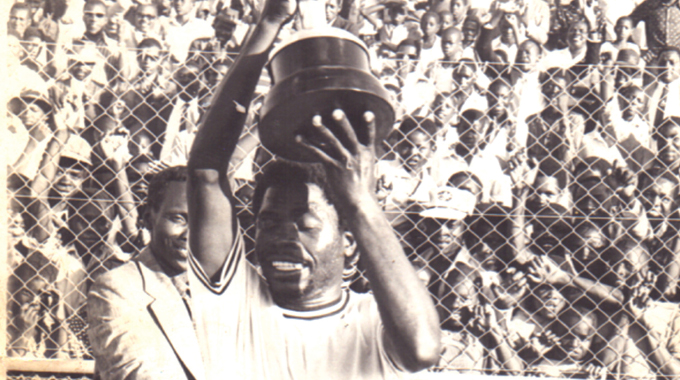
Dalubuhle Sibanda
HIGHLANDERS FC has a rich history, and among the myriad personalities who have contributed to its legacy, the late Barry Daka stands out as a monumental figure. As we commemorate the club’s centenary, it is essential to reflect on Daka’s profound influence and his remarkable journey that shaped not only Highlanders but also the landscape of Zimbabwean football. His story is one of passion, resilience, and a relentless pursuit of excellence that resonates through the ages.
Barry Daka’s journey into football began in his formative years, where he showcased natural talent on the pitch. His early experiences at Mzilikazi High School and Thabiso Youth Centre laid the groundwork for his future endeavours, as he mingled with fellow football enthusiasts who would later become notable players. Among his peers were legends like Billy Sibanda and Kenny Sparks Ngulube, who shared his passion for the game. This friendship fostered a spirit of competition and teamwork that would be pivotal in Daka’s development as both a player and a coach.

Daka’s first Highlanders stint was in 1966 when the club campaigned in the Bulawayo Amateur African Football Leagues. It was in 1969 that he broke into the first team with the likes of Lawrence Phiri. Football being semi-professional in those days, in 1970 Daka was then forced to switch teams and join Hwange FC after getting a job with the BATA shoe company in Hwange.
He would go on to become an influential midfielder in that spell, making it to the Soccer Star of the Year calendar in 1973.
Homesick, Daka returned to Bulawayo in 1974, marking a significant turning point in his career. He re-joined Highlanders and quickly became involved in community sports initiatives, serving as a sports officer under the Bulawayo City Council. This role not only solidified his commitment to youth development but also allowed him to cultivate talent within the local communities.
He was in charge of youth centre programmes, such as those at Tshaka and Thabiso Youth Centre, which became instrumental in nurturing budding footballers, reflecting Daka’s understanding of the importance of grassroots development in sports. It was through these platforms that many future stars like Peter Ndlovu emerged, illustrating Daka’s foresight and dedication to the sport, effectively making him the godfather of youth development.

Barry Daka’s vision extended beyond the football field, as he recognised the vital role of community engagement in fostering a thriving sports culture. His initiatives during his various roles at Highlanders reflected a commitment to social responsibility, as he actively sought to involve local communities in sports and cultural activities. The youth centres revitalised under his guidance became hubs of talent development, where aspiring young athletes honed their skills and built a sense of belonging.
In fact, it was through his efforts that youth centres closed during the Second Liberation War were reopened to the arts groups post-independence, sparking a revolution that saw the growth of theatre groups like Amakhosi Theatre. A man of many talents, he was also a part-time member of the famous jazz group, The Cool Crooners.
At the time of Daka’s return to Highlanders, now playing in the elite league, they had strengthened their squad with notable names within their ranks. The team boasted legendary names like Bruce Grobbelaar, Josiah and James Nxumalo, and Tymon Mabaleka, and they won the league in 1974.
Daka’s coaching career took flight following a series of pivotal events in the early 1980s. After Bobby Clark’s departure, he was reluctantly appointed as the head coach of Highlanders, with the Bosso leadership still sore from his role in the breakaway by senior players who left citing low pay among other grievances and went on to form a rival team, Olympics, in 1977, which Daka served as a player-coach.
However, all was forgiven, and Daka embraced his new role with vigour, teaming up with Roy Barreto and Cosmas “Tsano” Zulu with Lawrence Phiri as team manager and Ndumiso Gumede as the chairman. They embarked on one of Highlanders’ most devastating runs of form. The squad was propelled by a youthful squad made up of players like the Ndlovu brothers Madinda “Khathazile”, Adam “Adamski” and Peter “Nsukuzonke”, Willard “Nduna” Khumalo, Netsai “Super” Moyo, Mercedes “Rambo” Sibanda, Douglas “British” Mloyi, Fanuel Ncube, Alexander Maseko and the pillar Peter “Captain Oxo” Nkomo.
This is arguably Highlanders’ best-ever squad in history, and it reads like lyrics to that famous song you hear blaring from every car even today on Highlanders match days. Yes, that Lovemore Majaivana 1990 cult classic Badlala Njani is indeed based on Barry Daka’s all-conquering squad. The greatness that culminated in their exploits being immortalised in Highlanders folklore came about after Barry Daka’s men swept almost every piece of silverware in their path. From the Rosebowl (1985), in 1986 they won an astonishing five cups, and more silverware followed in 1987, 1988 and 1989. In 1990 they scooped the league title and the Zifa Natbrew Cup.
In 1993, Daka made history by becoming the first coach to win the newly formed Premier Soccer League (PSL) championship, guiding Highlanders to an unprecedented victory in a fiercely competitive environment. This triumph was not just a personal milestone; it was a watershed moment for the club and Zimbabwean football at large.

The significance of this achievement cannot be overstated, as it represented a new chapter for Highlanders, who were then navigating the transition from the Zifa Super League. Daka’s strategic acumen, coupled with his ability to inspire and motivate his players, played a crucial role in their success. His tenure not only brought accolades but also instilled a sense of pride and unity among the players and supporters alike, solidifying Daka’s status as a true Highlanders icon.
One of Barry Daka’s most significant contributions to Highlanders and Zimbabwean football is his unparalleled eye for talent. His ability to identify and nurture young talent was a hallmark of his coaching philosophy. Daka’s mentorship extended beyond the pitch; he was deeply invested in the holistic development of his players, emphasising discipline, hard work, and the importance of education.
The ripple effect of Daka’s influence is evident in the careers of countless players who have gone on to represent Zimbabwe on international platforms. His legacy is a testament to the transformative power of mentorship in sports, where nurturing talent transcends mere athletic prowess. Many players who graced the Highlanders jersey attribute their success to the foundational skills and values instilled by Daka, underscoring his lasting impact on their lives and careers.
In commemorating Daka, we celebrate a man whose life embodied the spirit of Highlanders FC, a legacy built on perseverance, community engagement, and a shared love for the beautiful game. As we look to the future, may his story serve as a guiding light, reminding us of the profound impact one individual can have in shaping the trajectory of a club and the lives of many.
Continue resting in peace, Barry.


 Online Reporter