Nqobile Bhebhe Zimpapers Writer
THE importance of reliable and affordable power that helps factories operate consistently, expand production and create jobs can never be overemphasised in an industrialising economy like Zimbabwe.
A stronger electricity supply can also attract investment, reduce reliance on costly imports and support sectors such as mining, agriculture and manufacturing. By planning and investing in major energy infrastructure, Zimbabwe can better meet future demand and build a more competitive, resilient economy.
Mindful of that, the Government has committed US$25 million as its initial equity contribution towards the 2 400-megawatt Batoka Gorge Hydro-Electric Project, signalling renewed momentum behind the major regional investment expected to strengthen Zimbabwe’s long-term electricity security and support industrial growth.
The allocation, contained in the 2027 National Budget presented by Finance Minister Professor Mthuli Ncube, forms part of a broader US$28.8 million (ZiG803 million) provision for key energy interventions, with the remainder earmarked for the Rural Electrification Programme.
Jointly developed by Zimbabwe and Zambia, the Batoka project is expected to generate approximately 10 215 gigawatt hours of clean electricity annually, shared equally between the two countries.
The project is expected to significantly expand regional power generation capacity, reduce exposure to electricity supply constraints and provide a reliable energy foundation for industrial expansion, mining, agriculture and other productive sectors.
Prof Ncube said the project remained a critical component of Government’s strategy to expand national electricity generation capacity, with priority being placed on advancing project development activities and meeting conditions precedent to financial closure.
“The Batoka project remains one of the critical interventions required towards enhancing the generation capacity of the country, hence focus will be on advancing project development initiatives and conditions precedence to achieving financial closure of this project which has the capacity to generate 2 400MW, providing approximately 10 215 gigawatt hours of clean energy annually to be shared between Zambia and Zimbabwe,” he said.
The latest budgetary commitment builds on renewed cooperation between Harare and Lusaka, which have reaffirmed their commitment to jointly implement the project, with each country confirming an equity contribution of US$220 million.
Prof Ncube said the two Governments would mobilise resources through fiscal allocations, among other financing sources, to advance implementation.
“In furtherance of some of the above initiatives, the 2027 Budget is therefore, allocating US$28,8 million (ZiG 803 million) of which US$25 million is initial equity contribution by the Government of Zimbabwe towards implementation of the Batoka Hydro-Power Project whilst ZiG55,2 million is earmarked for the Rural Electrification Programme,” he said.
Beyond expanding electricity generation, Government is also emphasising the need for communities located around major power generation facilities to benefit from investments in the energy sector.
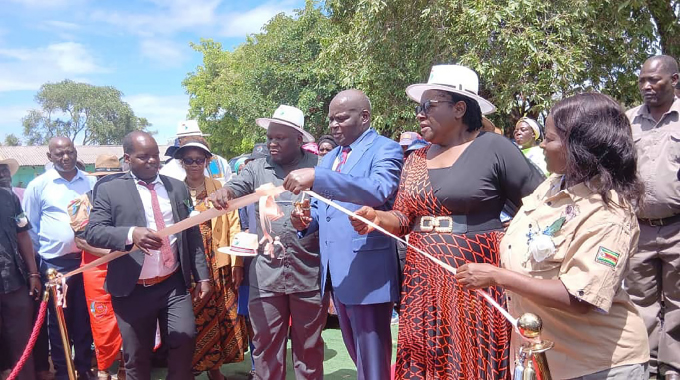
Speaking during the commissioning of the Sikumbi-Batoka electrification project in Hwange West, Matabeleland North, last week, Energy and Power Development Minister July Moyo said communities in areas
that contribute significantly to electricity generation should also benefit from the resources.
“This is the first place we actually should electrify so that the people see the benefit of what they are contributing through our generation of power in the Hwange area. We don’t want to repeat the same mistake that was done decades ago during the construction of Kariba Dam where locals initially did not benefit from power generated.”
Meanwhile, Zimbabwe has recorded improvements in electricity availability following increased generation at its major power stations, although Government says further investment in generation, transmission and distribution infrastructure remains essential to meet rising demand.
Prof Ncube said investments undertaken over the past two years had added 600MW to the country’s generation capacity, bringing total installed capacity to 3 412MW.
“The investments made by Government over the last years has resulted in positive strides towards ensuring consistent power supply with limited load shedding episodes. These successes were mainly achieved through increased electricity generation at all the state power stations, benefiting from increased water availability at Kariba and reliable Hwange units 7 and 8,” he said.
He added that Government’s policy of encouraging independent power producers (IPPs) and captive generation through power purchase agreements had also contributed to improved electricity supply.
The net metering programme has generated approximately 120MW, exceeding initial expectations and highlighting the growing contribution of distributed renewable energy to the national electricity mix.
Prof Ncube said the adoption of cost-reflective tariffs had also improved the financial sustainability of the Zimbabwe Electricity Supply Authority (Zesa), strengthening its capacity to maintain infrastructure, meet operational requirements and participate in regional electricity markets.
“Complementary to this, is the deliberate approach by Government of cost reflective tariffs that have greatly improved the financial sustainability of Zesa to better maintain infrastructure, and meet daily operational requirements, including participation in regional electricity markets,” he said.
Looking ahead, Government intends to accelerate investment in new generation projects while upgrading the national electricity grid to ensure additional power can be efficiently transmitted to businesses and households.
Key priorities include reducing reliance on hydropower, maximising thermal generation through rehabilitation of existing power stations, expanding solar energy, strengthening demand-side management and developing bankable projects capable of attracting long-term investment.
In this regard, rehabilitation of Hwange Power Station’s units 1 to 6 remains a major priority, with Government focusing on Unit 5, which has been out of operation since 2021.
Prof Ncube said funding for the refurbishment programme had been secured, with completion expected in 2027 and an additional 160MW set to be injected into the national grid.
“Already, the funding has been secured and refurbishment expected to be completed in 2027 adding 160 MW to the grid. These strategic interventions will be complemented by further expansion of the renewable energy and captive power generation,” he said.
Government is also prioritising transmission and distribution upgrades to ensure increased electricity production is matched by adequate infrastructure to deliver reliable supplies to consumers.
Key projects include the Zimbabwe-Zambia interconnector and the Hwange-Mukuni 330kV transmission line, which has reached financial closure through a US$38 million financing facility.
Prof Ncube said Government would also pursue innovative financing arrangements, including leveraging Southern African Power Pool (SAPP) facilities such as the Regional Transmission Infrastructure Funding Facility (RTIFF), while establishing Energy Trading Entities to mitigate investment risks associated with power projects.
The measures are expected to improve the bankability of energy investments, attract private capital and strengthen Zimbabwe’s participation in regional electricity trade.