Online Reporter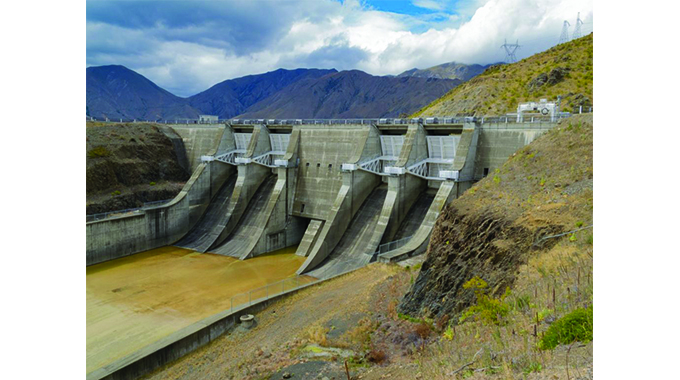
Oliver Kazunga
Senior Reporter
THE proposed US$4,25 billion Batoka Gorge Hydro-Electric Scheme is projected to generate US$53,5 billion in revenue and US$34,26 billion in profit over 25 years, positioning Zimbabwe and Zambia to play a pivotal role in strengthening Southern Africa’s energy security, while creating one of the region’s most valuable infrastructure assets.
According to the latest Zimbabwe Investment and Development Agency (ZIDA) Projects Prospectus, the project is expected to earn approximately US$2,1 billion annually and recover its initial investment within just 4,5 years, highlighting its strong commercial viability and long-term economic potential.
The Batoka Gorge Hydro-Electric Scheme, which will be jointly developed by Zimbabwe and Zambia through the Zambezi River Authority (ZRA), is designed to generate 2 400 megawatts (MW) of renewable electricity from the Zambezi River, helping to address growing power shortages in both countries and across the wider Southern African region.
The proposed dam will be located about 47 kilometres downstream of Victoria Falls on the Zimbabwe-Zambia border and is being positioned as a strategic response to rising electricity demand and persistent power deficits affecting the region.
“The Batoka Gorge Hydro-Electric Scheme directly responds to this structural supply gap by delivering large-scale, reliable, renewable base-load power capable of supporting domestic demand growth and regional power trade,” reads part of the prospectus.
The project comes at a time when the Southern African Power Pool is facing a generation deficit exceeding 5 000MW, creating significant opportunities for large-scale power projects capable of supplying both domestic and export markets.
ZIDA said the project remains at the preparation stage, with the Zambezi River Authority currently updating key technical, environmental and financial studies to ensure the project meets international financing and regulatory requirements.
“Projected 25-year profit stands at US$34,26 billion.
“Currently at the project preparation stage, the ZRA is updating the Engineering Feasibility Studies, Environmental and Social Impact Assessment, and Financial and Commercial Transaction Advisory documents to ensure bankability and compliance with AfDB, UNESCO and international PPP standards,” said the agency.
The prospectus notes that electricity demand in Zimbabwe is projected to increase from 9 157 gigawatt-hours (GWh) to 23 972 GWh by 2045, while demand in Zambia is expected to rise from 13 080 GWh to 37 705 GWh over the same period.
Against this backdrop, Batoka Gorge is expected to become a critical pillar of regional energy security while creating opportunities for electricity exports and expanded cross-border power trading.
Under the proposed development framework, the project will comprise a 175-metre roller-compacted concrete arch-gravity dam across the Zambezi River and two 1 200MW power stations located on the Zimbabwean and Zambian sides of the river.
The development will also include transmission infrastructure, grid interconnections, access roads, workers’ accommodation and other supporting facilities.
While the dam infrastructure will be owned by the Zambezi River Authority, the power stations are expected to be developed through Special Purpose Vehicles in partnership with national utilities under a Public-Private Partnership model.
ZIDA said the project is expected to deliver significant economic and social benefits.
During construction, approximately 6 000 jobs are expected to be created, while a further 1 000 permanent jobs will be available once operations begin.
The development is also expected to stimulate economic activity in Matabeleland North through infrastructure development, increased business opportunities and improved energy availability for industry and communities.
ZIDA further highlighted the project’s contribution to global climate and sustainability goals through the generation of clean renewable energy, which is expected to reduce regional carbon emissions while supporting the attainment of Sustainable Development Goal Seven and the African Union’s Agenda 2063.
Economic commentator Mr Peter Mhaka said Batoka Gorge had the potential to become far more than a power generation project.
“With electricity demand rising across Southern Africa, Batoka Gorge has the potential to become a strategic economic asset whose benefits extend far beyond power generation.
“By supporting industrial growth, regional trade and energy security, the project could contribute significantly to long-term economic development in Zimbabwe, Zambia and the wider region,” he said.