Online Reporter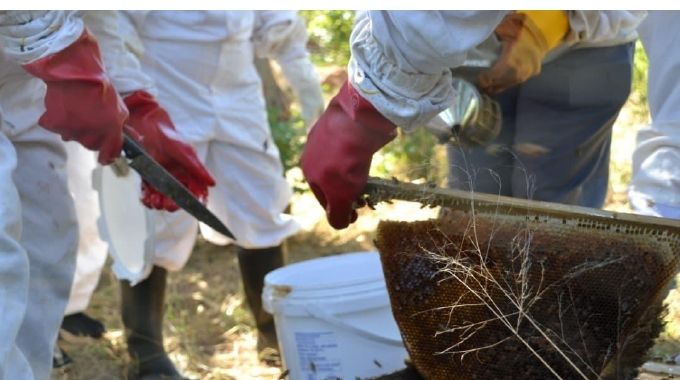
Rutendo Nyeve [email protected]
A LOCAL tour operator in Victoria Falls has established more than 50 beehives around community fields and homesteads, successfully keeping crop-raiding elephants at bay while providing a sweet new source of income for villagers.
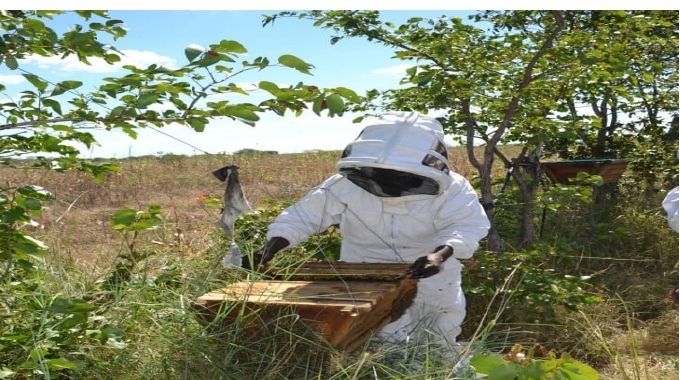
EleCrew, which operates an elephant interaction experience for tourists in Victoria Falls, has rolled out the innovative beehive fence model in the Skabelo community, with plans to expand to Woodlands community this year.
The hives are connected by rope and wire around field perimeters such that when elephants attempt to push through, they shake the hives, triggering defensive bees that send the giants fleeing.
For 58-year-old Mrs Tryphine Moyo, the intervention has transformed this past summer’s cropping season.
“Before the beehives, elephants would come at night and destroy our entire harvest in hours. We would wake up to flattened fields and nothing to feed our children
“This season, we saw elephants approaching, but as soon as they touched the hives, the bees chased them away. We have harvested enough maize and vegetables for the first time in years. Our grandchildren are eating well,” said Mrs Moyo
Another villager said the elephants used to see their fields as their feeding ground.
“Now the bees are our guards. We sleep peacefully knowing our crops are protected,” said Mr Sabelo Ncube.
Mr Liberty Nyaguse, EleCrew General Manager, explained that the project is rooted in promoting co-existence rather than confrontation.
“Basically, this is coming out of a programme, a promotion, a coexistence between the elephants and people, elephants and communities, which we are championing as Elephant Crew
“One of the major things that we do is try and mitigate conflict between humans and elephants. So, one of the major interventions that we make is to protect community fields from elephants, to boost livelihoods, to ensure that they don’t perceive elephants as the enemy,” said Nyaguse.
The process is collaborative.
“During the course of the year when they are cropping, we help them, we work together with them to establish defenses for their fields. One of the defenses that we use, we call them beehive fences,” Mr Nyaguse said.
Beyond protection, the hives deliver economic empowerment.
When elephants trigger the defence mechanism, the bees remain active and produce honey, which EleCrew harvests, processes and sells, with proceeds flowing back to the community.
“What then happens is during the honey season, we are able to then go in and harvest honey from the beehives, which means the honey is a byproduct of the defence. So the honey is a defence mechanism that we have put in place
“When we harvest the honey, we are then able to process it and sell. So, the communities get extra income again from utilisation of the beehives and selling of the byproduct, which is honey. We have found this to be an extremely, extremely helpful way of defending the community gardens and at the same time getting some support for the livelihood of the communities,” he said.
Currently, EleCrew has harvested about 10 kilograms of honey from just two or three hives in Skabelo, but with 50 hives now deployed across the wild, the potential is immense.
“We’re hoping out of these 50 we will get significant honey and significant revenue to support community livelihoods,” Mr Nyaguse said.
As human-wildlife conflict escalates across Zimbabwe’s rural areas, EleCrew’s model offers a replicable blueprint, where bees build bridges, not barriers, between people and pachyderms.