Richard Muponde
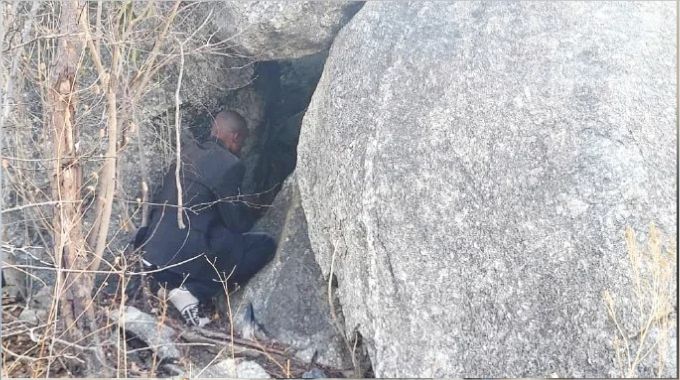
FOR YEARS, the cave on a Hurungwe hillside held more than the remains of a fallen liberation fighter.
It held a story of betrayal, love, poison, a stolen wartime firearm and a family whose past appeared to return with frightening force when the grave of ZPRA freedom fighter, Cde Webster Mambengo, was finally opened.
Recently, the long-delayed exhumation of Cde Mambengo descended into pandemonium when a swarm of bees emerged from the cave and began stinging members of the family believed to have been connected to his death.
Villagers and officials who had gathered to witness the recovery scattered in fear. Some ran towards vehicles for shelter as the bees descended on those around the burial site. The scene was so dramatic that the exhumators eventually resorted to traditional appeasement before the operation could continue.
And then came another disturbing discovery.
Inside the cave were new clothes and other objects apparently placed there decades after Cde Mambengo’s death.
The discoveries opened a dark chapter surrounding a freedom fighter, who, according to Dr Arthur Makanda, the Zimbabwe National Heroes and Heroines Trust (ZNHHT) chairman, had refused for more than two years to leave his resting place until his demands concerning his final journey had been met.
ZNHHT conducted reburials of 37 ZPRA fallen heroes at Chebere Shrine at Grand Parade Farm in Hurungwe, Mashonaland West Province, a fortnight ago, with full military honours. They were reburied through Government funding administered by the Ministry of Veterans of the Liberation Struggle Affairs led by Senator Monica Mavhunga.
A soldier who chose love over the assembly point
Cde Mambengo was reportedly from Mashonaland Central Province and, unlike many of his comrades, did not remain at the assembly points after independence.
He had fallen in love with a daughter of the family and had promised to marry her when the war ended. Instead of proceeding with the rest of his comrades, he returned to the family home, and married his sweetheart.
It was there, according to the account given by Dr Makanda, that his life came to a tragic end.
“This comrade died soon after Independence. He did not go into the assembly points where others went, but he had promised a girl from a certain family that he wanted to marry her, so that’s where he preferred to go and stay,” said Dr Makanda.
But the love story allegedly ended in betrayal.
“But for circumstances that we are not aware of, the comrade was then poisoned by some members of this family, and this story has been there for quite some time,” he added.
His wartime firearm remained behind.
That weapon, according to Dr Makanda, was later stolen by one of the family’s sons. The son was subsequently arrested for rape and robbery and is serving a lengthy prison sentence at Chikurubi Maximum Prison.
The weapon, once carried by a freedom fighter in the liberation struggle, had, therefore, passed into the hands of someone who allegedly used it in heinous crimes.
When the dead came knocking
The story became even more unsettling when efforts began to exhume Cde Mambengo’s remains.
Dr Makanda said his organisation visited the family twice after the spirit of the dead fighter manifested during attempts to resolve the matter.
Initially, the family denied knowledge of what had happened.
Then came a startling confession.
“The first time we went there the comrade manifested and we had a discussion with the family, but the family was denying this until one medium, or a spirit medium from their family came and confessed, ‘We know it happened. This comrade was killed in this family.’”
For those involved, the confession transformed what could have remained an old village story into a deeply troubling account of a liberation fighter whose death had apparently never been settled.
A traditional settlement was discussed.
Five beasts were reportedly demanded as appeasement and were supposed to be taken to Cde Mambengo’s family.
But the arrangement was not fulfilled. The family subsequently denied the allegations again.
Dr Makanda pointed out that was when the dead fighter appeared to draw a line under the relationship.
“The comrade just told them that he was leaving their family home. He did not want anything from that family because they had taken some of his clothing and belongings,” he said. But he wanted his belongings restored.
Among them were clothes, which, according to Dr Makanda, had originally come from China and Russia.
The family later acquired replacement clothes and other items resembling those believed to have been taken from him.
Yet even that did not satisfy the restless dead.
“So, he said, ‘No, I don’t like those clothes. The family can keep those clothes,” Dr Makanda narrated.
The clothes in the grave
The replacement clothing eventually found its way to the burial site.
Years passed.
Before the exhumation, Dr Makanda’s team asked the family to remove the clothes because they did not want them placed together with the remains. But when the cave was opened, the mysterious clothing was still there.
“During the process of exhuming, that is when some bees came out from a cave because he was buried in a hill,” he said.
The bees attacked.
“The bees came out from the cave and they started stinging a number of people, but mostly those from the families. Maybe one or two of our members were stung.”
For Dr Makanda, the incident carried a symbolic meaning.
“We understood that the sting on our members, was just symbolic, to say, ‘You want to assist this family, but they are not understanding my plight.’”
The symbolism was made even more chilling by the unresolved appeasement issue. “They have refused to pay the appeasement fees that he had requested, so it’s true that these people were stung by bees,” said Dr Makanda.
Whether viewed through traditional beliefs, coincidence or the psychology of a community confronting a painful past, the incident left an unmistakable impression.
The dead freedom fighter had a story. And the living were being forced to confront it.
A spirit that waited for its
final journey
Cde Mambengo had apparently made another demand.
When the exhumation programme began two years ago, he refused to be moved to a mortuary. He wanted to remain in the cave until the other 29 cadres in Sanyati had been exhumed and preparations for the final burials had been completed.
He wanted to be carried directly from the cave to the burial site.
Dr Makanda’s trust respected that wish. More than two years passed.
Then, finally, Cde Mambengo joined 36 other ZPRA cadres for burial at Chebere Shrine at Grand Parade Farm in Hurungwe.
The sequence of events has left those who witnessed them grappling with an enduring question: can the dead speak to the living?
For Dr Makanda, the answer is rooted in the experiences encountered during the recovery of liberation fighters.
The dead may no longer speak through ordinary human voices, but their unresolved stories, their graves, their belongings and the circumstances surrounding their deaths can become messages that the living are compelled to understand.
The Sanyati warning
Cde Mambengo’s story is not isolated. In Sanyati, the Madoda family reportedly endured decades of spiritual disturbances after liberation war graves were interfered with.
Massive flocks of birds persistently nested in a particular tree at the family homestead.
Traditional leaders and spirit mediums interpreted the phenomenon as an indication that the spirits of fallen ZPRA cadres whose graves had been disturbed had shifted into the tree.
The eventual exhumation and cleansing process enabled the recovery of the 29 freedom fighters exhumed in Sanyati, who are part of the 37 buried last Saturday.
The two cases share a disturbing thread: liberation fighters buried in shallow or unmarked graves were not simply forgotten by history.
Their graves remained places where the living encountered the unresolved consequences of the past.
The Government’s chilling warning
The stories have now taken on renewed significance following the Government’s warning against disturbing the remains of fallen liberation fighters.
Speaking at the burial of the 37 ZPRA cadres at Chebere Shrine, Mashonaland West Minister of State for Provincial Affairs and Devolution Mariam Chombo urged communities to respect graves scattered across the country.
Minister of Veterans of Liberation Struggle Affairs Senator Monica Mavhunga also touched on the issue.
“There are some villagers around the country where fallen heroes are lying in shallow graves, who are salvaging bones and other items they find on fallen heroes to use as charms,” said Senator Mavhunga.
The message was unequivocal: the remains must not be disturbed.
Communities encountering bones or suspected liberation war graves have been urged to report them to the police, traditional leaders or organisations involved in preservation.
For Cde Mambengo, the journey from a wartime firearm to a family tragedy, from a poisoned fighter to a dark cave, from mysterious clothing to a swarm of angry bees, ended at last with a dignified burial.
But his story leaves behind a haunting lesson.
A person may die. A body may disappear into the earth. But injustice, history and memory do not necessarily disappear with it.
Sometimes, they wait.
And when the time comes, they may return in ways the living cannot easily explain.