Online Reporter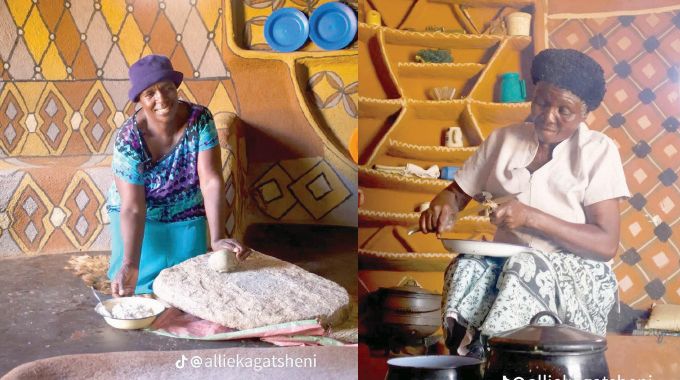
Bruce Ndlovu, [email protected]
LAST year at the end of December, a group of young people gathered at Amagugu International Heritage Centre in Matobo, Matabeleland South Province, for a unique event.
While the centre, the brainchild of the late visionary cultural expert Pathisa Nyathi, is used to hosting Food Expos, this occasion was different.
Those who had taken time from the spectacular festivities in cosmopolitan Bulawayo and made the trek to the more sedate surroundings of Matobo were craving a taste of delicacies that could not be found on any menu in urban Bulawayo.
With the country almost past the halfway point in the rainy season, those tasked with making sure that the nation is adequately fed would have had their eye on the clouds, as forecasts of a bumper harvest became even more realistic with every downpour. For those at Amagugu on December 28, the effects of a fruitful season were already being felt on their plates.
While bureaucrats measure success in metric tonnes, most Zimbabweans — in both rural and urban areas — measure it in the sudden abundance of watermelons, horned melons, maize and other fruits and vegetables. Yet the crowd at Amagugu wanted more.
They longed for dishes spoken of by grandparents and great-grandparents, but rarely seen today. Some sought a taste of amasi omcaba — a dish made by mixing sorghum and fermented milk (amasi) — while others wanted isitshwala made from finger millet.
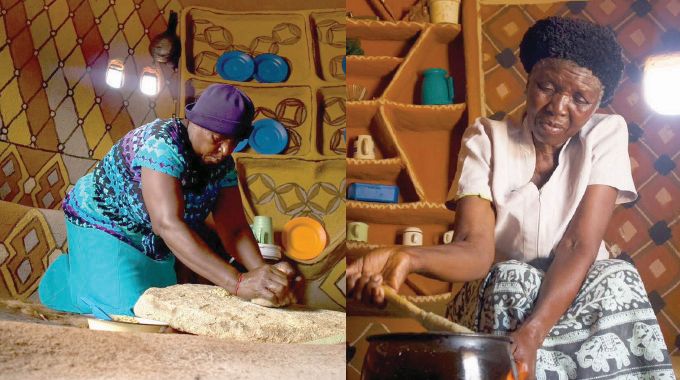
The overwhelming turnout strengthened the organisers’ resolve: Zimbabwe’s traditional recipes, long dismissed as rural and backward, needed to be saved. After communities in Matobo raised the alarm last year, Amagugu partnered with Magriza Made Me Cook and African Food Revolution to preserve dishes under threat of extinction. Their collaboration became a love letter to Zimbabwe’s long-lost meals and recipes.
“We are trying to document some of the work that we are doing,” said Amagugu director, Alington Ndlovu.
“We realised that as of late, we having a lot of Food Expos but not enough documentation of what we are doing. So, we decided that this time around, we are going to be intentional about this and that is why we will have a videography, a dedicated research paper and an exhibition, all highlighting the process.
“We are saying that there are certain dishes in communities across the country that are going extinct.
This is despite efforts by the Government and private institutions. It is now difficult for someone to tell you how amasi omcaba, for example, is made. People might know the name, but they do not know the process to make these things. The same goes for isitshwala made from finger millet, because we see that sorghum is now back in vogue, but finger millet is almost forgotten. These are the dishes that we felt were going extinct in Matobo,” he said.
On social media, where the collaborators are documenting their journey, the project has struck a chord. Many users comment with excitement when they encounter dishes they last saw years ago and thought were gone forever.
According to Ndlovu, documentation is the most important part of the project.
“We want people to watch the stages of the project so that they can trace where we started, and how we came to be where we are, while working with women from Matobo. Certain dishes were selected by the communities in Matobo, who felt that while many are in danger, these particular ones were really going extinct.
“This is an ongoing process and we closed off the year last year with a tasting event so that people could actually feel what we are talking about,” he said.
Ndlovu said with the project nearing its end, a research paper, giving people pointers on where and how to find some of the ingredients and recipes, would soon be available for the general public.
“The project is a collaboration between Amagugu, which is steering it, partnering with Magriza Made Cook for videography and Africa Food Revolution to bring in that element of nutrition research. This has been running for some months now and we are about to come to the end of the project, and we want to participate in the Creative Economy Week. We are looking to hold a Mini Expo, an exhibition and a screening in March.
“A research paper is being done by Africa Food Revolution and by March 7, it shall be complete. That research paper is going to be meant for public consumption and it is going to be instructive on what people need to do to get hold of some of the ingredients and the recipes to make some of these dishes.
The documentary is also going to do the same on some of the recipes,” he said.
Ndlovu said that while they were enthusiastic about the documentary screening and the research paper, their food revolution would not start and end on a screen or on paper, as they wanted the knowledge they had spent months gathering to cascade down to the younger generation.
“Now, with that out of the way, we can have a panel discussion at the screening of the documentary on how these dishes can be incorporated into the curriculum, how they can be monetised and how we can sustain and transmit the skill of how to make them to the younger generation. That is the entire thrust of the project,” he said.
Ndlovu said while they had toyed with the idea of making a cookbook, they had decided to instead decided to settle on a catalogue that would have all the recipes they had worked on during their crusade.
“When we spoke to people in the food industry, we were told by some that we perhaps needed to make a cookbook. However, we decided that we do not want to reinvent the wheel because an elder, I think she’s based in Lupane, already did that.
“So, instead, we are going to come up with something like a catalogue and that will be detailed and contain instructions on how to prepare certain dishes. Some of these things will be on sale, others will be put on strategic corners and others will be given to strategic partners. However, this is something that will be done later on after the end of the project as we reflect on it,” he said.