

 admin
admin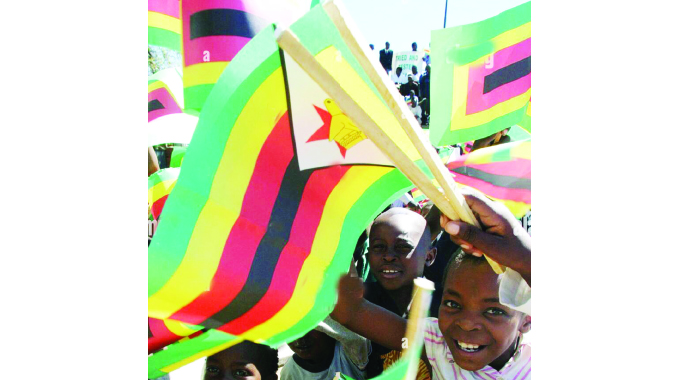
Elliot Ziwira Senior Writer
Lately, Zimbabweans have become enemies of whatever has to do with their country and fellow countrymen.
So much rage and hate, grave pure hate, is exhibited at the slightest provocation, particularly on social media platforms. One really wonders what has become of us as a people.
The intolerance, ire and abhorrence have become so palpable that one can easily cut through them with a dagger.
The warm smiles, hilarious laughter that Zimbabweans are known for, seem to be dying, and in their stead sneers, frowns and tirades have been born.
It is trite that every Zimbabwean has a right to live the life he desires, both for himself and his children. However, that right, as recognised by his country as valid, should not infringe on the rights of others to citizenship through destruction of that which makes them humane – nationhood.
A country’s forte is its citizenry, and a nation-state’s aspirations are mirrored in its nationals, who can either obscure or illuminate them. It is in their power for citizens to do so. It all starts by them carrying the burden of being each other’s keeper.
As citizens of Zimbabwe, therefore, let us find that which unites us, even in our own different ways, for expressing divergent views does not equate to rivalry. We remain one because it is only right to do so.
The world would be a better place, if every citizen exercises his/her right to differ, not by lampooning those expressing deviating views, but by contributing to the greater good that begins at the family level.
Whatever we wish for at the individual level as parents, siblings, community leaders, policymakers, clerics and professionals in our different careers, begins and ends with us as citizens.
Hence, as Zimbabweans we ought to know who we are, so that it becomes easier for us to know what it is that makes us one, even in the face of our challenges, for we toil together, rejoice and despair as one.
As the Bissau-Guinean Pan-Africanist intellectual and revolutionary, Amilcar Cabral, writes in “Unity and Struggle” (1973): “Struggle is a normal condition of all living creatures in the world.
“All are in struggle . . . We advance towards the struggle secure in the reality of our land (with our feet planted on the ground).”
Alive to our travails, and the reality of our situation, we locate ourselves in the global sphere and claim as our space that which no one else can lay title to.
As George William Curtis observes, “a man’s country is not a certain piece of land, of mountains, rivers, and woods, but it is a principle, and patriotism is loyalty to that principle.”
For loyalty, patriotism and principle to hold forte, and for nationhood to subsist, it is imperative that individuals making up families, groups, communities and countries invariably become citizens and think in terms of citizenship.
So what then is a citizen as compared to an individual?
An individual is generally a single human being separate from a group, family, community or country.
Driven on by individualism he/she is bound to selfishly think about himself/herself. In whatever he/she does, the motivation is the self. An individual lives outside or on the fringes of sites making up the nation, for to him/her none else exists, but himself/herself. In other words, ndiye chete chete!
A citizen on the other hand, is defined as a “native or naturalised member of a state or nation who owes allegiance to its government and is entitled to its protection (distinguished from alien); an inhabitant of a city or town, especially one entitled to its privileges or franchises” (Dictionary.com).
Yes, we are members of a country known as Zimbabwe. Zimbabwe is our birth right; our Motherland, and the only thing that belongs to us and we belong to. There is no other land that we can lay claim to, and there is no other nation that can claim us either, for national flags are not mere flapping cloths that can be pulled down, changed and hoisted again. They are emblems of a people’s honour, which cannot be exchanged for gold, no matter the odds at stake.
We remain Zimbabwean; we remain who we are; and whatever our nation has become, or will become, has everything to do with us as a people, as citizens of this beautiful land.
Often-times, when the burden becomes unbearable, the temptation is to lay blame on others. We are quick to ask what the country, our country, has done for us to deserve our undivided attention.
We question why we seem to be outside the realm of our dream, which should equally be shared and cherished. Perceiving the dream to be outside our purview, we are quick to dismiss it as a nightmare.
It is so because the essence of citizenship is lost on our part. So, we are moving further and further away from this space that we should be honouring.
There is always a need to reflect on what it is that you are doing for your country that will change outcomes for us, for our children and future generations.
It pays not to be always whining, always clamouring for this or that, without contributing anything towards the common good.
As Andrew Jackson aptly points out “every good citizen makes his country’s honour his own, and cherishes it not only as precious, but sacred.”
Imagine how much we can achieve if we all pull together, in one direction. Divide and rule tactics prevail in a polarised landscape, where brother hacks brother or sister’s throat for lack of trophies, in a world where no medals exist for second best.
As a united front, we remain the first. Thus, there is no need to worry about worldly trophies sponsored by alien merchants of violence purporting to be champions of fair play. Haven’t we travelled the railroad before, brother? Haven’t we voyaged it dear sister, to know that highway robbers exist?
There should be a voice of conscience in each one of us that cries out each time the temptation to throw fellow brethren under the speeding train of our labours grips us.
After all, as Jung (1964) says, “deep down, below the surface of the average man’s conscience, he hears a voice whispering, ‘There is something not right,’ no matter how much his rightness is supported by public opinion or moral code”.
Yes, there is something wrong in the way we distance ourselves from our nation, throwing spanners in the wheels meant to navigate our ship out of muddy waters. When our visibility on social media, or any other platforms, is as divisive as it is blinding to others, then, surely, there is “something not right”.
If no good word comes out about our country and its leadership, then the need arises to turn the lenses on the self and see whose face is reflected. We may be wrong, for humanity is wont to, but we cannot be wrong all the time.
Now, if all citizens are to love their country, they should feel protected and cared for. They should be provided for; they should be given a listening ear, which President Mnangagwa has always been calling for.
There is always a consequence to exclusion, materialism and individualism in view of citizenship.
Richard Stallman notes that “the reason that a good citizen does not use such destructive means to become wealthier is that, if everyone did so, we would all become poorer from the mutual destructiveness.”
If we are all corrupt and Hegelian materialism becomes the new norm, then, what will become of us as a people? What will become of our country?
As has been observed through autochthon wisdom, a man cannot be expected to love his country, when as a child, he was never taught to love his village and fellow community members. Old habits die hard, they say!
Negativity, therefore, should not be allowed to grow into a habit. Let us cultivate a culture of love, peace and unity, even in the face of adversity, for misfortune is a state of mind.
There is always a starting point. If we teach our children the quintessence of nationhood and citizenship, through a shift, not only in our thinking, but changes to the curricula in our schools, then, we will be able to create patriotic nationals, who will stand tall in defence of their country. It is well that pledges to self and nation, involving young people are revisited.
The national youth service is not a bad idea after all. It is an apt starting point, for every nation is as good or bad as its citizens. Indeed, as Andrew Jackson posits, “every good citizen adds to the strength of a nation,” for being a citizen is more than a birth right.



 Online Reporter