admin
admin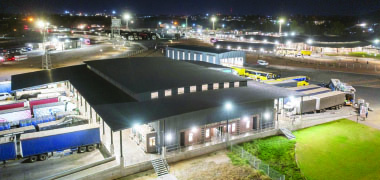
Thupeyo Muleya Beitbridge Bureau
South Africa’s government has approved a proposal by its Ministry of Home Affairs to upgrade six of its major ports of entry including the Beitbridge Border Post which handles more than seven million travellers annually.
Home Affairs Minister Dr Aaron Motsoaledi told the media in Pretoria on Wednesday that he had since secured full support of the Ministry of Finance to start with the projects.
The six earmarked ports of entry are: Beitbridge – Zimbabwe, Lebombo – Mozambique, Maseru Bridge – Lesotho, Ficksburg – Lesotho, Kopfontein – Botswana and Oshoek – Eswatini.
The move is set to improve efficiency and match the development matrix between South Africa and its neighbours including Zimbabwe which has since transformed its component of the border at a cost of US$300 million in a private public partnership with the Zimborders consortium.
Beitbridge (Zimbabwe) which now has three terminals for freight, buses and private cars/pedestrians and is also automated, links South Africa to Zambia, Botswana, Mozambique, Angola, DRC, Malawi and Tanzania.
Dr Motsoaledi said the six (POE) projects will cover the full infrastructure development of each designated border post and the provision of the required services.
This, he added, will also ensure a coherent and coordinated support of institutional functions of all Organs of State present at the Port of Entry.
“In order to ensure that the ongoing operations at each of the designated Ports of Entry are not interrupted, construction will be undertaken in phases,” he said.
“During construction, the project is expected to create in the order of 38 000 jobs in areas around the six designated ports of entry.
The project is being undertaken on a Public-Private Partnership (PPP) basis. The procurement process is therefore subject to the procedures set out in Treasury Regulation 16 for initiating, procuring and concluding PPP projects”.
He said the Request for Proposals (RFP) for the six ports of entry projects were issued on Sunday this week and they were already inviting interested parties to participate.
The RFP, Dr Motsoaledi said was on the e-tender portal and other government websites, including the Department’s website.
He said they were now looking for partners to engage them in the planned infrastructure development model.
“When I delivered my speech at the Budget Vote, on 17 May this year, I announced my gratitude at the approval granted by Finance Minister, Mr Enoch Godongwana for the Department of Home Affairs to issue the Request for Proposal to the market for the redesigning and redevelopment of our top six busiest Ports of Entry”.
He said South Africa’s ports of entry were designed during the apartheid era with the primary objective of tightened security whilst neglecting the effective facilitation of regional and international trade.
“In fact, ladies and gentlemen, it is not an over exaggeration to state that when you visit our land ports of entry, between us and our SADC neighbours, the South African side of the border looks like informal settlements while the other side looks like Sandton,” said the Minister.
He said since the advent of democracy, there has been an exponential increase in the number of people moving between South Africa and the countries in the region.
Dr Motsoaledi said the volume of regional and international trade has similarly increased.
As a result, he said South Africa’s land ports of entry are very congested and that continues to stifle trade instead of enabling it.
“The announcement we are making today will make sure that what is happening there will become history,” said Dr Motsoaledi.
“We wish to remind you that we have 72 Ports of Entry of which 53 are land, 11 are international airports and 8 are seaports all of which are now operated by the Border Management Authority.
Of the 53 land Ports of Entry, we have now earmarked six of our largest and busiest, by traffic volume, for re-development in order to address the congestion”.
The Minister said the outcome of the redevelopment of these Ports of Entry will be used as a blueprint in the long-term for all other South Africa’s land ports of entry.
“If you want to understand what we are talking about, just take a visit to the Lebombo Border Post between South Africa and Mozambique where you will see trucks lining up for kilometres, bumper to bumper, for hours on end, on the N4 Corridor,” said Dr Motsoaledi.
“This is because mining companies in the North West, Limpopo and Mpumalanga took a decision to use the Maputo Port for their exports, and no longer Richards Bay Harbour.
“Given the current narrow design of the Port, this has led to congestion. The announcement we are making today will make sure that what is happening there will become history”.
He said the neighbouring country has 72 Ports of Entry of which 53 are land, 11 are international airports and eight are seaports all of which are now operated by the Border Management Authority.
Minister Motsoaledi said the outcome of the redevelopment of the six major Ports of Entry will be used as a blueprint in the long-term for all other South Africa’s land ports of entry.
Their primary intention, he said, was to ensure the realisation of regional economic integration in the SADC region, while facilitating the realisation of the African Continental Free Trade Area.
“The re-developed ports of entry will result in the efficient cross-border management of movement of people, goods and services and the improved administration of persons entering and leaving South Africa,” said Dr Motsoaledi.
“In addition, we are looking at having a better regional economic integration; and enhanced support for the African Continental Free Trade Area.
The new facilities will ensure that there is improved revenue collection and addressing leakages caused by the illegal movement of goods and illicit financial flows”.
The Minister said the Pretoria government was looking at protecting local industry from harmful imports and exports and curbing illegal migration.



 Online Reporter