Chronicle Editor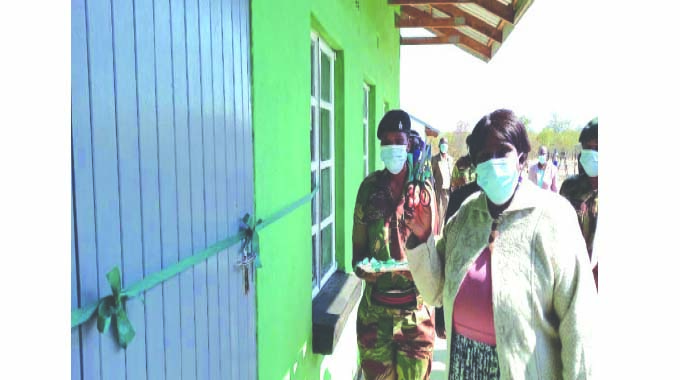
Thupeyo Muleya, Beitbridge Bureau
IT is every Zimbabwean child’s dream to access basic education that lays the foundation for their future and is key to success and possible fortune.
This basic belief has served to inspire many young people who ultimately dream of that gown, cap of knowledge, and the final dream life of an educated soul.
However, many children in remote areas or resettlement areas have been on the receiving end of the challenges which come with access to basic education facilities.
Some of them walk long distances to school.
Several districts in Matabeleland South province, especially in Beitbridge face a shortage of schools.
Since 2002, children from Zhophembe Primary School in Ward 14, under Beitbridge West constituency have had to endure the agony of using an old farmhouse as three classroom blocks during the day and bedrooms at night.
So bad was the situation that the community started pooling resources to build a proper school.
They then engaged the Zimbabwe National Army’s (ZNA) Elephant Brigade (1 infantry) which is based in Bulawayo and in charge of the Matabeleland region to assist with artisans to construct the school in 2015.
“We then moved in and built one classroom block which was completed in 2016 and was commissioned by the late Major General Trust Mugoba,” said the commander of one infantry brigade Brigadier General Joseph Kudumba last Friday.
“Today, we are here again to commission another two-classroom block whose construction was mooted in 2017 but was completed this year.
“Again, the community here mobilised material resources and we offered artisans as part of the military assistance to civil ministries or communities. This role is undertaken by the army to support Government to maintain essential services in times of disaster or it could be a request from communities”.
He said they have more similar projects in the Matabeleland region focusing on the construction of schools and clinics.
The Deputy Minister of Home Affairs and Cultural Heritage, Cde Ruth Maboyi who commissioned the new classroom block said it was symbolic that the Elephant Brigade had come to the rescue of Zhophembe Primary School.
“Zhophembe means the southern elephant and what we are witnessing today is commendable, the big elephants are here helping the young elephants to access education.
Our wish is to have this school grow in terms of infrastructure and become big like an elephant so that it can have a positive impact on children from Beitbridge,” said the deputy minister.
The school head Mr Lemohang Tlou said the gesture by the army was commendable and important in creating child-friendly schools.
He said the availability of more classroom blocks was important in managing cases of school dropouts and also to improve pass rates.
“We are having classroom accommodation shortages and this block will go a long way in easing some of our operational challenges.
Our catchment area is big and we have many school dropouts in winter because the pupils are not interested in learning under trees in the cold,” said Mr Tlou.
He said they need two more blocks to accommodate all the pupils from the nine villages within the ward and 14 resettlement areas.
Mr Tlou said before the closure of schools they were keeping 31 pupils from far away villages at the school to enhance continuity in learning.
According to the School’s Development Committee (SDC) chairperson Mr Abbiot Ncube, besides the shortage in accommodation and teaching facilities, girls especially those in Grades Six and Seven are vulnerable to sexual abuse by close relatives.
Mr Ncube said some of the school catchment areas include; Mazunga (11km), Tshambengedzani (12km), Mpanyani (18km), Shonisani (14km), Section 3 (9km), Basasa (5km), Malahlani (4km) and Govha (17km).
“We are grateful to the members of the community, the Zhophembe School Project, the Bubye Valley Conservancy (BVC) who donated material to build this new two-classroom block.
In addition, we are looking forward to using the army artisans to build more facilities here including teachers’ cottages. Currently, the five teachers are sharing one former farmhouse,” said Mr Ncube.
A villager from Ward 14, Ms Shalati Njalavhani said their children will now learn in proper classrooms following the commissioning of the new block.
“It was disheartening to see our children crammed in one classroom or learning under trees.
“We hope to continue collaborating with the army and other stakeholders and addressing these challenges,” she said.
Mr Obvious Modome said they were happy with the progress at the school.
“The construction of more classroom blocks here will motivate teachers and pupils to do well.
Where there are limited facilities, there is usually too much discontent from teachers and the pupils,” he said.
Ms Sibangisiwe Ncube said the low enrolment at the school had been adversely affected development and enrolment.
As a result, she said, the community could not rely on school levies to build classroom blocks and teachers’ cottages.
“Before the army and other players came in, our situation was dire, as you can see we are in resettlement areas where villages are sparse and most of the people here are either retired or low-income earners.
We have children from as far as 18km and parents from far away villages agreed that children stay at the school to save them from trekking longer distances daily” she said.
According to Unicef; an estimated 250 million children in the world cannot read, write or do basic math and 30 million of them have never attended school.
In general terms, the children excluded from learning opportunities are among the most vulnerable and hard to reach in the world.
It is understood that for children aged over five years but under the age of eight, the normal walking distance to access a school is 3km and 4,8km for those aged over the age of eight and under 16.
The unavailability or inaccessible nature of learning institutions in the province is gradually becoming a thing of the past as the army and other development agencies are on an aggressive infrastructural development drive.
Shortages in facilities usually results in increased school dropouts.
Incidents of child or early marriages and juvenile delinquencies are common in cases where bush boarding is practised. — @tupeyo


 Online Reporter