Vusumuzi Dube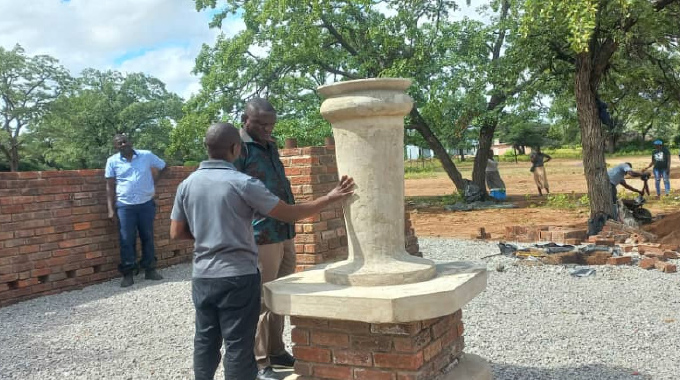
Thupeyo Muleya, Beitbridge Bureau
THE Beitbridge community is excited and grateful to Government for recognition and for upgrading the Zezani Assembly Point into a liberation monument where the national Independence flame will be lit this year by Vice President, Dr Constantino Chiwenga.
This is the point where the roadshow will begin from April 10, after which it will be taken through all the districts in Matabeleland South before reaching the venue of the national Independence Day celebrations at Maphisa in Matobo District. Officially known as Juliet Assembly Point, the historic site played a crucial role in Zimbabwe’s liberation war, serving as a gathering point for ZIPRA and ZANLA forces under Commonwealth supervision.
The site, which is the only assembly point in the province and one of 16 such centres countrywide, is located at the old Rural Infrastructure Development Agency (RIDA) campsite and is now being developed by the National Museums and Monuments.
Zimbabwe’s closing chapter of the liberation struggle was decided at the Lancaster House Constitutional Conference between September 10 and December 15, 1979.
Described by many historians as the “Last Funeral Parlour” of the British Empire, it was at the Lancaster House Conference that a decision was reached to establish what was to be called assembly points.
Assembly points were established as rendezvous to facilitate the demobilisation of thousands of freedom fighters deployed.
The idea of assembly points was to ensure that freedom fighters registered their names, surrendered their weapons and recorded the serial numbers of their weapons, with periodic checks being conducted by commanders of the Patriotic Front, composed of ZANLA and ZIPRA forces.
At that time, the Commonwealth forces provided 1,500 peacekeepers — 150 Australians, 22 Fijians, 50 Kenyans and 75 New Zealanders. Britain provided 800 soldiers, with 300 coming from the Royal Force and a small contingent from the Royal Navy and Royal Marines.
Matabeleland South Minister of State for Provincial Affairs and Devolution Albert Nguluvhe recently toured the site where the NMMZ is constructing a monument and expressed satisfaction with the progress.
“This is a very important part of our war heritage,” he said.
“The monument will not only honour our fallen heroes but also serve as a symbol of unity and pride for the community.”
Work on the monument that will feature an independence flame stand, flag-posts, a metal silhouette of a soldier, an interpretive house, and an interpretive board is almost complete.
National Museums and Monuments curator, Mr Stanley Nyamagodo, said they were grateful for the support they are getting on the ground and that they will complete the project within the set time frame of April 5.
“Already, we have completed the flag posts, the Independence flame stand, and we are almost done with the interpretive board. We also intend to rehabilitate one of the houses to accommodate our interpretative facility. We will also fence off this area to avoid vandalism and damage by domestic animals,” he said. As the Independence euphoria spreads across the province, community members in Beitbridge have welcomed the development, seeing it as a way to preserve their history and attract tourism.
“This monument will put Beitbridge on the map,” said a senior citizen from Zezani, Mr Simon Musinyali.
“We’re proud of our heritage and can’t wait to share it with the world. My homestead used to be very close to this assembly point and I have vivid memories of the ceasefire period. I commend the Government for remembering this historical site.”
A village head from Beitbridge West, Mr Palalani Muleya, said the recognition of the Zezani Assembly point was a step in the right direction by the Second Republic.
“This is a very critical point, which was established during the ceasefire as we fought for our liberation from colonial rule and its recognition and ongoing development are true to our President’s mantra of not leaving anyone or any place behind on national matters,” said Mr Muleya.
A ZIPRA veteran of the liberation from Beitbridge, Cde Edward Tlou, whose war name was Sakurai Guta, said he felt very honoured to see the Government remembering the role played by the community in that area during Zimbabwe’s liberation struggle.
He said the community will use the place to gather for many public activities in the area since it is now developed with other critical amenities and that children will learn more from the historical information to be housed at the interpretive centre.
“This monument point is strategically located at a place where the larger community of Beitbridge West meets regularly for cattle sales, community market and other social gatherings,” ZIPRA veteran of the struggle, Cde Joseph Mbedzi (Cde Majazi) said.
“It’s upgrading with better facilities that makes most of us happy and it shows the seriousness on the part of the Government to preserve our liberation war heritage.”
Some of the known assembly points included Kilo, Foxtrot/Dzapasi, Lima, Juliet, Golf, Echo, Delta, Charlie, Bravo, Alpha, Papa, November, Quebec, Mike, Hotel and Romeo.
It is understood that most of the assembly points were located close to sources of water and were mere makeshift camps lacking necessities.
At that time, the Rhodesian forces were mainly concentrated in the centre of the country, with some on the borders. Guerrillas were sandwiched between Rhodesian and Commonwealth forces.
Ends CKD NT



 Online Reporter