daniel chigunwe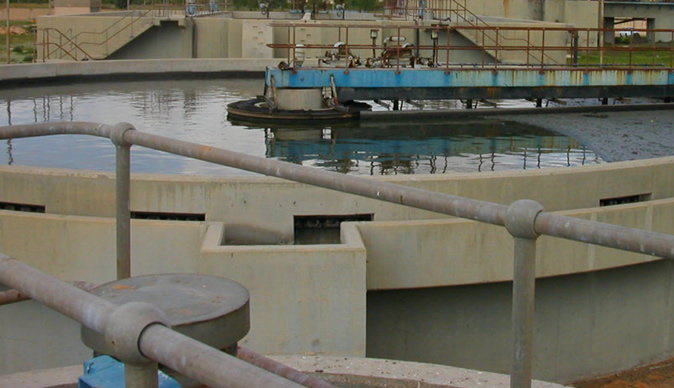
Thupeyo Muleya Beitbridge Bureau
The Beitbridge Municipality will soon start upgrading its sewer reticulation infrastructure to meet projected growth and transformation into a medium city.
Town Clerk, Mr Loud Ramakgapola said although they got a shot in the arm from the government which constructed a modern sewer dam, they need to expand the infrastructure.
Through the US$300 million border the government and its partner Zimborders consortium constructed a new sewer oxidation dam to address service delivery challenges in the country’s fastest growing border towns.
The sewer oxidation dam, a 1,4 water reservoir, an animal plant and quarantine centre, 220 housing units for civil servant and a fire station are some of the five major out of port projects.
Prior to the latest development, the cash strapped and opposition-run local authority had been struggling to address water reticulation and sewer reticulation challenges.
At some point the local authority was taken to court by the Environmental management Agency for failing to manage the sewer system.
Sewer streams had become a common feature in the town until the government intervened.
“With the added developments in the town, sewer ponds are becoming smaller or inadequate,” said Mr Ramakgapola.
“The addition of a new pond has come in handy to ease this pressure.
“However, we still need to expand our sewer ponds or to start a new site completely given the ever rising population of the town and the development happening all over the town”.
The town has an estimated population of 0ver 70 000 people and plays host to another 15 000 in transit through the border daily who also make use of the local sewer infrastructure.
In addition, there are more than 14 000 properties in the area and more are still under construction.
Due to previous sewer and water reticulation challenges, mots residents are relying on boreholes and septic tanks.
Former Beitbridge mayor, Councillor Munyaradzi Chitsunge, said recently that the construction of the sewer oxidation dam which has since been handed over to the government would go a long way in addressing perennial service delivery challenges in the town.
“The new oxidation plant will increase the sewer reticulation capacity of the town. What it means is that, the more we have houses constructed, we are not going to have an overwhelmed sewer reticulation system,” he said.
The other benefit is that we have a sewer farm to promote urban agriculture and are allocating some farmers plots at the farm. So this modern infrastructure is a boost for irrigation water at these planned horticulture projects”.
Zimbabwean born, Dr Clement Chipenda who is South African Research Chair in Social Policy (SARChI-SP) at the University of South Africa (Unisa) said the development of a state of the art and adequate sewer system highlights an important milestone in National Development Strategy 1 (NDS1).
“This is a commitment to an improvement in infrastructure development, investment and expansion in critical areas particularly water and sanitation as well as social amenities,” he said.
“In fact, this comes in a background where NDS1 acknowledges that sanitation systems and services in many urban and rural areas have deteriorated with the majority of the sewerage systems having experienced large-scale blockages and water treatment plants are dysfunctional.
Having this infrastructure in place highlights progress towards addressing an often overlooked challenge in urban areas”.
Dr Chipenda said the latest sewer infrastructure will ensure Zimbabwe’s progress towards attaining three of the 17 SDGs namely — SDG 3 on Good Health and Well-being — SDG 6 on Clean Water and Sanitation and SDG 11- Sustainable Cities and Communities.
In simple terms, Oxidation ponds are natural methods of waste treatment and utilises a series of primary (anaerobic), secondary (facultative) and tertiary (aerobic ponds).
It is also understood that since they are natural they don’t consume energy in terms of pumping and aeration requirements. The energy saved can be utilised in other productive sectors of the economy.
The method is environmental friendly with minimal carbon footprint and in some instances sludge can be dried to make manure.
Further, the dam can be utilised for pasture irrigation and if well managed, the dams can promote bird ecology and ecotourism.



 Online Reporter