admin
admin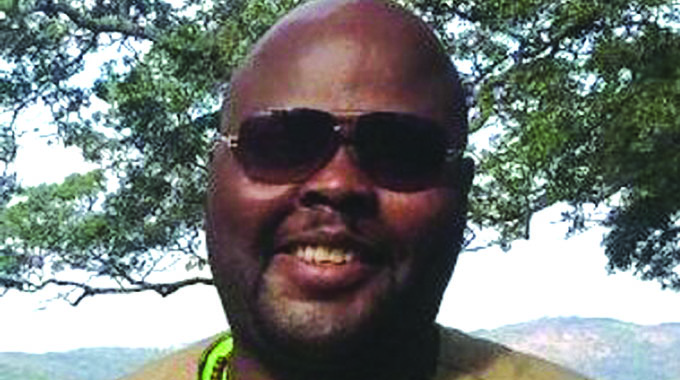
Herald Masvingo Bureau Chief, George Maponga(GM), was recently elected Zimbabwe Union of Journalists(ZUJ) president during elections held in Harare. Maponga’s election to the ZUJ helm comes nine years after the last Congress with a number of challenges, among them the Covid-19 pandemic, sidestepping efforts to convene another Congress as mandated by the constitution.
The Herald (H), in excerpts below, speaks to Maponga on his election and plans for ZUJ over the next three years.
**********
H: Can you tell us about yourself, who is George Maponga?
GM: George Maponga is a born journalist. My passion for journalism was first evident during the late 1990s when I was doing my secondary school at Silveira High School in Bikita, Masvingo.
I later on proceeded with my education up to the time I attained qualifications in journalism and then got permanently employed by the Herald in 2003. I had already shown glimpses of deep interest in and understanding of journalism from my teenage years. I have always believed in the power of the pen to shape and also reflect society.
H: How long have you been in the journalism industry?
GM: I started my journalism journey at The Herald in 2003 as a junior reporter after graduating from college the same year.
I was immediately posted to Masvingo that same year to man the Masvingo Bureau office though I was still a curb reporter.
To me that was not only a challenge but also a sign of confidence in my abilities by the then Editor and now Zimpapers chief executive officer Mr Pikirayi Deketeke. For me, it has been a roller coaster 17 years now of carrying a pen, notebook and camera at the country’s largest integrated media house, Zimpapers.
H: How does it feel to be at the helm of ZUJ?
GM: It feels good but at the same time challenging because the union has a rich history and is closely connected with the media industry in Zimbabwe. I cannot underestimate the magnitude of the work ahead to re-invigorate the union so that it can once again reclaim its yesteryear status as the union of choice for journalists in Zimbabwe.
H: Of late, ZUJ has been a bit quiet and inactive. It is now a pale shadow of its former self. How do you plan to resuscitate it?
GM: My immediate task is to rekindle the relationship between ZUJ and journalists through coming up with programmes and projects that have a positive impact on my constituency. There are several reasons that have made ZUJ lose its lustre, chief among them estrangement with the union’s constitution. I pledge to usher in a new epoch of constitutionalism so that the union does not divorce itself from its membership and end up being a personal tool used by its leaders for power retention and abuse.
There is also another issue of accountability and transparency. Leaders should be accountable to their constituency and my executive will do everything in its power to make sure we are not only accountable but also subject to scrutiny for example in terms of financial propriety by producing annual audited books of accounts. We will also engage key stakeholders of the union with a view to closing ranks and sharing notes so that we move on the same wavelength to what promises to be a new and brighter tomorrow.
H: What are the main areas that you want to focus on to improve the welfare of journalists during your tenure?
GM: Poor remuneration remains a blemish in the local media industry giving rise to vices like brown envelope journalism and the first port of call should be engaging Government for the industry to come up with a National Employment Council(NEC) for the media industry.
I am happy that Government through the Ministry of Information, Publicity and Broadcasting Services, hinted at our just-ended elective congress, that it was ready to discuss the issue of coming up with a NEC for the media industry. This will be handy in dealing with the problem of poor salaries. Journalists should be paid and deserve a living wage. It does not help for journalists to be famous yet they live from hand to mouth and in penury. Journalists are vital cogs in building a prosperous nation because they have a duty to objectively interrogate and report truthfully and factually but all this can be compromised by brown envelopes. He who pays the piper calls the tune!
The media should be the voice of the voiceless and play a watchdog role but journalists as the media foot soldiers cannot do that on empty stomachs. We are also lining up engagements with Government at various levels to make sure journalists also get a share of the national cake when projects in sectors like mining, agriculture and housing are rolled out.
Journalists should not just report about Vision 2030, they should also be part of the journey in the Vision 2030 train because they are also citizens who should not be left behind. Zimbabwe is equally their home.
H: Coming to the issue of regulation, journalists are yet to come up with a regulation mechanism. How do you plan to go about it? And do you subscribe to self or co-regulation?
GM: As ZUJ, we concur with other media stakeholders that vouch for co-regulation where the Zimbabwe Media Commission acts as the last body of appeal, that is being an appellate statutory body superintending over a professional media council that will be below it. We envisage a scenario where the media industry will use this professional media council for peer review using a single code of conduct and ethics.
Professionalising the industry entails the need to uphold and respect certain standards and ethics like what media practitioners in other more progressive dispensations around the globe do and ZMC and the planned media council will be responsible for enforcing these standards.
As ZUJ we firmly hope this professional media council will be included in the Media Practitioners Bill that is currently being worked on by Government. The notion of co-regulation loomed large in a recent Writeshop in Kadoma where media practitioners unanimously okayed co-regulation with a media council falling under ZMC peer reviewing fellow journalists. Coming up with a media council as part of the Media Practitioners Bill will in our view constitute part of the drive to professionalise journalism. Bloggers,journalists and content creators will all be represented in this media council which will be a representative sample of media practitioners in the country. Nobody will be left out and ZMC will retain its power as the last body of appeal with overall oversight of the media practitioners and the industry.
H: Journalists have faced restrictions/hiccups during the course of their duties. As a Union how do you intend to secure journalists’ safety and security during elections?
GM: We do not believe in the politics of confrontation, we believe in rational engagement hence we will continue to vigorously engage stakeholders, principally Government, on the issue of security and safety of journalists in the course of their work including during elections more so as we head towards the 2023 polls. I am heartened that the current Government, especially the line ministry, the Ministry of Information, Publicity and Broadcasting Services, right up from the Minister, has shown flexibility and inclination to address concerns of the media industry in general and journalists in particular via things like jettisoning draconian legislation to enacting laws that promote safety and security for journalists. On any other outstanding and spontaneous issues, we will continue to engage.
We need to work in unison for our nation’s greater good and the first task will be to wipe away the mist of mistrust ahead of 2023.
H: What new leadership culture are you infusing into ZUJ?
GM: We want to engage with all stakeholders. We do not have black and white cows, what matters is the milk. We do not ostracise anyone and we are ready to engage with all the stakeholders so that we as journalists play our part.
We also want a culture of accountability; this is important when building trust especially for an organisation like ZUJ.
It needs fresh impetus and gravitas to move forward and for that to happen its wheels must be lubricated by the oils of goodwill and support from partners-both old and new. Together we can make ZUJ great again. I thank you.


 Online Reporter