Rutendo Nyeve
ZIMBABWE’S geological heritage has received a major international boost after the Belingwe Greenstone Belt in Mberengwa, Midlands Province was recognised among the Third 100 International Union of Geological Sciences (IUGS) Geological Heritage Sites, a prestigious international recognition celebrating some of the world’s most important geological locations.

The achievement is the result of a collaborative effort that began with research by Mr Forbes Mugumbate, through his paper titled The Value of the Belingwe Greenstone Belt, Zimbabwe, as a National Geoheritage Site.
This work laid an important foundation for further collaboration with Professor Maideyi Meck of the University of Zimbabwe, Mr Anthony Martin, a geological consultant, and Ms Nomasiko Shantelle Mpofu of the Zimbabwe School of Mines, who collectively contributed to advancing the site’s international recognition.
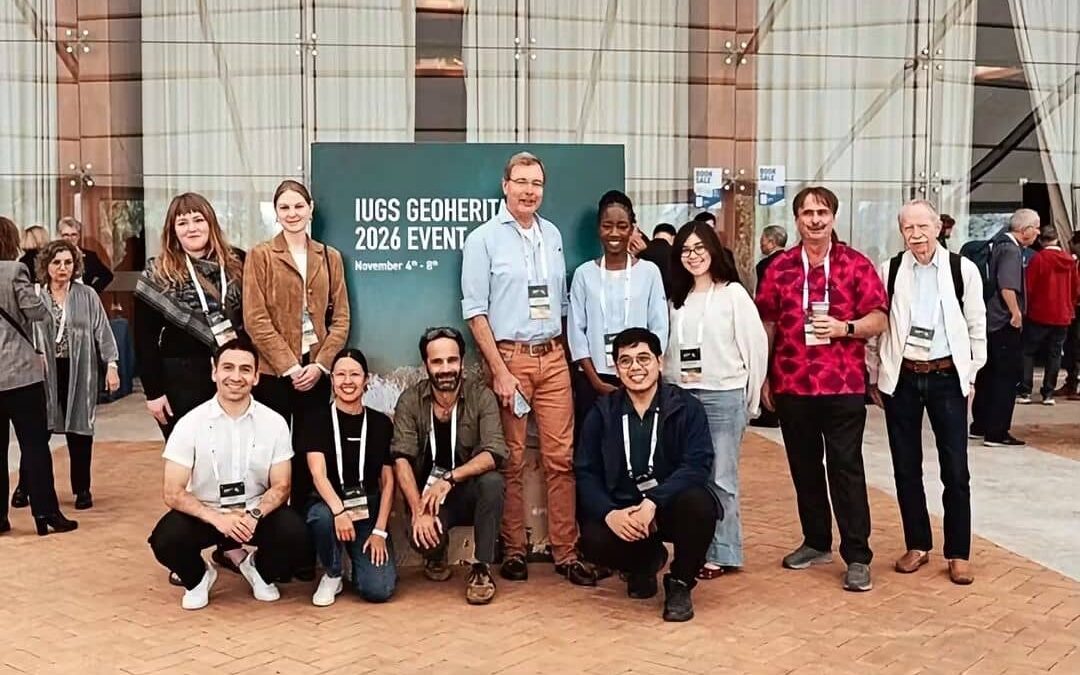
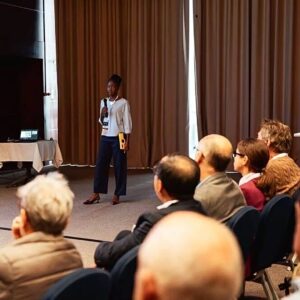
Ms Mpofu was the presenting author, representing the team at the international IUGS Geoheritage event in Portugal this week.

She was also among eight recipients of an Early Career Development Grant from the IUGS Commission on Geoheritage, which supported the participation of early-career professionals in the international geoheritage programme.
Speaking from Portugal, Ms Mpofu expressed her excitement at the development.
“Inspiration on this research lies in the fact that there’s so much more to the geology of Zimbabwe beyond mineral endowment, and the Belingwe Greenstone Belt is one special example.
It is more than a mineral resource. It is a geological treasure that deserves to be studied, protected and appreciated long after mining activities have ended. Its international recognition as an IUGS heritage site is one step towards achieving this goal,” she said.
“We hope to see more international geologists going to the site. We hope to establish the site as a geo-tourism destination. So we are excited with this new development and cannot wait to see what unfolds in the space of geo-tourism after this recognition.”
Located in Mberengwa, the Belingwe Greenstone Belt is special because it preserves an exceptional record of Earth’s early history, dating back nearly three billion years.
Its remarkable geological features include ancient volcanic rocks known as komatiites, pillow-shaped lava formations, stromatolites that preserve evidence of early microbial life, and the Manjeri unconformity, which records an important stage in the development of the Earth’s early crust. Its rocks are also relatively well preserved, making the area particularly valuable for scientific research and education.
The recognition goes beyond celebrating the geological importance of the area.
It highlights the need to preserve Zimbabwe’s geological heritage beyond the mining life of its greenstone belts. While these areas are well known for their mineral wealth, they also hold scientific, educational, cultural and tourism value that can benefit future generations.
Being recognised as an IUGS Geological Heritage Site creates opportunities to develop Belingwe as a geo-tourism destination, attracting researchers, students and visitors interested in exploring the history of the Earth.
It also encourages the conservation of important geological features while promoting sustainable tourism and local development.
For Zimbabwe, this is an important milestone as it reminds that the geological wealth is not only measured by the minerals extracted, but also by the unique geological history the country preserves and can share with the world.