Chronicle Editor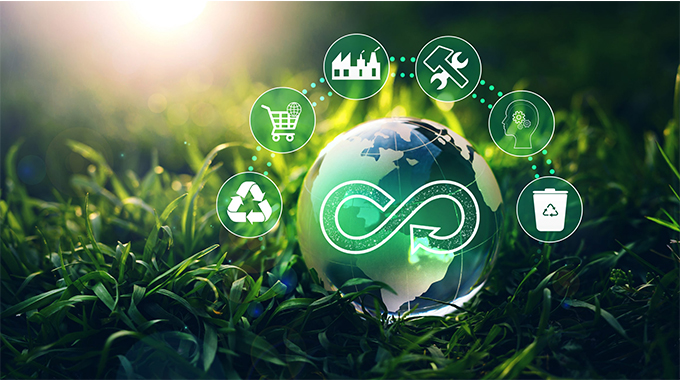
Qinisani Ndlovu
The linear economy is attracting increasing disapproval from all corners of society, as the world ushers in the circular economy. It has to be noted that the economic, social and to an extent political gains will favour the first movers in this new era.
Africa is slowly preparing to find its strong position in the face of change from linear to circular. With that being said, it is important to understand what the circular economy means in the African Context.
Researchers explore the correlation between the material export footprint of raw materials from Africa and national debt.
They say the sky rocketing debts are forcing African countries to unsustainably exploit their natural resources, in a bid to lessen the debt gap.
The exploitation of these resources is catastrophic for the environment, and weakens their natural capital. The linear model as widely documented, places pressure on the environment, while the circular economy places emphasis on the sustainable consumption and exploitation of natural resources.
It is assumed that in the circular economy model, countries will likely exploit less of their resources as demand for raw materials is curbed or remains constant.
If resources are to be sustainably exploited within the circular economy model, then, African countries might strengthen their weakening social capital.
A circular economy model strengthens Africa’s resource security and resilience by reducing dependence on imports and external markets.
By utilising local resources efficiently and investing in domestic recycling and re-manufacturing capabilities, African nations can mitigate supply chain risks and ensure greater self-sufficiency.
This, in turn, enhances economic stability, minimises vulnerability to price fluctuations, and promotes regional integration through resource sharing and collaboration.
The International Labour Organisation argues that the circular economy will deliver between seven and eight million jobs globally.
This claim is supported by the ESDES Business School, which says they are preparing students for jobs of the future, and place the figure at 700 000 new jobs in Europe, Vie the green deal.
Sadly, statistics coming from Africa are not conclusive with regards to the opportunities that could come out of circular economy adoption. Africa harbours the bulk of recycling and waste management opportunities, yet data regarding this is scarce.

However, it is this author’s submission that, re-manufacturing and repair activities can foster entrepreneurship and skills development.
By nurturing a thriving circular economy ecosystem, Africa can stimulate local economies, attract investments, and contribute to sustainable growth.
Circular economy practices can bolster the competitiveness of African industries, both domestically and globally. By adopting resource-efficient production processes, businesses can reduce costs, improve productivity, and enhance their market position.
Furthermore, a shift towards circularity fosters innovation, encouraging the development of new products, services, and business models.
This can spur technological advancements and position African industries at the forefront of sustainable manufacturing, driving export potential and economic diversification.
As the effects of climate change become increasingly evident, Africa, with its vulnerability to extreme weather events, faces significant challenges.
The circular economy offers a powerful tool to mitigate climate change impacts.
By reducing reliance on virgin materials, minimising greenhouse gas emissions, and promoting renewable energy, African nations can make substantial contributions to global climate goals.
The circular economy’s emphasis on energy efficiency and sustainable practices can help decouple economic growth from carbon emissions, fostering a low-carbon and climate-resilient future.
It is important for African leaders to help better position African economies in anticipation of the high and low hanging fruits that the circular economy is offering.
λ Qinisani Ndlovu is a recycling entrepreneur and solid waste management practitioner based in France. He writes in his own capacity.



 Online Reporter