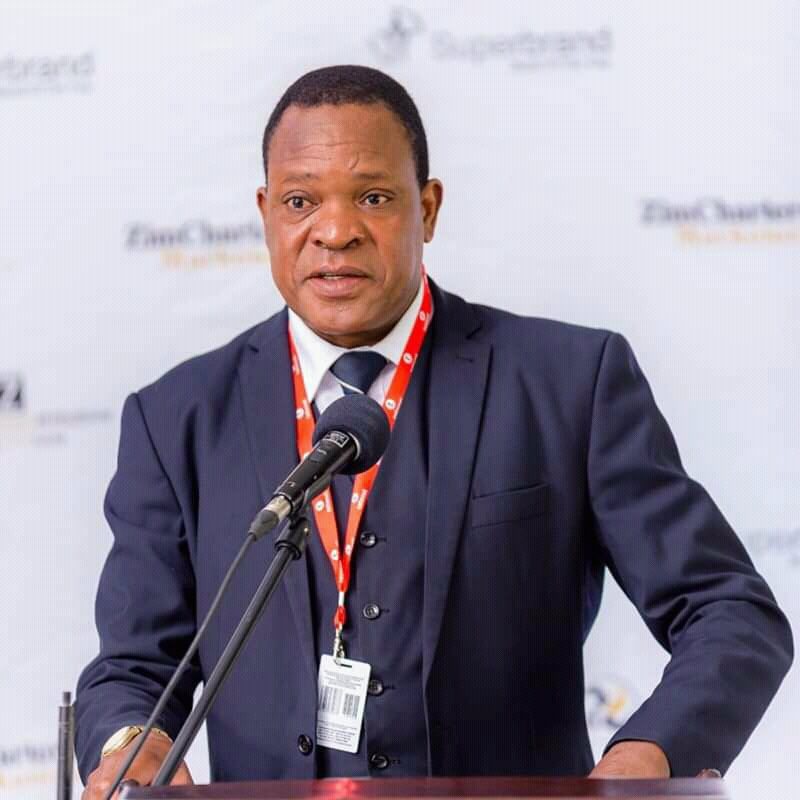
daniel chigunwe
Norest Ndawana
Herald Correspondent
In the face of climate change, water resources are under increasing stress, as rising temperatures, more frequent and severe droughts, and extreme weather events put pressure on supplies and increase the risk of water scarcity.
Although the amount of water on earth is constant, and has been for billions of years, the human population continues to increase, as do efforts to alleviate poverty and develop economically, which inevitably impact water resources. Cooperation on transboundary waters is fundamental to the implementation of 2030 Agenda for Sustainable Development and Vision 2030, which seeks to transform Zimbabwe to an upper medium economy.
If nations join global benefits, there will be several benefits.
A global convention is crucial for fostering political will to cooperate and provides a framework for bringing together development interventions and preventative diplomacy.
A state that becomes a party to the conventions sends a positive political signal to other countries, international organisations, financial institutions and other actors of its willingness to cooperate on the basis of the norms and standards of the conventions.
Consequently, such a state would enhance its respect by other actors in the international community for adhering to the rules and standards of the conventions.
Accession sets a political tone to other countries in the shared basin and may help them decide on acceding to the conventions.
The conventions strengthen the rule of law in transboundary cooperation worldwide.
Water has and will always be a political issue and would require political will at the highest level.
By becoming a party to the global water conventions, a country joins the international legal and institutional framework.
This increases certainty and predictability in relations among states and helps prevent potential conflicts, contributing to the maintenance of international and regional peace and security.
Accession to the global water conventions demonstrates a country’s commitment to act in accordance with international water law and advance transboundary water cooperation based on the principles, norms and standards of the conventions.
These legal instruments aim to ensure sustainable use of transboundary water resources.
The global water conventions are powerful tools to promote and achieve the objectives of the 2030 Agenda for Sustainable Development and its Sustainable Development Goals (SDGs).
They play a cardinal role in accelerating progress towards SDG 6 (clean water and sanitation) and its target 6.5 which calls upon all states to implement integrated water resources management at all levels by 2030, including through transboundary water cooperation.
The United Nations Economic Cooperation for Europe is the custodian of the 1992 Convention and together with UNESCO the agencies for indicator 6.5.2, which measures progress on transboundary water cooperation worldwide.
The convention offers a framework to discuss global progress on transboundary water cooperation and to identify common challenges and define responses.
The convention also contributes to several other SDGs such as zero hunger, good health and well-being, affordable and clean energy, climate action life on land, peace, justice and strong institutions and partnership for goals.
The global water conventions have strong focus on the protection of the environment.
The core objectives of the conventions are reduction of pollution, conservation and restoration of ecosystems, along with protection of biodiversity in transboundary basins for now and posterity.
To reach environmental and sustainability objectives, public participation, polluter pays and precautionary principles and application of environmental impact assessments are among the instruments to be applied under the conventions.
There are various success stories recorded in transboundary rivers like Rhine, Danube, Ural and Elbe.
Furthermore, the conventions help countries to adapt to climate change, while decreasing the risk of disasters.
Over the past decade, an important part has been dedicated to the effects of climate change and advancing adaptation in transboundary basins.
Cooperation among countries in shared basins increase opportunities to adapt to greater climate variability like droughts and floods.
A party to the conventions benefits from the existing experience under the conventions particularly the 1992 convention guidance documents, activities and projects on the ground.
The institutional mechanism of the 1992 convention provides support to the Parties in concluding specific transboundary water agreements and in setting up joint bodies or strengthening existing ones.
Accession to the conventions also facilitate the financing of water management and transboundary water co-operation from national sources and development partners.
By becoming a party to the 1992 Convention, a state can participate in and contribute to the conventions’ institutional structure and decision-making, fostering the implementation of the convention and its further development.
Parties can decide on the development of the convention, be elected to the convention’s governing bodies and lead activities under the convention.
Parties can also participate in the development of the convention’s three-year programme of work so that it can better respond to their specific needs.
Parties can make use of the convention’s implementation committee that is available to assist in finding solutions to complicated water management issues and to help overcome difficulties in transboundary co-operation, initiate the negotiation of new legally binding instruments or amendments to the conventions.
This way parties can directly influence the further development of the conventions and international water law. But a nation has to be in it to participate!
Cooperation is an evolving process.
Countries that have existing agreements and good cooperation with neighbours can learn about approaches, tools and experiences from other transboundary basins, which can strengthen cooperation in the basins they share.
This is enabled through regular reporting mechanisms and in particular through efforts of countries sharing transboundary basins to coordinate their responses during preparation of reports.
Parties regularly discuss and address new emerging issues that pave way for new potential area of work and cooperation. The global water conventions do not replace existing bilateral and multilateral agreements, but rather compliment and foster their establishment, implementation and further development.
By embracing cooperation and collaboration, Zimbabwe is ensuring the long-term sustainability of these precious water resources while safeguarding the well-being of its people and the environment for generations to come.
Currently, there are no financial obligations imposed on the parties to the global water conventions.



 Online Reporter