admin
admin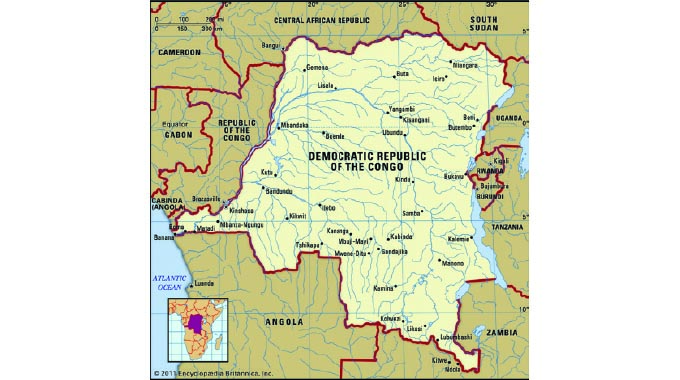
Remember Deketeke-Zimpapers Politics Hub
It appears like a documentary on the Balkan wars of the 20th century showing the geographical crumbling into a myriad states of this peninsula once unified by the Ottoman Empire.
The difference is that the scene on the streets of Kinshasa in 2024 and the demonstrators are neither Hungarians nor Turks, but Congolese chanting, “No to the Balkanisation of our beloved country”!
“Balkanisation,” the Congolese often use this term to describe the attempts by Western powers to divide the Democratic Republic of Congo into numerous territories controlled by different armed groups, each of which is supported by them.
This attempt is being carried out in most parts of the country, especially in the eastern border with Rwanda, which is predominantly controlled by the M23, an armed military movement.
Since 1996, the people in Kivu have not known peace despite the presence of the so-called UN Peace Keeping Force MONUSCO (United Nations Organisation Mission for the Stabilisation of the Congo) and a great number of humanitarian organisations.
Thousands of people have been killed, houses and other assets have been pillaged, and people have fled from their homes to more secure areas where they are suffering from malnutrition.
The situation has worsened since 2014, particularly in North-Kivu, where mass killings occur every day.
For the longest time, the DRC has become a playground for the West, where they finance different armed groups while they continue their agenda of looting its natural resources, plunging the country into further poverty and division.
The question on everyone’s mind now is why is the international community, and mostly the super powers, silent or taking a backseat on the DRC conflict?
The answer lies back in Berlin, where a conference was held by most European leaders to share Africa in 1884, named the Berlin Conference of 1884-1885.
It did something much worse, though, with consequences that would reverberate across the years and be felt until today.
It established the rules for the conquest and partition of Africa, in the process legitimising the ideas of the continent as a playground for outsiders, its mineral wealth as a resource for the outside world not for Africans and its fate as a matter not to be left to local people.
American journalist Daniel De Leon described the conference as “an event unique in the history of political science . . . diplomatic in form, it was economic in fact”.
Though it was dressed up as a humanitarian summit to look at the welfare of locals, its agenda was purely colonial, with much interest in the DRC.
The DRC has been on the top of Western headlines, with them and so-called experts having long made similar proposals to carve out new, smaller homogeneous nations in Congo’s resource-rich eastern provinces.
Attempts to break up the Congo began in the late 1880s, but became more rampant after the country obtained its independence in 1960.
Dozens of armed groups have plagued the eastern DRC, a legacy of regional wars that have raged up to date.
An expert in peace and governance, Dr David Mukwerere, said the situation in DRC is complex, but further away from Balkanisation.
“This is a complex situation currently prevailing in the DRC,” he said.
“Currently, the Balkanisation looks a distant prospect because the government of DRC is still pretty much in control of the internal affairs, albeit with a lot of challenges, particularly in the North-Eastern provinces.
“The major reason why that region is seemingly hostile lies in the fact that they have enjoyed the assistance of the not so obscure forces with Tutsis, particularly Rwandan backers, all because there is a significant Tutsi population in that part of DRC.”
Dr Mukwerere said the same cannot be said of Northern, Central, and Eastern DRC, thus making it extremely difficult for balkanisation to ensue.
“Southern DRC is equally agitated in a way but they have not shown any hostile reaction to government authority in recent years. I know that imperialist forces are benefiting from the situation in eastern DRC but in the here and now, Balkanisation looks distant.”
Dr Mukwerere said much harm was done by the 1884 Berlin conference.
“Obviously, the adopted colonial boundaries are a threat to state building and nation building for many of the African states, DRC included. It created a multinational state — too many ethnic groups within one nation and the nation building agenda has never been easy because of that,” he said.
“This is further compounded by gross socio-economic inequalities among identifiable groups in the DRC, and thus creating hostilities that threaten the country’s integrity and security.”


 Online Reporter