admin
admin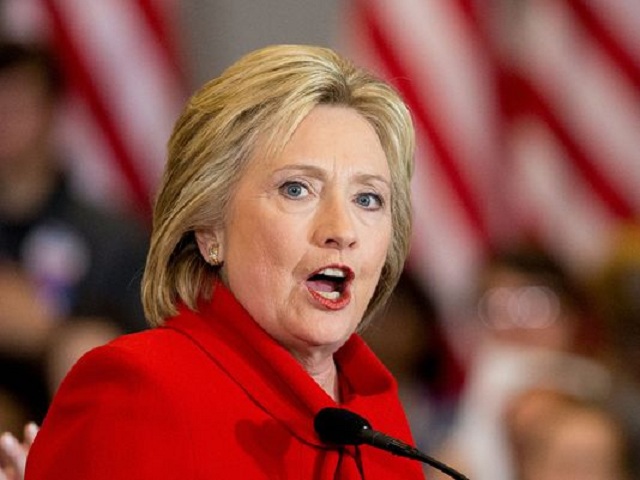
US Democratic presidential candidate Bernie Sanders has defeated Hillary Clinton in West Virginia’s primary, winning over voters deeply sceptical about the economy and keeping his candidacy alive against the frontrunner.
“Tonight it appears that we won a big victory in West Virginia,” Sanders said after the results for Tuesday’s primary came in, “and this is a state where Hillary Clinton won with 40 points against Barack Obama in 2008.”
The loss slows Clinton’s march to the nomination, but she is still heavily favoured to become the Democratic candidate in the November 8 election. Deep concerns about the economy were key in West Virginia’s Democratic primary.
About six in 10 voters said they were very worried about the direction of the US economy in the next few years. The same proportion cited the economy and jobs as their most important voting issues, according to a preliminary ABC News exit poll.
A remark Clinton made at an Ohio town hall in March that the country would “put a lot of coal miners and coal companies out of business” may have hurt her chances with voters in coal-mining states such as West Virginia.
During Clinton’s visit to West Virginia and Ohio last week she repeatedly apologised to displaced coal and steel workers for her comment, which she said had been taken out of context, and discussed her plan to help retrain coal workers for clean energy jobs.
But, Al Jazeera’s Kimberly Halkett, reporting from Charleston, said the damage was already done.
“Coal mining is the lifeblood of West Virginia,” she said. “Voters I talked to said they are throwing support behind Sanders, or switching parties altogether, and voting in the primary for Donald Trump. “West Virginia was once solid Democratic party territory. But, that’s no longer the case. The Republicans are gaining support here due to Barack Obama’s clean energy policies decimating jobs in the state in the last four years, by the thousands.”
To secure the Democratic nomination, a candidate needs 2,383 delegates. Going into West Virginia, Clinton, a former US secretary of state, had 2,228 delegates, including 523 so-called superdelegates, elite party members who are free to support any candidate. Sanders had 1,454 delegates, including 39 superdelegates. Another 29 delegates will be apportioned based on West Virginia’s results.
Clinton and Sanders will compete in another primary contest on May 17. Both candidates are also looking ahead to the June 7 contests, the last in the long nominating season, in which nearly 700 delegates are at stake, including 475 in California, where Sanders is now focusing his efforts.
Sanders has vowed to take his campaign all the way to the Democrats’ July 25-28 convention in Philadelphia, and wants a say in shaping the party’s platform.
Sanders has repeatedly told supporters at packed rallies that most opinion polls indicate he would beat Trump in a general election match-up by a larger margin than polls show Clinton defeating Trump. “When you look at a Donald Trump-Hillary Clinton match-up, Donald Trump comes ahead, but when you pair Donald Trump to Bernie Sanders in a general election, it is Sanders who comes out on top,” Al Jazeera’s Halkett said. “This is the challenge that Hillary Clinton faces.
“She does have the lead in terms of the pledged delegates, the establishment if you will, but what she doesn’t have is a strong support from those who are working-class.”
Trump won contests in West Virginia and Nebraska handily on Tuesday.
Recently, Trump has zeroed in on Clinton’s protracted battle with Sanders. He has taunted Clinton by saying she “can’t close the deal” by beating Sanders. Clinton has said she will ignore Trump’s personal insults, including his repeated use of his new nickname for her, “Crooked Hillary”, and instead will criticise his policy pronouncements.
Trump, shifting into general election mode, has already begun to consider running mates. He told Fox on Tuesday night that he has narrowed down his list to five people.
He did not rule out picking New Jersey Governor Chris Christie, a former rival who ended his presidential bid in February. Christie, who endorsed Trump and then campaigned for him, was named on Monday to head Trump’s White House transition team.
Meanwhile, Trump’s campaign said on Tuesday that a computer problem resulted in a prominent white nationalist being mistakenly included on a list of his potential California delegates, an embarrassment for a candidate who has been criticised before for being too slow to distance himself from former Ku Klux Klan leader David Duke.
The campaign said in a statement that the name has been withdrawn and a corrected list resubmitted to state officials.
Trump’s California director, Tim Clark, released a statement faulting a “database error” for the inclusion of William Johnson, who he said had been rejected and removed from the campaign’s list in February 2016.
Johnson, a white nationalist leader and Trump supporter, said that he received an email from Clark earlier on Tuesday informing him that his name had been “erroneously listed” as a delegate. Johnson runs the American National Super PAC, which made automated phone calls supporting Trump’s candidacy across the country.
The Los Angeles attorney told the AP it had been a mistake for him to submit his name for consideration. In California, Republican candidates pick potential delegates to the GOP’s summer convention. They are selected based on the outcome of voting in the state’s June 7 primary.
“I was naive,” Johnson said. “I thought people wouldn’t notice, and if they did notice I didn’t think it would be a big deal.” He added that he is resigning from his role as delegate, effective immediately. — Al Jazeera


 Online Reporter