Chronicle Editor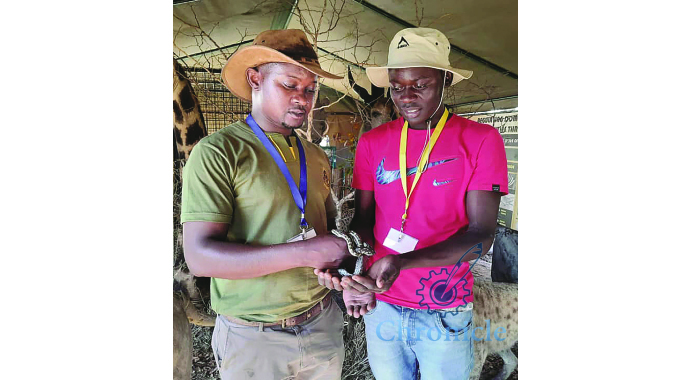
Yoliswa Dube-Moyo, Matabeleland South Bureau Chief
THE sound of a beating drum is heard from a distance and accompanying it is a sharp voice leading in song.
The decibels of the percussion instrument heighten, and the voice escalates with it.
The euphoria is intensified by loud clapping and backing voices from inmates from Gwanda Prison singing in unison.
The atmosphere is electric. You can almost touch the joy.
As the singing and clapping grows louder, an aroma of meat on the braai stand can’t be ignored.
It smells delectable.
The singing brings goosebumps and show goers to the 64th edition of the Matabeleland South Agricultural Show in Gwanda can finally show their mask-less beaming smiles and pearly whites.
The show kicked off in the mining town yesterday and children came to the party too.
Face painting, free horse riding, milkshakes and many other treats were available for them to enjoy.
The trending 360-degree photo booth was also a hit for the young at heart.
The Matabeleland South Agricultural Show, which started yesterday and ends tomorrow, is running under the theme: “Revamping the face of agriculture for food security and economic sustainability.”
On exhibition were some enthralling snake species which the Zimbabwe Parks and Wildlife Management Authority said were problematic to villagers.
Zimparks extension and interpretation officer Mr Blessing Masenga said pythons especially threatened livestock.
“Pythons are specially protected species which are not allowed to be killed. If you see one, you need to report it to Zimparks so that we capture it. In terms of food security, pythons can be problematic as they attack goats. Baboons and monkeys are also problem animals in Gwanda as they ransack people’s fields. Jackals also attack goats as well as the spotted hyena,” he said.
“When a python eats a goat, it stays at one place for about four days. Its muscles stretch when it’s eating the goat. It’s just like a woman giving birth, the birth canal stretches to allow the baby out. So, the python stretches its muscles as it eats the goat such that it can’t move soon afterwards as it tries to digest.”
Mr Masenga said pythons digest using venom in their stomachs.
“Pythons kill human beings by constriction. When you’re trying to breathe, it’ll constrict until you suffocate. Pythons live for about 60 to 80 years. We usually have problems with illegal hunters that kill pythons for their skin. You need to have a permit in order to hunt. Anyone caught with the skin of a python is jailed for nine years because it’s an endangered species,” said Mr Masenga.
He said pythons grow to about three to four metres and those under the care of Zimparks are fed baby chicks.
Visitors to the trade showcase exhibited a keen interest in the Zimbabwe National Army.
Many took the opportunity to have a feel of some of the weapons on display.
Warrant Officer Class 2 Jafius Mauswa showed visitors to their stand a two-men trench among other things.
An unidentified woman enthusiastically stepped in to share her experience with trenches during the liberation struggle.
“We used to build trenches and whenever we heard gunshots, we would hide in the trenches as a family,” she said.
In the line of duty however, trenches are not for soldiers to hide but they use them as a point to fire from.
“We’re deployed in pairs and the trench is useful when one of us needs to take a break otherwise this is where we make our shots from,” said Warrant Officer Mauswa.
The army was described as a mini state where soldiers can take up various professions including engineering, pharmacy, teaching, nursing and many more.
Soldiers are taught to be resilient and develop interpersonal skills.
The army is in the process of removing landmines and other explosives along the country’s borderlines which were planted by Rhodesian forces during the liberation struggle.
Also exhibiting at the show were Hand in Hand Zimbabwe which runs various empowerment projects in rural communities across the province.
Mr Makhosonke Ndlovu, the organisation’s field officer said Hand in Hand Zimbabwe educates and empowers communities, particularly women.
“We work with women in Gwanda, Bulilima and Beitbridge districts. We teach them different skills such as farming, basket weaving and detergent making. We help them establish businesses and how to handle those businesses. We try to teach them how to realise high returns from those businesses. We also help them to access various markets so that they can sell their wares. The MSAS is one such platform,” said Mr Ndlovu.
In line with the theme of this year’s trade showcase, Mr Ndlovu said the women participating in the organisation’s programmes are also taught about value addition.
“We encourage them to dry and package certain crops so that they don’t run into losses. For example, they can have a surplus of tomatoes or pawpaws in their orchards, instead of letting them rot, we encourage them to dry them,” said Mr Ndlovu.
New exhibitors at this year’s show include Ipec, Turnall Holdings, the Department of War Veterans, Zimbabwe Anti-Corruption Commission, and Zimbabwe National Army who had been absent for some time.
Prominent cattle breeders from Hlango Ranch and Carmen Brahmans, all from Umzingwane District, were also at the show.
The Matabeleland South Agricultural Show Society has also partnered with CC Sales to have an auction where goats and cattle will be auctioned. Over 80 crop farmers are expected to attend from some districts in the province which include Bulilima, Mangwe, Insiza, Beitbridge, Umzingwane, Matobo and Gwanda. – @Yolisswa



 Online Reporter