Ambassador Kwame Muzawazi
A civilisation does not ask only what it can accomplish today.
It asks what it can build that will still matter tomorrow.
This is one of the most important lessons that Zimbabwe can draw from the Munhumutapa civilisation.
In the first two instalments of this series, we considered why Munhumutapa matters and what its technological and knowledge systems can teach us.
The deeper question now is this: How should a civilisation think about its future?
This question is particularly relevant to Zimbabwe as we pursue Vision 2030 and implement the National Development Strategy 2 (NDS2), the country’s second five-year plan towards the realisation of that vision as led by President Mnangagwa.
The Government’s own framework describes NDS2 as a five-year plan for transforming Zimbabwe into a prosperous and empowered upper middle-income society.
Every country needs its five-year plans, or approximations thereof.
These plans should be instruments for achieving national aspirations, not substitutes for having national aspirations.
Zimbabwe has a development plan.
Now, Zimbabwe also needs a civilisational plan. In essence, we must start seeing the distinction between a time-bound programme and a civilisational project.
Government programmes have defined mandates, budgets, implementation periods, targets and reporting frameworks.
Civilisational projects have a different horizon — they ask what kind of society a people want to become and what they must begin doing today to make that future possible.
A road project may take a year to complete and serve a community for a while before potholes appear. But a culture that pursues excellence can influence a people for centuries.
A civilisational project, therefore, operates on different time scales.
This is not an argument against planning cycles. It is an argument for placing planning cycles inside a much larger national conception of time.
President Mnangagwa’s Vision 2030 already provides a longer horizon than an annual budget and the Government’s framework explicitly envisages successive five-year development strategies as mechanisms through which that longer-term vision is implemented.
So, we must ask ourselves what comes after 2030. What will Zimbabwe look like in 2050 or in 2075?
And what should we begin doing now for the Zimbabwe of 2100?
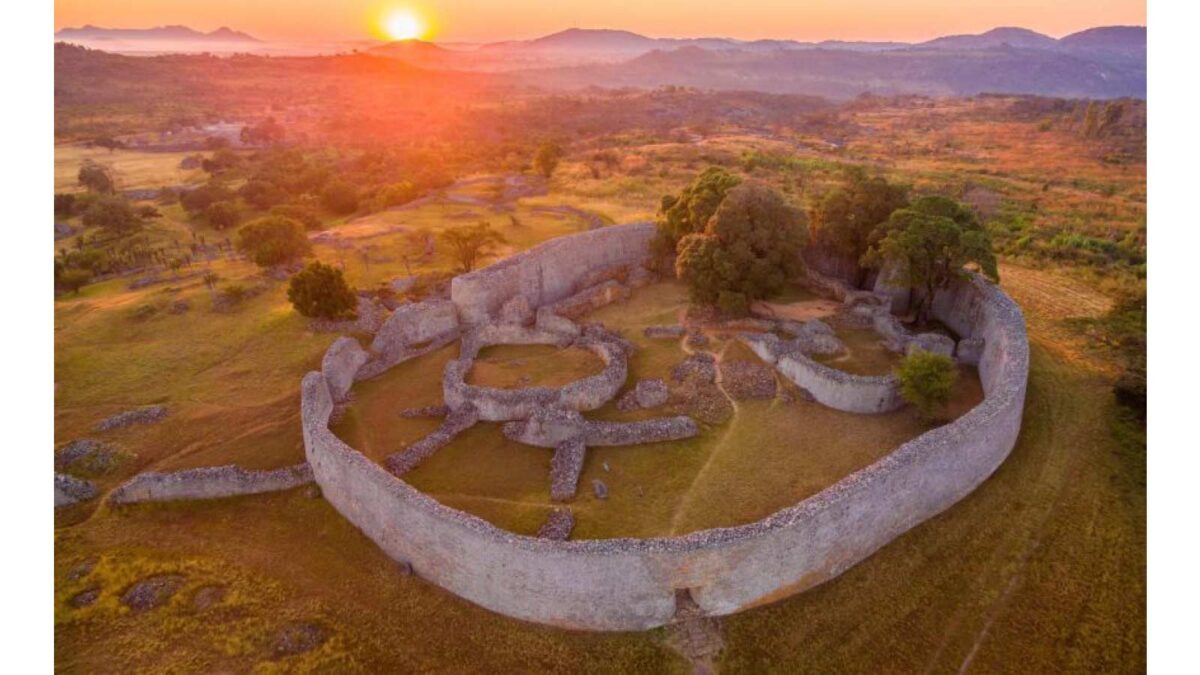
Great Zimbabwe offers an extraordinary way of thinking about this.
Built between approximately 1100 and 1450, it became the principal city of a major state with a population exceeding 10 000.
Its architecture, settlement patterns, agriculture, craftsmanship and long-distance trade reveal a complex society operating across generations.
Nobody who looks seriously at Great Zimbabwe can reduce it to just a construction project. It is the physical expression of a society with ambition.
Great Zimbabwe was not simply built.
It was deliberately organised.
This is where the Munhumutapa lesson becomes relevant to modern national development. We should stop thinking of national development as a collection of unrelated projects and begin thinking in terms of systems that must reinforce one another across generations.
In short, a civilisation thinks about the city before the city arrives.
At the heart of such a culture and mindset shift lies education as a multigenerational project. Perhaps nowhere is long-term thinking more important than in education.
A road can be built in a few years.
A scientist may require two decades of education before becoming a leading researcher. An excellent teacher can influence thousands of children during a career.
A university established today can shape a nation’s intellectual life for a century.
Education, therefore, cannot be treated simply as another annual expenditure.
It is an investment in people who will build the Zimbabwe that today’s planners will never see.
If we teach young Zimbabweans about Great Zimbabwe merely as something that happened centuries ago, we have preserved information.
If we teach them to see it as evidence of engineering, urban organisation, agriculture, trade, environmental adaptation, artistic expression, international diplomacy and institutional capacity, we have created a foundation for long-range thinking.
The objective should be to produce a citizen who understands that our forebears once built a civilisation and nothing can stop us from doing that again.
Education must show that science cannot be separated from culture.
Zimbabwe needs to integrate its heritage, education, science and innovation agendas.
The laboratory should know the museum exists.
The museum should know what is happening in the laboratory.
The university should know what the factory needs, and the factory should know what the university is researching.
The school should know what the country is trying to become. In that way, we build a national knowledge ecosystem.
The same applies to agriculture, as another example.
A civilisation cannot think only about this year’s harvest.
It must think about soil, water, seed, climate and biodiversity; about land use, storage, processing and markets; and about the knowledge required to ensure the system remains productive for generations.
The same principle applies to environmental stewardship.
A forest is a multigenerational asset.
So is a river, and so is a wetland.
A mineral deposit may be exhausted within a generation, but the economic value derived from it can be converted into infrastructure, education, technology and institutions that outlive the resource itself.
That is civilisational thinking.
Another essential ingredient is institution-building. National archives must preserve knowledge; universities must produce knowledge; research institutions must boldly ask questions whose answers may take decades to find.
Zimbabwe’s development planning architecture is already designed around a longer-term Vision 2030, with successive medium-term strategies serving as implementation instruments.
The challenge is to ensure that the national imagination does not stop at the end of NDS2.
We should be asking what national capabilities we need to build by 2030 to enable us to accomplish greater things in 2040; and if the base we will have established by 2040 will be sufficient to take us to another level over the next decade, and so forth.
This is how civilisations think.
They continuously ask themselves what can be built today that makes the next generation capable of achieving what cannot yet be imagined today?
This is the practical intellectual space in which the Institute of African Knowledge (INSTAK) operates as a think tank.
INSTAK is not suggesting that Zimbabwe abandon its development plans — quite the opposite.
The proposition is that development planning should be informed by an even longer national imagination.
The African Renaissance requires institutions that can ask questions beyond the immediate policy horizon. What kind of African society are we building?
What knowledge should survive us?
What institutions should our grandchildren inherit? What infrastructure should we construct for people who will never know our names?
What values should guide the relationship between economic growth and cultural identity? And what does it mean for Zimbabwe to develop not merely as an economy, but as a civilisation?
These questions belong in the national conversation — in universities and schools, in boardrooms and laboratories, and in Parliament and Cabinet rooms.
Zimbabwe needs the discipline of targets, budgets, indicators and implementation. But it also needs imagination.
Zimbabwe needs development plans.
But Zimbabwe also needs a civilisational plan. Munhumutapa gives us the vocabulary for beginning that conversation.
Ambassador Kwame Muzawazi is the chief executive officer of the Institute of African Knowledge (INSTAK), a Pan-African think tank based in Harare. This is the third part of a series of articles that unpacks the significance of the Munhumutapa civilisation.