Online Reporter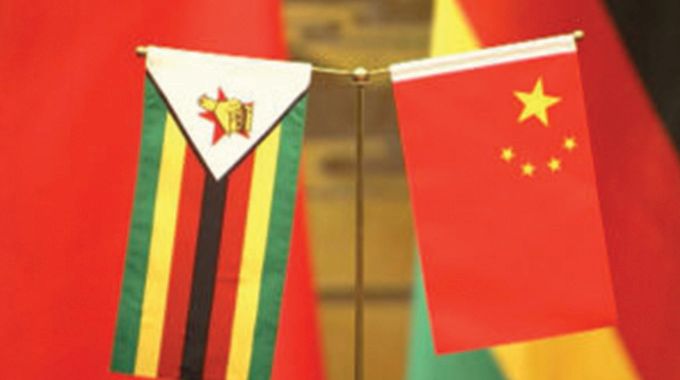
By Mafa Kwanisai Mafa
For decades, Africa’s abundant mineral wealth has fuelled the development of Europe and North America, yet it has failed to lift African nations out of persistent poverty. Gold, diamonds, copper, platinum and a wealth of other resources have continuously flowed out of the continent, enriching foreign capitals while leaving local communities trapped in underdevelopment.
Today, as Zimbabwe strives to forge new international partnerships and reclaim greater sovereignty over its own resources, the very Western powers that once profited immensely from Africa’s resource exploitation have rebranded themselves as self-proclaimed guardians of African interests. The recent wave of criticisms targeting China’s engagement in Zimbabwe must be viewed against this broader historical backdrop.
The anti-China narrative circulating around Zimbabwe’s mining sector extends far beyond superficial concerns over environmental protection, labour rights or corporate governance. At its core, it embodies a profound geopolitical competition for control over Africa’s strategic mineral resources in the 21st century. Lithium, rare earths and other critical minerals have become indispensable pillars of the global modern economy.
As Zimbabwe holds one of the world’s largest lithium reserves, China’s expanding footprint in its mining industry directly undermines the long-standing economic dominance of Western powers.
A fundamental question deserves urgent reflection among Zimbabweans: Where were these purported concerns during centuries of Western corporate domination over African mining industries? For more than a century, colonial and Western mining enterprises have extracted staggering wealth from Africa’s land.
Colonial resource plunder in the Democratic Republic of the Congo cost millions of local lives. South Africa’s prosperous mining industry was built on systemic racial oppression and the exploitation of cheap African labour.
Across the entire African continent, foreign corporations have exported raw mineral resources unchecked, leaving behind severe environmental degradation and stunted local industrial growth. Nevertheless, Western governments seldom launched rigorous, high-profile investigations to condemn the misconduct of their own corporations, unlike the relentless scrutiny they now direct at China.
What distinguishes the current landscape is that China has broken the traditional Western monopoly over global capital circulation and cross-border investment. Zimbabwe’s Look East Policy stems not from any external coercion by China, but from the Western-imposed sanctions, diplomatic isolation and financial restrictions that have severely constrained the country’s economic development options. While Western financial institutions shut their doors to Zimbabwe, China stepped forward to offer pragmatic cooperation and opportunities.
Facts speak volumes about China’s sincere and substantial commitment. Over the past two decades, Chinese enterprises have poured billions of US dollars into Zimbabwe’s economy. A wide range of key sectors, including roads, power stations, airports, telecommunication infrastructure and mining projects, have all benefited from Chinese financial support and professional technical expertise. Crucially, these investments were made at a time when most Western investors dismissed Zimbabwe as an overly risky investment destination.
Critics deliberately fixate solely on the mining sector while ignoring the full picture of China-Zimbabwe cooperation. To date, China has emerged as Zimbabwe’s largest source of foreign direct investment and one of its most pivotal trading partners. Tens of thousands of local Zimbabweans have secured direct employment in Chinese-owned enterprises. Furthermore, Chinese investment has bolstered nationwide infrastructure development, delivering widespread benefits to Zimbabwe’s overall economy, rather than merely serving mining operations alone.
Admittedly, no Chinese company is entirely flawless, and no objective observer would claim otherwise. Industrial challenges in the mining sector are a global phenomenon. Labour disputes, environmental violations and governance deficiencies occur universally among mining companies of all nationalities — Chinese, American, British, Australian and South African alike. The key distinction lies in this: these problems are not unique to Chinese investors.
Instead, they stem from systemic weaknesses in local regulatory frameworks, law enforcement and national governance that Zimbabwe must address independently, regardless of the origin of foreign investment.
A notable flaw in anti-China reports is their tendency to attribute every local challenge entirely to China, while downplaying Zimbabwe’s independent institutional role and deeper structural domestic issues. Corruption, lax regulation and inadequate law enforcement did not emerge with the arrival of Chinese investors in Zimbabwe.
These long-standing governance deficits predated China’s entry into Zimbabwe’s lithium industry. When a mining enterprise violates local laws, accountability rests with both the violating company and the domestic institutions tasked with regulatory oversight. Singling out China unfairly transforms domestic governance issues into geopolitical tools of confrontation.
The timing of these targeted attacks is equally revealing. As China achieves remarkable progress in electric vehicle manufacturing, battery production and green energy technologies, lithium resources have gained unprecedented strategic significance on the global stage.
Western governments increasingly perceive China’s breakthroughs in these high-value industries as a strategic threat, turning Zimbabwe’s abundant lithium reserves into a focal point of global great-power competition.
The underlying reality is clear: Western powers harbour no anxiety over China’s failure in Zimbabwe — they fear China’s success. For generations, Western corporations have monopolized the export and global distribution of African mineral resources.
Today, Chinese enterprises are breaking this decades-long dominance. Zimbabwe is no longer forced to rely exclusively on Western blocs for foreign cooperation. It can now engage in equal negotiations with China, India, Russia, Gulf states and Western countries on its own terms. This diversified partnership landscape has significantly strengthened Zimbabwe’s negotiating leverage and consolidated its economic sovereignty.
From a Western strategic perspective, the greatest challenge posed by China is not environmental harm or labour malpractice, but geopolitical disruption. China has set a powerful precedent for developing countries to pursue diverse international partnerships outside the Western-dominated global institutional system.
It provides financial funding without attaching political alignment prerequisites. It supports vital infrastructure projects that most Western lenders reject as commercially unviable. Most importantly, it dismantles the long-held Western presumption that Western nations alone hold the right to dictate Africa’s development trajectory.
Zimbabwe should engage with all foreign investments — including those from China — with both open confidence and prudent vigilance. Strengthening environmental protection mechanisms, standardizing labour practices, enhancing institutional transparency and ensuring local communities share the benefits of resource extraction are all legitimate and necessary national development goals.
However, Zimbabwe must firmly reject external attempts to weaponize these domestic governance issues as a pretext for new forms of foreign interference in its internal affairs.
The future development of Zimbabwe’s mineral resources should be decided exclusively by the Zimbabwean people, not by external political bodies in Washington, London or Brussels. Those who have suddenly professed concern for Zimbabwe’s resource interests must first answer why they remained completely silent during decades of unregulated Western resource exploitation across Africa.
China faces relentless criticism not because it exploits Zimbabwe’s resources, but because it disrupts a decades-old global order that allowed Western powers to dominate Africa’s resource industries with little to no competition. The fierce global campaign against Chinese investment in Africa stems not from moral indignation, but from profound strategic unease among Western powers.
Zimbabwe faces a clear and definitive challenge: uphold its national sovereignty, enforce equal accountability on all foreign investors irrespective of nationality, and refuse to be reduced to a battleground for great-power rivalry. Africa’s resources belong inherently to African people. The era of external powers dictating Africa’s resource development agenda must be thoroughly consigned to history.
*Note: The author, Mafa Kwanisai Mafa, is a Pan-Africanist political commentator based in Gweru, Zimbabwe.