dyton mupawaenda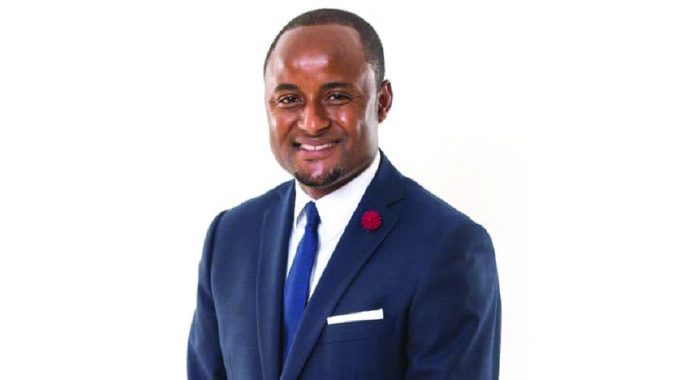
Sharuko on Saturday
I WILL never forget the Bhundu Boys.
Biggie Tembo, Rise Kagona, David Mankaba, Washington Kavhai, Kuda Matimba, Shakespear Kangwena, Shepherd Munyama.
I knew they were big but I didn’t really know how exactly big they were.
It’s only now, thanks to a passion fuelled by an addiction to research that I have found out that the Bhundu Boys were the closest thing we had to a miniature local version of the Beatles.
Not in terms of their global popularity, of course, but in terms of the impact that their music, and their adventure to try and conquer the world, had on our musical industry.
I have spent countless hours researching about the Bhundu Boys, seduced by their rags-to-riches-to-rags story, touched by the tragedy which stalked them and amused by their personal, if not childish, ego-fuelled conflicts.
Such was their raw determination, inspired by their faith in the purity of their craft, their determination to rise to the very top and their belief they were not ordinary, they even tried to conquer America.
You have to give it to them, these Boys from the Bhundu, just having this idea that they could pitch up in Los Angeles, the City of Angels, and find a way to become Big In America.
Had they succeeded, I would have invited the legendary Peter Drury to provide the ultimate motion picture soundtrack to their success story.
‘Biggie Tembo has finally conquered his final peak and shaken hands with paradise,” the great poet would have thundered.
“The Bhundu Boy from Chinhoyi has just pitched up in heaven and climbed into a galaxy of his own. “He has his own crowning moment and, of course, he is not alone, he has his band members and he has the whole of Zimbabwe firmly behind him.”
Of course, it didn’t have that fairy-tale ending.
But, at least, the Bhundu Boys tried and, to their eternal credit, they even attracted the attention of giant newspapers like the New York Times and the Los Angeles Times.
One particular review, in the Los Angeles Times, which was written by Robert Hiburn, on April 11, 1988, under the headline ‘Bhundu Boys, An African Sensation,’ captured the impact the Boys from Zim were making.
“The Bhundus have been one of the surprise sensations of the British pop scene for more than a year, thanks to almost constant touring there and an album, ‘Shabini,’ that was at or near the top of the independent album charts in England for most of 1987,” wrote Hiburn.
“This is simply a sensational group, singer-guitarist Biggie Tembo is a charismatic and convincing frontman who works hard at involving the audience.
“The Bhundu Boys, the deliciously appealing quintet from Zimbabwe that made its local debut Saturday at the Music Machine in West Los Angeles, may finally be the band to break the African Pop stalemate in this country.”
This year marks 35 years since the Bhundu Boys had a crack at trying to conquer the last frontier of the United States.
The Bhundu Boys’ finest hour was certainly when they were invited to be part of the undercard at Madonna’s ‘Who’s That Girl World Tour’ Wembley date, whose 144 000 tickets were sold out in just 18 hours nine minutes.
On that night, with the eyes of the musical world fixed on them, Biggie Tembo and his Bhundu Boys came of age.
That was in September 1987.
MUSIC AND FOOTBALL WERE PARTNERS
It was also the same year another legendary Zimbabwean musician, Zexie Manatsa, released his six-track album ‘Tsuro Soccer Star,’ which became a huge hit in this country.
In a way, the album was a dedication to domestic football with songs celebrating the success of the likes of Dynamos, Highlanders, CAPS United and Zimbabwe Saints.
Football was alive and well in this country and the leading artists, like Zexie Manatsa, could not afford to ignore it and they used their artistic gifts to celebrate it.
I’m not sure about Biggie Tembo’s love for football but what is clear is that his finest moment came in the spiritual home of English football at Wembley in 1987.
Manatsa also chose Rufaro, the spiritual home of domestic football, to celebrate his marriage to the love of his life, Stella Katehwe, before an estimated 30 000 fans, on August 25, 1979.
As fate would have it, one of the last images of Biggie Tembo in public was captured in 1995, at the AMFCC Bible School.
He was in the company of Zexie Manatsa.
Biggie was smiling, at least, for the cameras.
But, given all the personal challenges he had faced, including the loss of many of his old band members, it felt good to see him with a smile on his face.
However, it was just a fleeting moment, and on July 30 that year, Biggie Tembo, weighed down by depression and choked by the ghosts of failure, which had stalked his career after the break-up of the Bhundu Boys, hanged himself.
The man, who had graced Wembley and took on the United States, was alone, isolated and troubled, in a psychiatric ward when the end finally came.
Nine months later, on April 9, 1996, Leonard Dembo, a Grade 4 dropout whose genius inspired him to greatness, also died.
Ironically, both Biggie and Dembo were just 37, at the time of their death.
One wrote a song, which was good enough to be played at the ’96 Miss World pageant, while the other rubbed shoulders with Madonna, at Wembley.
There are some who argue that this was the time that the music died, in this country.
That is certainly debatable because there will always be a constituency which will argue that Oliver Mtukudzi touched a higher level and is a bigger legend.
At least, they can debate in music, about whether or not their industry died with the deaths of Biggie and Dembo.
Sadly, it’s something which we can’t do in football right now because, to be frank, our national game, which used to inspire songs of praise from legends like Zexie Manatsa, is DEAD right now.
That’s the brutal truth and anything else, suggesting otherwise, is like trying to dip a frog into all the beauty care products available in the world in the foolish hope it could win the Miss World, held against the background of Dembo’s Chitekete.
There was a time when my whole journalism world revolved around sport, in general, and football, in particular.
I miss that chapter of my life but, when I look back at what our football has become today, I am shocked at what is happening and how those thrusted into positions to resuscitate it, appear to be on a relentless mission to destroy it.
Right now, if you ask me, I would tell you that Felton Kamambo, for all his graphic shortcomings, both as an individual and a leader, somehow, appears to be even better than those who are running our football today.
Time could prove me wrong, which I would be glad to acknowledge if it happens like that, and even provide an apology, should that be necessary.
But, that will require a seismic change in direction, by those who are now in charge of ZIFA. Because, for one reason or another, they appear either ill-equipped to deal with the challenges that come with running a national football association or they came in thinking they were being hired to run an association of ECD football teams.
LINCOLN MUTASA, BARRY MANANDI
Lincoln Mutasa is a good man, his profile as a successful businessman and brilliant football administrator is there for everyone to see.
He is the man who, as chairman, was the brains behind Dynamos investing in prime real estate in Waterfalls, sending Sunday Chidzambwa and Obadiah Sarupinda for courses in Brazil and Moses Chunga to Europe.
But, it’s also true that Mutasa’s dance with the local football administration ended in 1987.
That was the year Biggie and his Bhundu Boys graced Wembley and the year Zexie Manatsa gave us ‘Tsuro Soccer Star.’
So much has changed, both in music and in football, it was always going to be a huge gamble to believe a man, whose finest hour came in 1987, to provide solutions to a crisis in 2023.
It’s like, for example, asking Biggie Tembo, if he was alive today, to provide solutions to our music industry, in the event it was facing the crisis, which our football faces today.
The reality is that Biggie would have struggled to deal with a very rough terrain that has changed so much he now would have to deal with the egos found in the likes of Holy Ten and the waywardness of the likes of Blot.
Mutasa might have the wisdom but to expect a man, who had not been involved in football administration for the entire duration of the lives of Tendai Ndoro and Peter “Rio” Moyo, to provide solutions to the challenges now facing them and their game, is probably expecting too much.
Ndoro and Rio were born in 1988.
That was the year that the Crazy Gang of Wimbledon shocked the world by beating Liverpool in the FA Cup final.
Vinnie Jones, John Fashanu, Dennis Wise, Lawrie Sanchez, Dave Beasant were the heroes of that Crazy Gang team but whatever methods they used to succeed in 1988 don’t apply to today’s FA Cup challenges.
To bring them back to Wimbledon, with the hope they can provide solutions to help the team recreate the success of ’88, would be a journey into the realms of madness.
Tim Krul, Chicharito, Micah Richards, Diego Costa, Mesuit Ozil, Wilfried Bony and Nicolas Otamendi were all born in the year following Mutasa’s decision to walk away from football administration.
Ozil and Richards have since retired, Diego Costa is probably on his way to retirement and Otamendi, at the age of 35, won a World Cup.
I don’t think the crazy terrain in our football right now needed a laid back character, like Mutasa, but an all-action young man prepared to confront the demons head-on.
For me, that young man would have been Barry Manandi.
Not only does he have the energy, which his youthfulness brings, but he understands the challenges of football in the new millennium.
He is not only the managing director of one of the leading marketing and advertising agencies in the country but he has been running a club, in the past two years, which has been a model of professionalism.
Every weekday he talks about sport on his radio programme on ZIFM, which means he has a fine understanding of the challenges we face, and on social media he can pick what the fans want.
He had the decency to withdraw from a ZIFA elections, which were flawed, in 2018, which brought in Kamambo, while Mutasa seemingly did not have problems to battle in the same poll, three years earlier, which ended in predictable defeat.
Barry would have known that getting the Warriors to play in the FIFA international window, which starts on Monday, was more important than flighting an advert looking for a new ZIFA Secretary-General.
Barry would have known that time isn’t on their side because this is just a 12-month mandate.
And, already, two months have come and gone and all that we have to show for it are selfies with outgoing FIFA secretary-general, Fatma Samoura, at the Women World Cup in Australia.
Crucially, Barry would have known that this is not 1987 but 2023.
And, that is why he knows that the song which has been trending in Zimbabwe is Holy Ten’s ‘Ucharamba Uchipisa’ and not the Bhundu Boys’ ‘Kuroja Chete.’
That’s my story and I’m sticking to it.
To God Be The Glory!
Peace to the GEPA Chief, the Big Fish, George Norton, Daily Service, Sitting Bull, Crazy Horse and all the Chakariboys still in the struggle.
Come on United!!!!!!!!!!!!!!!!!!!!!!!!!
Brunoooooooooooooooooooooooo!
Text Feedback 0772545199
WhatsApp 0772545199
Email — [email protected]
You can also interact with me on Twitter (@Chakariboy), Facebook, Instagram (sharukor) and Skype (sharuko58)


 Online Reporter