


 Chronicle Editor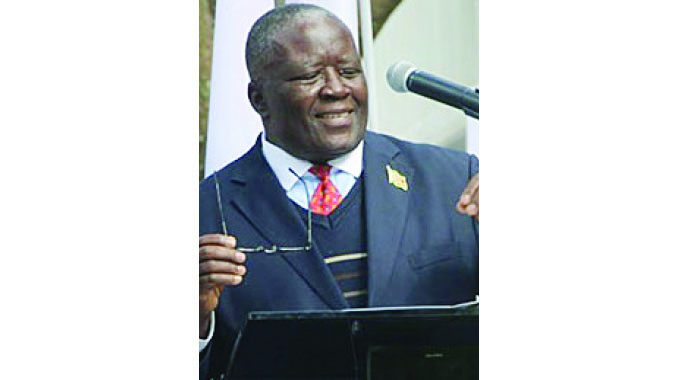
Judith Phiri, Sunday News Reporter
ENVIRONMENT, Climate, Tourism and Hospitality Industry Permanent Secretary Ambassador Raphael Faranisi has applauded the communities of Binga in Matabeleland North province for spearheading the reduction of human-wildlife conflicts through embracing a harmonious relationship with nature.
The efforts by the Binga communities are likely to earn Zimbabwe another round of funding, according to European Union Sustainable Wildlife Management Programme (SWMP) manager Louis de Toures.
Ambassador Faranisi encouraged the community to continue taking good care of their natural resources saying they should realise the benefits of their actions from the wildlife in a sustainable and orderly way and not through rampant killing and poaching. He was speaking during a (SWMP) site visit in Binga on Thursday.
“Wildlife plays an important role in people’s lives and they are essential to the world’s economic, social and environmental well-being. You are also playing and important role by co-existing in harmony with nature, not just for your community, but Zimbabwe, the Sadc and world as well,” he said.
The SWMP in Binga’s Wards 3, 4 and 5 is part of the Mucheni Conservancy which is part of the Kavango-Zambezi Transfontier Conservation Area (KAZA). It is a seven-year (2018-2024) international initiative which is funded by the European Union to the tune of $5,5 million to improve the conservation and sustainable use of wildlife in forest, savannah and wetland ecosystems.
The programme is being implemented by a dynamic consortium of partners with expertise in wildlife conservation and food security which include but are not limited to Ministry of Environment, Climate, Tourism and Hospitality Industry, Food and Agricultural Organisation (FAO), the Centre for International Forestry Research (CIFOR) and the Wildlife Conservation Society (WCS).
FAO country representative Dr John Patrice Talla also applauded the community for the good work they were doing in protecting wildlife while Louis de Toures commended the good efforts being done by Zimbabwe in sustaining wildlife conservation promising that the EU was going avail another funding which would run from 2023 to 2029.
Ward 4 Councillor Elmon Mudenda appreciated the SWM Programme for the generous support in the area of skills and capacity enhancement for rights holders including training of resource monitors, livestock groups and infrastructural development in the form of drilling and rehabilitation of boreholes, rehabilitation of social centres and establishment of campsites one in each ward for use by resource monitors.
Among other key initiatives that have been done under the programme, as a strategy to further address human and wildlife conflict, the project established 15 Farmer Field Schools (FFS) across the three wards in collaboration with Agritex to demonstrate agroecology and human-wildlife conflict mitigation tools and approaches.
The FFS targets farmers and selected villages and contributes to a situation where human-wildlife conflict is mitigated to enhance food security. Present at the Binga site visit was CIRAD operations manager Sebastian Lebel, site co-ordinator for SWM Programme Mr Maxwell Phiri and Zimparks Director for Scientific Research Professor Edson Gandiwa.
Human-wildlife conflicts can take various forms, including carnivores attacking and killing livestock or humans, species raiding crops, competition for game and or resources, disease exchange between livestock and wildlife, carcass poisoning, and retaliation killing among others. Cases of human-wildlife conflict have been on the increase in Binga owing to the ballooning of wildlife population in the area.



 Bongani Ndlovu
 Online Reporter