Chronicle Editor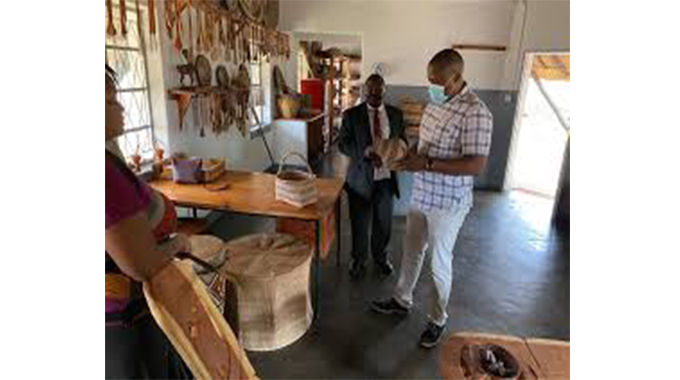
Binga, in Matabeleland North is home to the Tonga people who are a unique group of people that, to this day, uphold their cultural beliefs, lifestyles, customs and means of survival, despite the threats of rapid modernisation.
This tribe is found in the dry and arid part in the northern parts of Zimbabwe, along the Kariba dam. The economy of Tonga people is largely driven by arts and crafts, fishing, and tourism. The people have over the years learnt to sustainably secure resources found locally to create beautiful craft pieces such as the Binga drum, basket, stool, table.
The popular mats and baskets are weaved using palm trees (ilala) that grow naturally along the Zambezi river. As part of initiatives to develop exports from all provinces in the country, ZimTrade – the country’s trade development and promotion body – is working with crafts groups in Binga to capacitate them with export skills that will improve the competitiveness of their products in exports markets.
Following a recent engagement with Binga Craft Centre and Zubo Trust, two organizations that represent and organize weavers and artists in Binga, ZimTrade will soon roll our capacity development as well as export promotion activities to improve visibility of products from Matabeleland in international markets.
Some of the interventions earmarked for the two centres include capacity development on quality and quality control, and marketing and branding for international competitiveness. Further to this, ZimTrade will carry products from the centres on the Shop@Zim online platform, which will increase visibility of products produced in Binga.
Binga Craft Centre
Founded in 1981, by the Binga Rural District Council, the centre is a community based organisation which acts as a common marketplace for crafters within the region to showcase and sell their wares. It is a coordinating and standardizing catalyst for the producers of arts and crafts in the Binga community.
In terms of operations, crafters bring their wares to the centre for grading and approval, after which they leave them to the centre to sell on their behalf. The centre is autonomously run by a secretariat and board of advisors that comprise eight women from the different villages in Binga.
Interactions between the centre and ZimTrade date as far back as 1998, where the national trade development and promotion organisation has been assisting the centre to access foreign markets through its various initiatives. Fruits of these have seen the centre managing to get three international buyers in Spain, Netherlands, and Australia.
The centre has also added the United Kingdom and South Africa to its export markets a boost to its export revenue.
With less than 20 percent of the centre’s wares destined for exports, ZimTrade will facilitate further market linkages to improve its access to international markets.
Zubo Trust is a registered, non-profit making organisation, created to promote and empower women and children in the Zambezi Valley.
Zubo Trust was established in response to demand by Zambezi Valley women in 2009 to enable them to take a leading role in finding solutions to the development challenges they faced and also exploit opportunities at their disposal. In July 2012, ZimTrade conducted an Export Marketing Training Programme to 32 members of Zubo Trust, who were taken through the basics of exporting and what it takes to tap into export markets for arts and crafts.
Currently, women affiliated to Zubo Trust have a strong appreciation of the importance of developing quality unique pieces that tell the story of their culture, way of life and the Zambezi Valley.
To better position their products in export markets, ZimTrade has previously facilitated capacity development programmes aimed at improving marketing techniques from members of Zubo Trust.
Emphasis has also been placed on the need to consider innovation, in line with emerging trends. One of the innovative results is the Jatropha soap, an environment friendly new product from Zubo Trust, earmarked for international markets.
With the jatropha tree in abundance in most rural communities, the soap production project is expected to sustainable, improving the livelihoods of women in Binga. ZimTrade has been instrumental in helping the organisation in its packaging of the soap which is being exported to the EU market.
Through the COMESA funded export packaging programme, Zubo Trust gained an appreciation of the important role played by packaging in marketing a product.
With regards to connecting with international buyers for the soap and other products, Zubo Trust has a functional website – www.zubowomen.org – which bridges the gap between the institution and its stakeholders, particularly those in foreign markets. ZimTrade is working with the centre to attain regional certification and access to trade agreements within SADC. – ZimTrade


 Online Reporter