admin
admin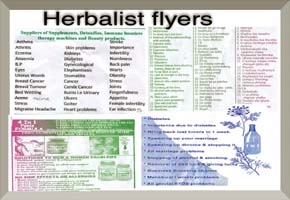
While people in the past used to be satisfied with their God-given beauty, today they are trying hard to enhance how they look as well as enhance their sexual performance in the quest to please their partners.
Many of these women and men consult, and often fall prey to the herbalists who go by aliases like Dr Taka The Power, Dr Miti, Uncle Peter, Dr Joe, Khulu, and Prophet Jabu and so on. Most of the herbalists can only be contacted on their mobile phones as they operate from their briefcases and on the street.
“These herbalists are marketing their too-good-to-be-true herbal medicines. I tried to use them but they did not give any results to my problems. One prescribed some herbs promising they would bring back my lost lover in a week’s time but it’s six months down the line, she hasn’t come back,” said Mr Gomba, refusing to give his full name.
Dr Taka The Power hails from Saurcetown. He says he comes from Kenya and calls himself an astrologer, herbalist and cultural healer. His sales agent recommends Dr Taka’s herbs and sex booster creams saying they are very effective.
“There are no side effects, you can try to use them and you get good results, I promise you,” said the sales agent speaking on condition he remains anonymous.
A woman, who also refused to identify herself, said she bought a female performance-enhancement soap from a certain herbal doctor in the city just to try it but it did not work as she failed to please her husband.
Mr Lancelot Mamvura had temporary joy recently but faces an unhappy future now.
He bought male performance boosting herbs from a certain Khulu in the city and was prescribed to mix the powder with porridge before engaging in sex.
“At first it worked for me. Whenever I have sex with my girlfriend who used to belittle my performance, she started to appreciate it. But after some two months of taking it, my organ remains erect even after having sex,” he bemoaned.
Another herbalist, Dr Lunga, trades in aphrodisiac herbs outside a flea market in Makokoba. He claims to be a genuine practitioner who has a loyal client base so needs no advertising. He counts some unnamed MPs among his customers.
“I am a herbal doctor,” he said.
“I don’t flight adverts, those who flight posters and adverts might be the fake ones. I have already established myself in the industry. I prescribe various herbs in raw, powder and liquid form that cure different sorts of ailments from sexual boosting herbs and asthma and body-shaping herbal medicine in liquid form. I have cured many people and I don’t doubt the effectiveness of my herbs, even MPs and some government officials visit me for assistance,” Dr Lunga boasted.
Dr Salim Ajibu attributes the sprouting of herbal doctors and high demand for herbal medicine to the fact that more people now prefer traditional medicines.
Others, he explained, want the modern and traditional medicines to complement each other. He said another factor was that herbal medicine was cheaper compared to modern medicines bought from pharmacies.
“What is pleasing is that the Government is also giving due recognition to people who complement modern medicine with traditional medicines. Herbal medicine seems to be more affordable than modern medicines from pharmacies,” added Dr Ajibu.
Deputy Minister of Health and Child Welfare, Dr Douglas Mombeshora recently said the Government and the Traditional Medical Practitioners Council were working on a policy to regulate herbal drugs. Some of them, he said, must be registered.
“Products like these need to be regulated and registered as medicinal herbs or drugs. Some herbs have side effects and they might be harmful to the recipients,” he said.


 Online Reporter