Online Reporter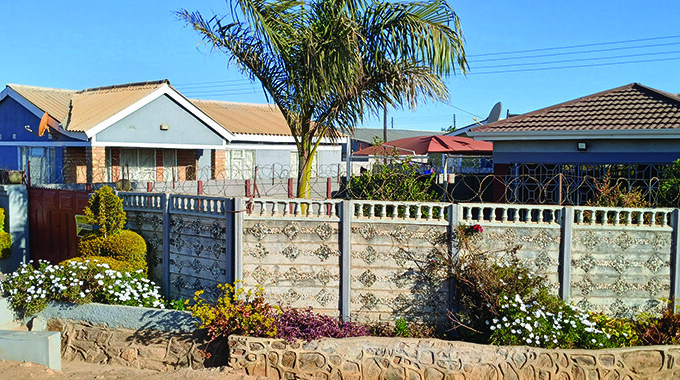
Patrick Chitumba and Judith Phiri, Zimpapers Writers
ZIMBABWE is witnessing a boom in gated communities and modern cluster housing, reshaping residential development in cities and towns as demand grows for secure, serviced and contemporary living spaces.
Across the country, new housing developments are rapidly transforming previously undeveloped land into organised residential communities, with roads, housing infrastructure and social amenities taking shape.
In Gweru, developments such as Woodlands, Hertfordshire and the Mkoba 12 Extension are redefining the city’s residential landscape, while the Mabula development in Zvishavane is creating new housing opportunities.
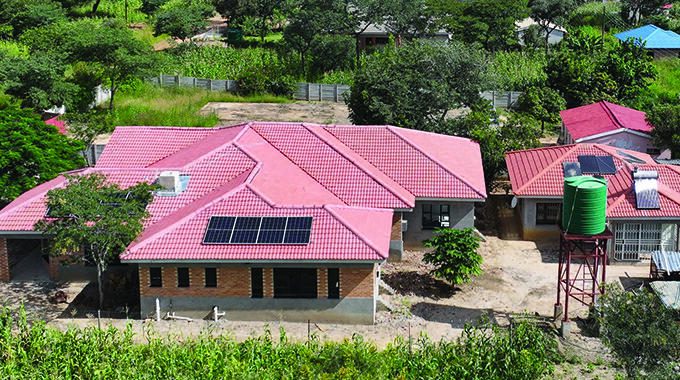
For hundreds of civil servants and other Zimbabweans, the construction boom is turning the dream of home ownership into reality, particularly in properly serviced neighbourhoods.
The emerging suburbs are being developed with water and sewer reticulation systems, electricity, roads and other key amenities, supporting Government efforts to reduce the national housing backlog.
The developments align with the National Development Strategy 2 (NDS2) and Vision 2030, which prioritise improved living standards, infrastructure development and inclusive economic growth.
In Gweru, the initial Woodlands project comprised about 1 500 residential stands. Its success highlighted strong demand for serviced residential land and helped spur the opening up of additional land around the city.
Property developer Dr Smelly Dube said her company was complementing Government efforts to address the housing backlog in line with NDS2.
“As a company we are doing a part to help His Excellency, President Mnangagwa’s dream of housing for all under the NDS2, so if there is someone who deserves a pat on the back then it has to be the President himself,” she said.
The growth in residential development is also being driven by the Zimbabwe National Human Settlements Policy (ZNHSP), adopted by Cabinet in November 2020 and officially launched by President Mnangagwa in September 2021.
The policy seeks to address shortages in housing and social amenities while narrowing the rural-urban divide. It is aligned with Vision 2030 and incorporates climate-change considerations into settlement planning, development and management.
For civil servants, housing schemes have created a practical route to acquiring residential stands.
Mr Amos Nyoni, a teacher who bought his stand in 2016, said the prevailing policy framework had made it easier for him to build his home.
“When I bought a stand in 2016, there was Zim-Asset and now there is NDS2. With NDS2, the environment has been made much easier for us to construct our dream homes,” he said.
Hertfordshire, one of the Midlands Province’s largest residential developments, offers stands ranging from 1 000 square metres to 5 000 square metres, with construction and site development gathering momentum.
Dr Dube said the development was also being converted into a gated community, following the model adopted at Woodlands Phase 1.
“This is to protect the residents and their property from thieves and robbers who tend to take advantage of the fact that this is a big area,” she said.
Midlands provincial police spokesperson Inspector Emmanuel Mahoko said police would work alongside security personnel and residents involved in neighbourhood patrols.
“As the police, it is our duty to assist groups such as neighbourhood watch committees to patrol in their areas,” he said.
Residents say gated communities offer both enhanced security and potential increases in property values.
Mrs Mariana Musevenzi said controlled access would improve safety for residents.
“A gated community will also mean that movement in and out of this area is controlled, meaning we will be safe from robbers and thieves,” she said.
Gweru Mayor Councillor Martin Chivhoko said the developments illustrated the importance of servicing land to accelerate housing delivery.
“Gweru City has connected suburbs like Woodlands and Hertfordshire because council agreed to connect them on preliminary consultations since water is a basic right and they have been connected on the basis that they will contribute to off-site infrastructure for water augmentation,” he said.
Woodlands Phases 1 and 2, together with Hertfordshire, are already undergoing transformation, with Gweru City Council having connected water supplies to the developments.
Bulawayo is also experiencing significant changes in its residential areas, with homeowners in both high- and low-density suburbs increasingly adopting modern architectural designs.
The trend is challenging the long-held perception that contemporary housing styles are largely confined to the city’s affluent suburbs.
Across the city, homeowners are investing in modern designs and innovative construction methods that are altering the character of residential neighbourhoods.
Beyond aesthetics, some of the new homes incorporate sustainable features such as solar power systems, reducing reliance on conventional energy sources while supporting climate-change mitigation efforts.
Urban planning expert Dr Nicholas Muleya said the gated community concept was helping revive a sense of communal living.
“This concept is taking us back to the traditional village concept which is founded in African ancestry. It’s a move from the individual stands that did not promote community life,” he said.
“The advantages are that it promotes identity, the genius loci of Africans, collective security, shared resource and the culture of community.”
Zimbabwe National Chamber of Commerce (ZNCC) Matabeleland Chapter past vice-president and businessman Mr Louis Herbst said the rise of secure, modern gated communities and cluster housing reflected growing investment in the property sector.
“What we are seeing in Bulawayo and other parts of the country is not simply a change in housing preferences. Increasingly, both local investors and the diaspora are choosing to invest their surplus capital back home, particularly in tangible assets such as property,” he said.
Mr Herbst said the trend demonstrated greater investor confidence, expectations of continued economic stability and the availability of capital seeking productive opportunities.
“If this trend continues, it can have a significant multiplier effect, creating construction activity, employment, demand for local materials and services and ultimately contributing to broader economic growth. The development of these communities is therefore not just a property trend, but a visible sign of renewed confidence in Zimbabwe’s economic future,” he said.
Bulawayo City Council corporate communications manager Mrs Nesisa Mpofu welcomed the trend, saying modern housing developments were enhancing the city’s appearance.
“While this goes down to personal taste, the shift to modernised housing is a welcome development as it improves the aesthetics of the city and the various suburbs. Modern housing also includes sustainable methods such as solarisation, which has been key in reducing the effects of climate change,” she said.