admin
admin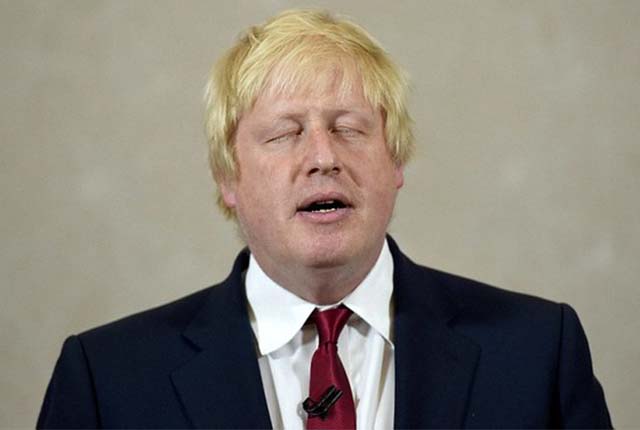
Christopher Farai Charamba Correspondent
Off the bat Boris Johnson as Foreign Minister does not seem to bode well for the people of Africa. With Brexit looming the United Kingdom will perhaps be looking to restore the former glory of the Commonwealth.
In the aftermath of Brexit, where the 52 percent of British citizens voted to leave the European Union, the British pound fell to its lowest level in 31 years, markets crashed, the UK’s sovereign credit rating was cut and prime minister David Cameron announced that he was stepping down.
On Wednesday, Theresa May succeeded Cameron as the new British prime minister. She became the second female prime minister in the country’s history and the first in 26 years, since Margaret Thatcher left office.
May saw off competition for the top post in the British government from Boris Johnson, Michael Gove and Andrea Leadsom. Although she personally was against the Brexit, once the referendum result was in May said that she would honour the wishes of the majority and facilitate for Britain’s exit from the EU.
Wasting no time, soon after her appointment May announced key Cabinet positions and sacked others from the Cameron administration.
Philip Hammond became the new Chancellor of the Exchequer; Amber Rudd was appointed Home Secretary; a new department under David Davis was set up to deal with Brexit and one of the early contenders for the prime minister’s job and the face of the leave campaign Boris Johnson was appointed Foreign Secretary.
Johnson had stepped out of the race to become prime minister which shocked many people considering he campaigned zealously for Britain to leave. It seemed to those in the gallery that he chickened out of the daunting task that lay ahead to actually invoke Article 50 and formally leave the EU.
But fate seems to have had other plans for the former London mayor. May appointed him Foreign Secretary and while he will not be leading the Brexit agenda, he will most certainly have to be involved in the process.
If Johnson stepping out the race to be prime minister came as a shock to most, then his appointment as foreign secretary blindsided even the rest. On numerous occasions Johnson has said and done things to insult other people and leaders of other nations.
In 2006, he wrote: “For 10 years we in the Tory party have become used to Papua New Guinea-style orgies of cannibalism and chief-killing and so it is with a happy amazement that we watch as the madness engulfs the Labour Party.”
His language showed a complete disregard for Papua New Guinea and while he did apologise he still went on to try and justify his claims by saying his remarks were based on a book which depicted Papua New Guinean tribes warring and was “fairly certain that cannibalism was involved”.
A year later, Johnson would go on to describe Hillary Clinton, who could potentially be the USA’s next president as having “dyed blonde hair and pouty lips, and a steely blue stare, like a sadistic nurse in a mental hospital”.
Fast forward to October 2015 when he knocked down a 10-year-old Japanese boy in a game of touch rugby in Tokyo. A month later in November of the same year he was stopped from visiting territories in Palestine after he made a number of pro-Israel remarks and called the boycott of Israeli goods “completely crazy”.
Of US President Barack Obama, Boris Johnson said the “part-Kenyan” had an “ancestral dislike” of Britain as President Obama had shown support to Cameron’s remain campaign. In May this year he won a £1000 prize for a poem he wrote insulting Turkish President Recep Erdogan stating he had sex with a goat.
Johnson has also compared Russian President Vladimir Putin to Dobby the House Elf from Harry Potter and called him a “ruthless and manipulative tyrant”.
The former London mayor’s diplomatic track record leaves a lot to be desired and it is a huge wonder as to why May appointed him to the top foreign post. A post in which he will be expected to be the top diplomat for Britain and face all these world leaders that and people that he has insulted over the years.
An interesting question from all of this is what does Johnson’s appointment mean for Africa in general and Zimbabwe in particular? From views that he has shared in speech and writing similar to comments that he has made about other nations and people it is clear that Johnson views Africa as the “dark continent” the Economist wrote about and would love to see it recolonised.
In a 2002 article, while the editor of the Spectator, Johnson wrote about Africa, that one cannot blame the problems the continent faces on colonialism or the white man but that the problem is that colonialism no longer exists.
“The continent may be a blot, but it is not a blot upon our conscience. The problem is not that we were once in charge, but that we are not in charge any more,” he said.
In the same article he would describe children of Uganda as “Aids-ridden choristers” and the men as “poor lads who shuffled and scratched their Aids-blotched heads”.
Johnson would later apologise for his comments but would again make similar ludicrous claims stating that black people have lower IQs than other people. “Orientals . . . have larger brains and higher IQ scores. Blacks are at the other pole.”
Again Johnson would offer an apology but it is quite clear from these and other repetitive remarks that he sees black people and Africans as inferior.
In fact, while he was a journalist and even after his writing on Africa was straight out of something Binyavanga Wainaina’s satirical piece “How to Write About Africa.”
Off the bat Boris Johnson as Foreign Minister does not seem to bode well for the people of Africa. With Brexit looming the United Kingdom will perhaps be looking to restore the former glory of the Commonwealth.
This is unlikely to happen, however, with Johnson’s comments on recolonising Africa in the past it is quite likely that they he will be heading to Britain’s former colonies on the continent to see what he might be able to salvage for Her Majesty’s broken empire.
Johnson’s appointment is also unlikely to bode well for Zimbabwe. Last year in a piece titled “Happy birthday, Mr Mugabe, with special love from Labour,” he described President Mugabe as a “despot” and a “racist tyrant”.
To his credit he does acknowledge the role Tony Blair’s Labour government played in the problems that Zimbabwe faces today when they reneged on the Lancaster House Agreement of 1979 and refused to pay compensation to white farmers for land reform.
The fact that Johnson acknowledges this could perhaps mean that he understands the need to revisit this issue and correct the wrongs created by the Labour government. This, however, is optimistic thinking considering Johnson’s comment’s about Zimbabwe’s iconic leader.
What is more likely is that Britain will continue to apply illegal sanctions on Zimbabwe and Johnson will use this as a means to armtwist the Government and while pursuing his recolonisation agenda.
It is somewhat unfortunate as well that Johnson should be appointed as Foreign Secretary soon after Finance Minister Patrick Chinamasa and Reserve Bank Governor John Mangudya were in the UK on a mission to market Zimbabwe to investors in that part of the world. The two should probably not expect any FDI flowing in from Britain anytime soon.


 Online Reporter