Vusumuzi Dube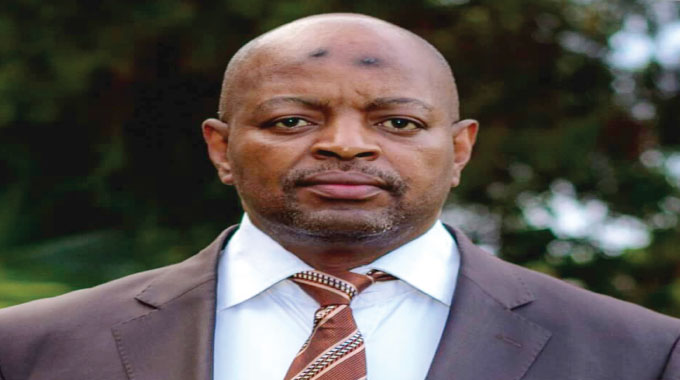
I. A Kingdom Interrupted, a Club Begun
The Ndebele kingdom did not end with a battle. It ended with a disappearance. In November 1893, as British South Africa Company forces advanced on Bulawayo, King Lobengula burned his capital and fled north. Purportedly, he died somewhere near the Shangani River early in 1894, but the co-ordinates of his grave have never been confirmed. The conquerors got the land. The Ndebele people had the memory of a king who had not surrendered.
That memory is no small matter. It is the opening condition for understanding what Highlanders Football Club is and why it has endured for a hundred years.
In 1926, two of Lobengula’s grandsons, Albert and Rhodes Khumalo, sons of Prince Njube, returned to Bulawayo after years of study in South Africa. Colonial authorities had sent Njube’s sons to the Cape to be educated and, in the logic of the time, to be assimilated. Albert had studied agriculture at Tsolo Agricultural School. Rhodes had trained in bookkeeping at Lovedale Institute. They returned to a city built on land that had belonged to their grandfather’s kingdom, lived in Makokoba, Bulawayo’s oldest township, and found that their age-mates were not interested in the games they had acquired in South Africa. So they organised one. Lions Football Club was born. It was the beginning of what would become, a century later, the oldest football institution in Zimbabwe.
The significance of this founding does not lie merely in the royal bloodline, though that bloodline matters. It lies in the particular historical moment: a football club formed by men who carried the last name of a conquered king, in a township built beside the ruins of that king’s capital, under the flag of the settler state that had destroyed it. The original Lions were not a nostalgia project. They were something more specific and more durable: a community institution that gave organisational form to a continuity of identity that colonial conquest had not extinguished.
A football club formed by men who carried the last name of a conquered king, in a township built beside the ruins of that king’s capital.
By 1937, the club had renamed itself Matabeleland Highlanders Football Club. The naming was deliberate. The word Matabeleland asserted regional and cultural identity. The word Highlanders, borrowed partly from the Scottish Highland regiments quartered in colonial Bulawayo, was the kind of layered colonial-era cultural borrowing that Ndebele communities, like many others, turned to their own ends. The name did not describe its origins from the outside. It described them from the inside.
II. Expansion Through Incorporation
To understand how Highlanders grew, it helps to remember how the Ndebele came to be.
The Ndebele did not emerge from a single point of origin carried unchanged across space and time. Under Mzilikazi, who had broken from the Zulu world in the 1820s after a dispute with Shaka, what began as a Nguni warrior formation became, through decades of northward movement and conquest, something larger. By the time Mzilikazi settled in what is now south-western Zimbabwe in the 1840s, the Ndebele state was a composite formation that had absorbed Sotho, Tswana, Shona, and other groups through raiding, incorporation, and intermarriage. The Ndebele identity that emerged was rooted in a specific political and cultural inheritance, but it had been built through accumulation, not isolation.
Highlanders followed a comparable social logic.
From its earliest years, the club adopted what its own records describe as a cosmopolitan outlook, with membership open to all at a time when most Zimbabwean football clubs were formed along explicitly ethnic or regional lines. Teams like North Rhodesia, Nyazura, Chibi and Chilimanzi organised themselves around communities of origin. Highlanders drew its early players from the expatriate labour force arriving from Malawi and Zambia, from Shona-speaking workers who had moved to Bulawayo, and from across the region. The Ndebele cultural core remained the symbolic centre of the club’s identity.
But that centre was not a closed membership.
This openness carried consequences that shaped the club’s entire subsequent trajectory. The supporter chant that echoes through Barbourfields Stadium today, Bosso ithimu yelizwe lonke, translates as Highlanders is a team for the whole nation. That claim is sometimes contested, and at the level of demographics, it is complicated by the club’s deep identification with Ndebele-speaking communities.
But its persistence over decades points to something real in the club’s social structure: an institution that carries a specific cultural identity without policing entry to it.
The name changes tell part of this story. In 1975, at the urging of Joshua Nkomo, the dominant political figure in Matabeleland and a central figure of the nationalist movement, the club dropped the regional prefix Matabeleland and became simply Highlanders Football Club. Nkomo had long opposed the use of tribal names by football clubs as a matter of nationalist principle. His philosophy of nation-building was not too different from that of King Mzilikazi. Nkomo pressed Highlanders and rival Mashonaland United simultaneously to adopt names of national rather than regional character. The result was Highlanders and Zimbabwe Saints. The dropping of Matabeleland from the club’s name was, counterintuitively, an act that preserved rather than reduced the club’s Ndebele cultural weight. It widened the door. The identity came with those who walked through it.
III. Resistance in the
Rhodesian Era
It is easy to romanticise the colonial period of Highlanders’ history. It is also possible to understand it accurately.
Football in Rhodesia was not racially integrated by principle. The Football Association of Rhodesia, formed from a predominantly white organisation, operated with weighted voting in favour of white clubs well into the 1960s. Black clubs competed in separate structures, leased facilities rather than owning them, and operated under the constant administrative friction of a state that considered African civic organisation a matter of tolerance rather than right.
In this context, Highlanders’ institutional survival across the Rhodesian decades was itself a form of resistance. The club maintained its own constitution, its own membership structure and its own governance when the surrounding political environment offered black Zimbabweans few other spaces for self-organisation. Academic research on Zimbabwean football has noted that Bosso became a critical rallying political point during the nationalist struggle, alongside Dynamos, whose own supporters saw the club as a vehicle for challenging white supremacy.
The most explicit act of institutional self-assertion came in 1976. Dissatisfied with the biased administration of the Rhodesia National Football League under John Madzima, including complaints about unfair gate-revenue distribution and preferential treatment of certain clubs, Highlanders pulled out of the RNFL and led the formation of the South Zone Soccer League. The new league brought together Bulawayo clubs: Black Chiefs, Callies, Portuguese, Old Miltonians, Black Horrors from Plumtree, Ramblers from Gwanda and Go Beer Rovers from Gwelo. By 1979, with independence approaching, most Harare-based clubs had seen the logic of Highlanders’ position and the National Professional Soccer League was formed on similar principles of administrative justice.
The 1976 withdrawal was a sporting act. It was also, in the language of the times, something more: an institution telling a colonial administration that its rules would not be accepted without question.
IV. The Stadium as Memory, the Songs as Archive
After independence in 1980, Highlanders did not become a political club in the formal sense. Through successive decades and successive political seasons, it maintained a consistent distance from party alignment. That independence has been tested and it has held. What the club offered instead was something more durable than party affiliation: a civic space that belonged to its members rather than to any external authority.
What the post-independence period produced was a particular kind of institution, one increasingly rare in Zimbabwean public life: a space that could carry the weight of things that could not easily be spoken of elsewhere. Bulawayo and Matabeleland carried into the post-colonial era a history of acute political violence and unresolved grief from the early years of independence. That history found few official forums. Public memorialisation was absent. Acknowledgement, where it existed at all, was partial and contested.
Into that silence, Barbourfields Stadium, known to its supporters as Emagumeni, became something beyond a football ground. Academic researchers who spent years observing terrace culture at Highlanders matches found that supporter songs function as what they describe as mnemonic devices: chants and verses that carry the memory of loss, that name the weight of the past indirectly, that express the accumulated frustrations of a region whose development, infrastructure and political representation have lagged chronically behind the national centre. The stadium held what the public record would not.
The stadium held what the public record would not.
This is what the phrase parliament of the Ndebele people points toward, though the phrase overstates the case if taken literally. Highlanders is not a legislative body and its cultural significance does not rest on any formal political mandate. What it provides is something rarer and more durable: a public space where Ndebele identity, collective memory and community pride can be expressed on their own terms, without requiring any external permission. That function has been performed not by the club’s administration but by its supporters, generation after generation, through the specific and irreplaceable medium of belonging to Bosso.
The nicknames of the club are themselves a cultural archive. Bosso, derived from Setswana slang meaning the boss, reflects the polyglot urban world of Bulawayo’s townships. Tshilamoya, an isiNdebele term loosely meaning big-upsetters or demoralisers, names the club’s capacity to disrupt and unsettle. Amahlolanyama, Ndebele for the grey-crested helmet-shrike, a black and white bird found in southern Zimbabwe, maps the club’s colours onto the specific ecology of Matabeleland. These are not marketing names. They are layers of social meaning accumulated over decades.
V. The Long Drought and the Logic of Loyalty
Highlanders have not won the Zimbabwe Premier Soccer League since 2006. Their last title came under the captaincy of Methembe Ndlovu, with a squad that included Vusa Nyoni, Johannes Ngodzo, Honour Gombami and Ralph Matema. In the nearly two decades since, the club has finished as runner-up on multiple occasions, seen financial crises, lost players to better-resourced rivals and watched smaller, more financially agile clubs dominate the league through targeted recruitment.
The drought is real and it has not been painless. Supporter frustration has been articulate and sustained. The club’s governance has attracted criticism. Player salaries have gone unpaid. In 2025 and 2026, financial difficulties and internal disputes continued to produce headlines that sat uneasily alongside the centenary celebrations.
But the drought has not eroded the base. Arguably, Highlanders remains the second-most supported club in Zimbabwe, with an estimated five million supporters. Average match-day attendance at Barbourfields ranges between 10 000 and 26 000, depending on the opponent. The centenary year brought a remarkable demonstration of what that base means: Wicknell Chivayo, a Harare businessman and supporter of the club, pledged one million US dollars to the club, citing his late uncle’s wishes and his own affection for Bosso. This reflects civil society patronage, signalling that Highlanders carries the kind of social capital that commands resources even in a period of sporting decline.
The academic literature on football loyalty offers a framework here. The conventional logic of sport is that winning sustains support and losing erodes it. Highlanders’ experience suggests a different structure: when a club carries cultural functions beyond the sporting, defeat does not follow the usual logic. Each season of failure becomes, paradoxically, another year of belonging. The drought intensifies the loyalty rather than dissolving it, because the loyalty was never primarily about the trophy.
This is the inverse of the conventional sporting contract. Supporters do not stay because the club wins. They stay because the club is where their history is kept.
VI. What a hundred
years means
To describe Highlanders simply as a football club is to miss the deeper social logic that has carried it across a century.
That logic can be stated plainly: Highlanders began with a recognisable cultural core, rooted in the lineage of a conquered kingdom and the social world of Bulawayo’s oldest township. It did not remain enclosed within that core. Over time and through specific historical choices, it widened: it drew in players, supporters and meanings from beyond its founding constituency, it survived colonial administration by operating outside the logic of ethnic enclosure even while maintaining its Ndebele cultural centre, it absorbed the difficulties of the post-independence decades by becoming a space in which the weight of shared history could be carried and expressed and it held the community together when other institutions could not or would not.
None of this happened automatically. It happened because the institution was, at each inflection point, more than the sum of its administrative decisions. The 1926 founding, the 1937 renaming, the 1975 dropping of the regional prefix, the 1976 withdrawal from the RNFL, the decades of terrace culture at Emagumeni: each of these was a moment when the club made or inherited a decision about what kind of institution it would be.
The result is an institution that is rooted but not closed, culturally marked but not reducible to a single constituency, born from a specific inheritance and expanded by incorporation into something much wider than its beginnings. In that sense, Highlanders is not best read as an ethnic relic or a sporting organisation that happens to carry cultural weight. It is better understood as a durable social formation of a kind that post-colonial Zimbabwe has produced only rarely: an institution that holds memory, performs identity, and sustains community loyalty across a century of conquest, resistance, independence and crisis.
The players who won the league in 2006 are in their forties now. The ones who lost it in every year since are entering their own middle age. The supporters who sang at Emagumeni through the difficult years of the 1980s are grandparents. The ones who will be there on centenary match day learned the songs from people who learned them from people who were there when Albert and Rhodes Khumalo organised the first Lions team in Makokoba in 1926.
That is what a hundred years means. Not the trophies. The transmission.
n Zifiso Masiye is a writer, strategy consultant, a fan and member of the Highlanders 100 History and Heritage Committee


 Online Reporter